



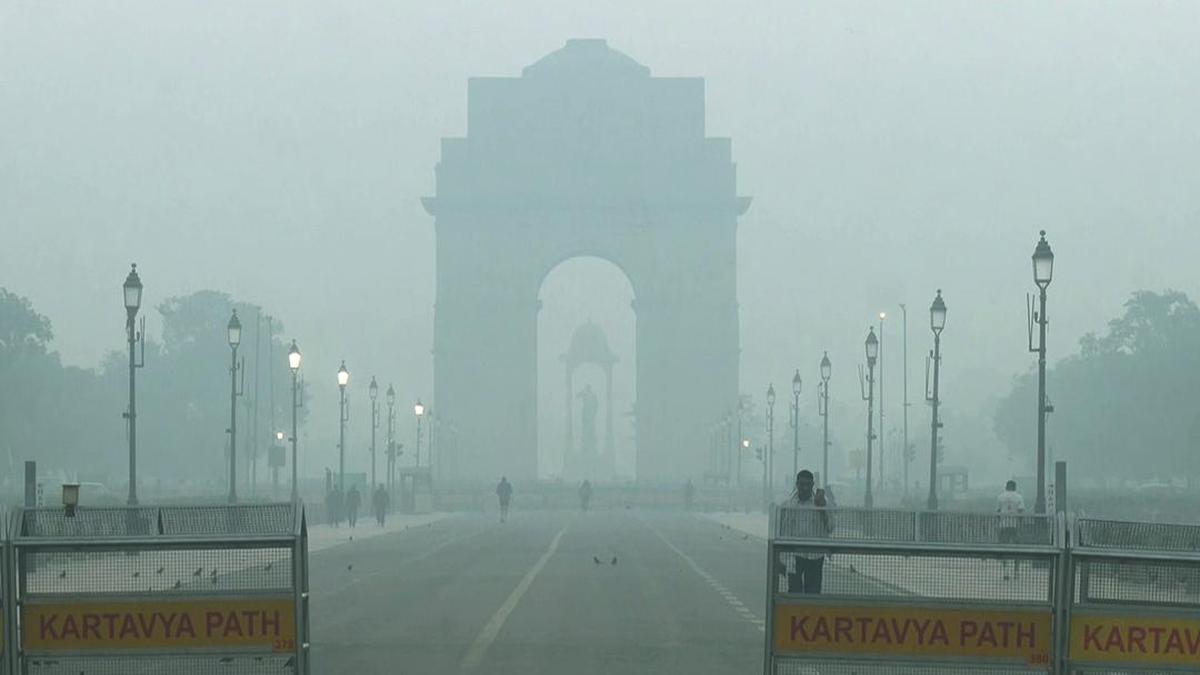

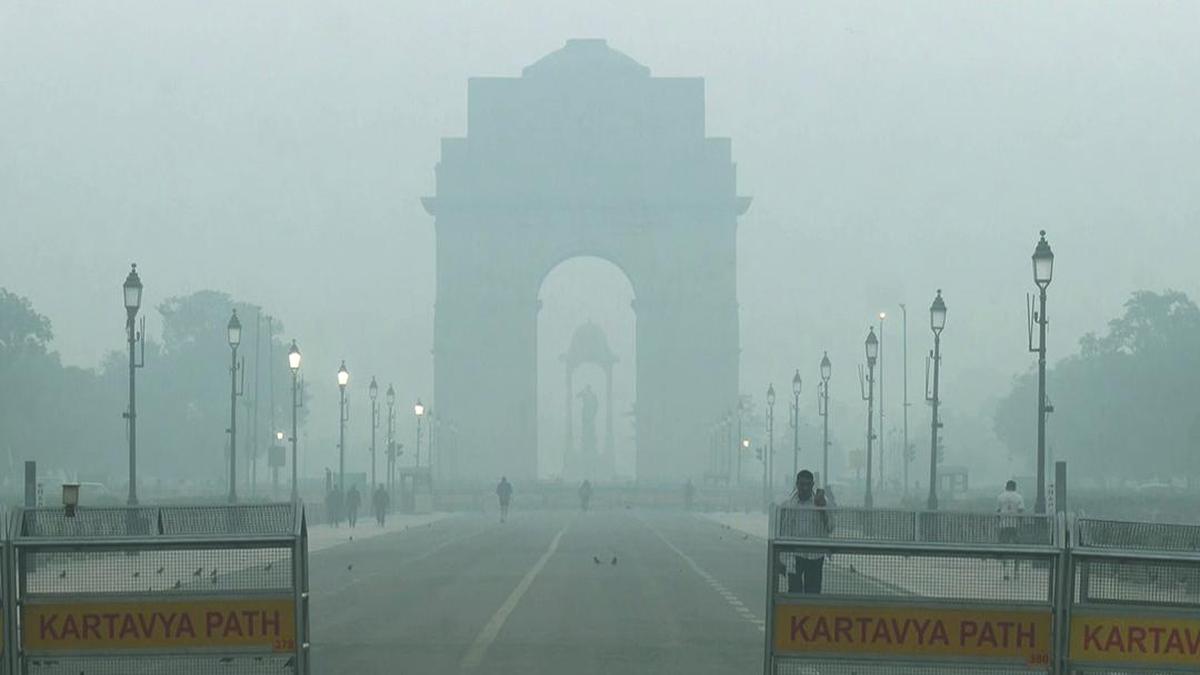
A thick layer of smog engulfs India Gate, in New Delhi.
| Photo Credit: ANI
Delhi’s air quality remained in the “very poor” category on Friday (November 7, 2025) and is likely to continue to be at the same level, with contribution from stubble burning predicted to see a sharp rise.
The contribution of stubble burning in neighbouring states to PM 2.5 (a chief pollutant) in Delhi on Friday (November 7, 2025) was 8.6%, according to the Union Ministry of Earth Sciences data. This is predicted to rise to 30.91% on Saturday and 31.24% on Sunday.
“The air quality is very likely to be in the Very Poor category from 08.11.2025 to 10.11.2025. The outlook for the subsequent 6 Days: The air quality is likely to be in the Very Poor category,” said the Central government’s ‘Air Quality Early Warning System for Delhi’.
Meanwhile, Delhi’s 24-hour average air quality index (AQI) was 322 (very poor) at 4 p.m. on Friday, up from 311 (very poor) a day earlier, as per the Central Pollution Control Board’s (CPCB) daily official bulletin, which is considered as a day’s official AQI. A higher AQI means an increase in air pollution.
An AQI between 51 and 100 is “satisfactory”, 101 and 200 is termed as “moderate”, 201 and 300 “poor”, 301 and 400 “very poor”, and 401 and 500 “severe”, as per the CPCB.
Every winter, air pollution spikes in Delhi-NCR and many parts of the larger Indo-Gangetic Plains (IGP), mainly due to meteorological factors such as lower wind speed and a drop in temperature. And pollution from stubble burning during October-November and bursting of firecrackers worsens it.
Published – November 08, 2025 04:08 am IST