



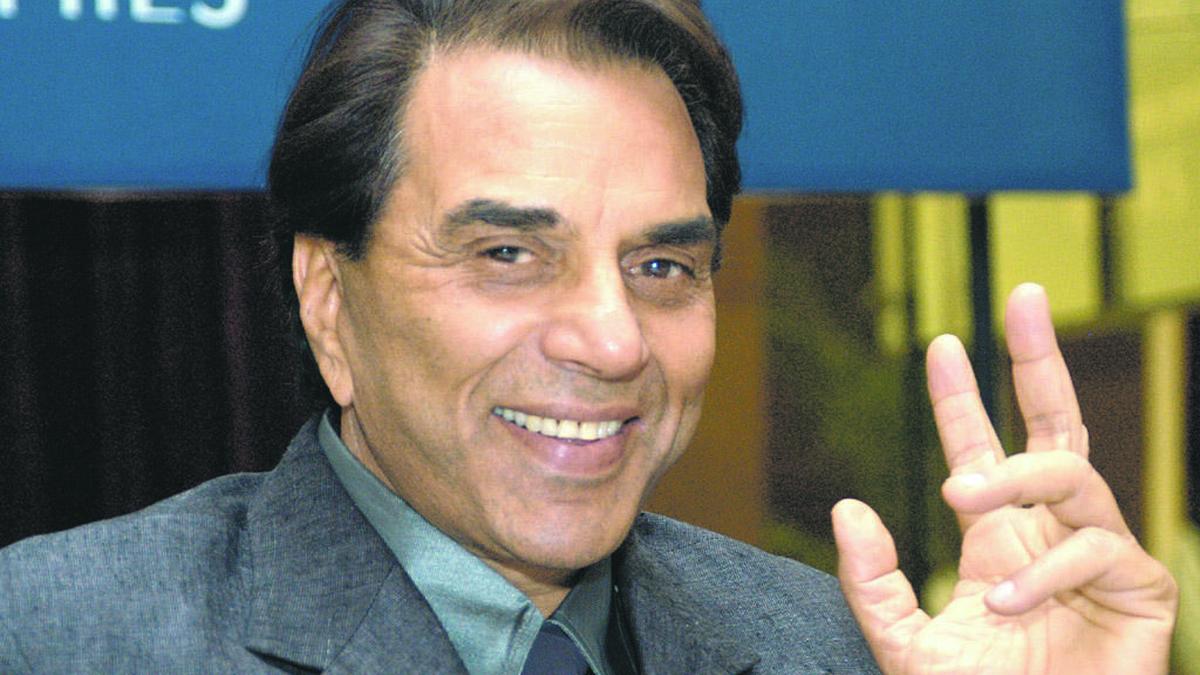

The heartbeat of Hindi cinema’s golden era, who turned raw instinct into cinematic immortality, Dharmendra passed away in Mumbai on Monday (November 24, 2025) due to age-related ailments at 89.
Tempering fire with vulnerability, Dharmendra embodied a paradoxical masculinity, the He-Man who could shed a tear, the village avenger who recited poetry, humanising the archetype of the Hindi film hero. Dharmendra’s swagger, his appeal, wasn’t manufactured — it was organic, unbreakable, and enduring.
His rugged charm and effortless masculinity stood out from the tragic-romantic heroes of earlier decades and the brooding, angry young men who emerged after him. Yet, his physical strength was always balanced by a deep emotional sincerity that shone through his intensely expressive eyes.

Dharmendra played some of the most loved characters in Hindi cinema that have withstood the test of time. The unflinching idealist engineer in Satyakam, the sensitive poet in Anupama, the wronged truck driver in Pratiggya seeking justice for his sister, the romantic protector in Jugnu, the reluctant saviour in Mera Gaon Mera Desh, the loyal friend in Sholay, and the prankster professor in Chupke Chupke, Dharmendra was perhaps the most adaptable icon of popular Hindi cinema.
Over six decades and 300 films, his ability to deliver one clean hit per decade underscores his longevity. Between 1966 and 1975, he delivered a dozen consecutive hits. Despite the high flop count in the third half of his career, Dharmendra’s pull powered many average films to profitability, especially in rural markets, making him Bollywood’s most commercially resilient star. There was a time when he and his son Sunny Deol were romancing the same set of heroines on screen.
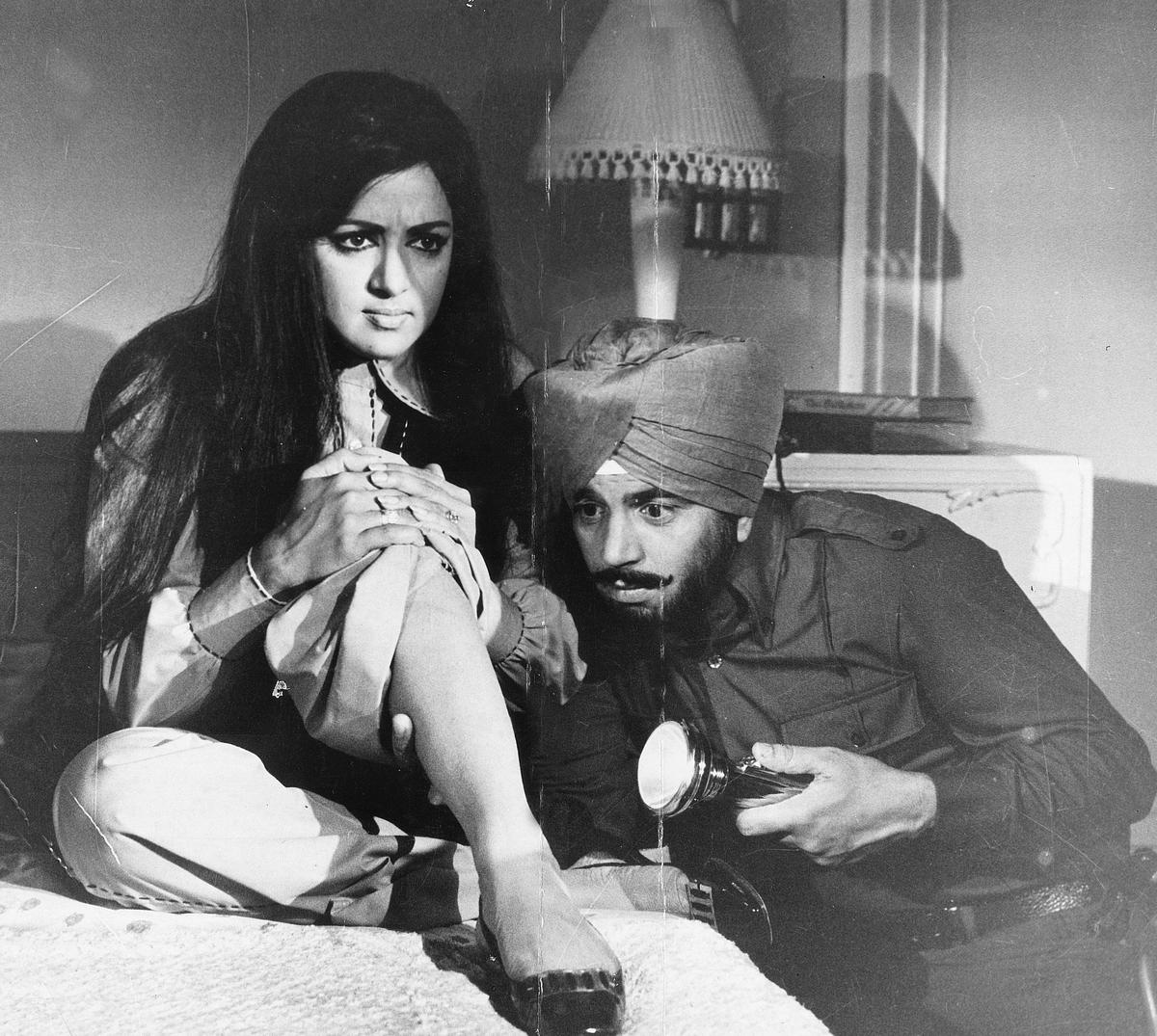
Hema Malini and Dharmendra in J’ugnu’ (1973). The real-life couple starred in around 30 films.
| Photo Credit:
HINDU PHOTO ARCHIVES
Unlike urban-centric heroes, Dharmendra’s stardom was built and sustained in the heartland, where his films ran for silver jubilees in single-screen theatres long after they faded from metros.
Born Dharam Singh Deol on December 8, 1935, in his maternal village Nasrali in Ludhiana district Punjabi Jat family, Dharmendra grew up in the nearby Sahnewal, where his father, Kewal Kishan Singh Deol, was a school headmaster, and Dangon, his ancestral village in Ludhiana. Closer to his mother than his strict father, Dharmendra celebrated his roots. He would talk about the days when he worked as a tubewell operator and tilled the fields.
That’s why his unpolished Punjabi-inflected Hindi felt like a neighbour crooning “Main Jatt Yamla Pagal Deewana” (Pratiggya), not a star performing. Still, in another universe, he could be a refined gentleman pouring his heart on paper with “Pal Pal Dil Ke Paas Tum Rehti Ho” (Blackmail).
Discovered through an acting contest run by the Filmfare magazine, Dharmendra willed his way into films through sheer passion and perseverance. His story symbolised hope for countless dreamers from small towns who longed to make it big in Bollywood.
Though he was a lifelong devotee of Dilip Kumar and saw him as a guiding light, there was no method to Dharmendra’s acting. In fact, the lack of method became his unique style, making him one of the most believable performers. Instinctive and unstudied, he believed that truth didn’t need a technique to convey itself, inspiring a generation of mass entertainers in Hindi and South Indian cinema. When he stood against the corrupt and spoke out against injustice, the public knew Dharmendra would go the whole hog. When he asks Basanti not to dance in front of the dogs, he means it. When he decides to jump off the water tank, the audiences know this guy can very well do it. With Dharmendra, there were no half measures; he would not hold back his punches. His presence on screen was an assurance that the villain would not have his way.
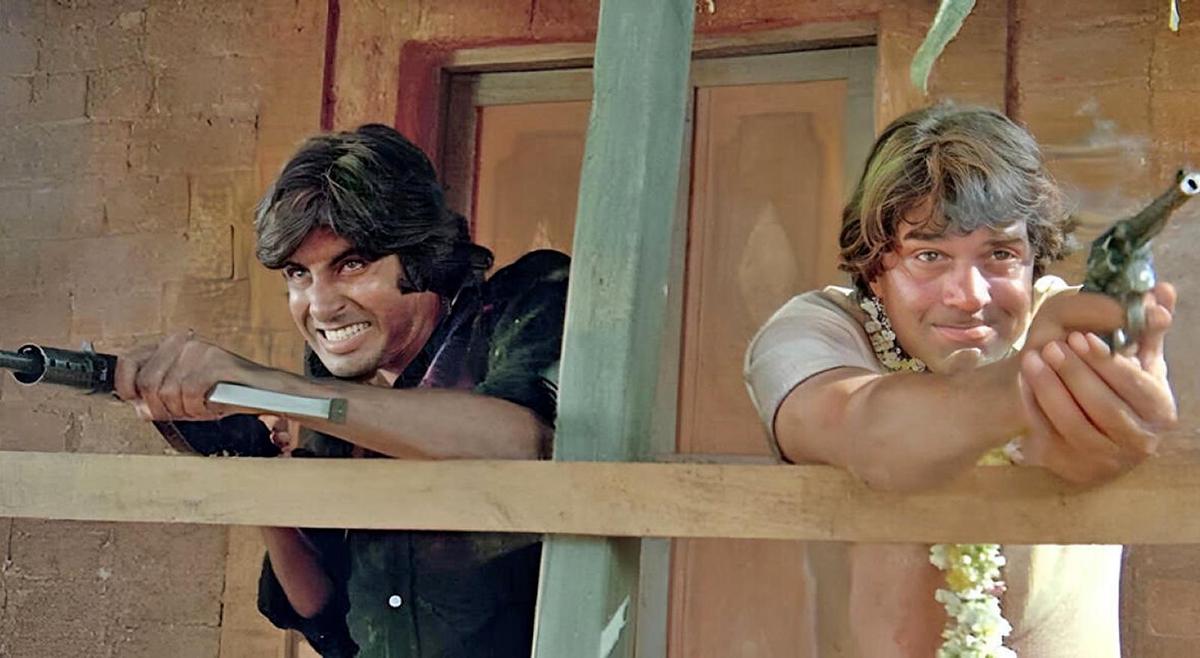
Dharmendra (right) played the loyal friend to perfection in ‘Sholay’, also starring Amitabh Bachchan.
| Photo Credit:
HINDU PHOTO ARCHIVES
After a sedate start with Arjun Hingorani’s Dil Bhi Tera Hum Bhi Tere (1960), he was noticed in Bimal Roy’s Bandini (1963) in a small but crucial role. However, it was when he blended action with romance in O.P. Ralhan’s Phool Aur Patthar (1966) that Dharmendra made heads turn and hearts skip a beat. His shirtless presence and electric chemistry with Meena Kumari reversed the idea of male gaze as women sighed and men aspired to be like him. He emerged as a village stud who could be a soulmate, an unpolished gem who won’t flirt but declare his love. Later, his boisterous real-life romance with Hema Malini, with whom he appeared in around 30 films, amplified his irresistible appeal. Over the years, their passionate and defiant love story became an enduring symbol of the bond between the north and the south, with Hema Malini winning consecutive elections from Mathura, the heartland of Jat farmers.
ALSO READ: The “Devdas” starring Dharmendra, Hema Malini that Bollywood missed
Despite the strong image of Garam Dharam, his comic flair remained unmatched. Even in his testosterone-fueled films, his comic timing stands out for the way he employs his machismo to subvert expectations, creating humor through contrast, understatement, and impeccable rhythm. He could drop from a roar to a whisper in one breath, using his deep baritone for ironic softness.
While his image is synonymous with mainstream extravaganzas like Nasir Hussain’s Yaadon Ki Baaraat (1973), Ramesh Sippy’s Sholay (1975), Manmohan Desai’s Dharam Veer (1977), and Anil Sharma’s Hukumat (1987), his early and mid-career trajectory was profoundly shaped by collaborations with Bengali masters who made Bollywood their home. Impressed by the honesty that his eyes exuded, Roy wanted to cast him in Parakh, but by then, Dharmendra had returned to his village. When the opportunity for the role of a compassionate prison doctor, who falls in love with the inmate, in Bandini arose, the legendary filmmaker remembered the boy from Punjab. A message was sent, and Dharmendra’s life changed. The actor never forgot Roy’s contribution to his career. When he bought his first car, he wanted to take Roy for a spin. Somehow it didn’t work out, and in the meantime, Roy passed away. Dharmendra would relate this lost opportunity to make his mentor proud with great pain.
Besides Roy, Hrishikesh Mukherjee, Dulal Guha, Asit Sen, and Pramod Chakravarty, directors rooted in the intellectual and literary traditions, played a pivotal role in transforming Dharmendra into a versatile performer capable of nuance, subtlety, and depth. Their influence helped him navigate the competitive 1970s landscape, where stars like Rajesh Khanna and Amitabh Bachchan threatened to eclipse him. It cemented his status as a bankable hero across genres and streams, and between potboilers, he kept returning to them to satiate his artistic hunger.
Though he informally invested in some of his films in the 1970s, in the 1980s, he launched a production house named after his daughter, Vijeta, to launch the careers of his sons, Sunny and Bobby Deol. After initially being reluctant, he also supported his daughter, Esha Deol’s, entry into the film industry.
He was repeatedly subjected to moral scrutiny for reportedly converting to Islam for a brief period to marry Hema Malini without divorcing his first wife. His struggle with liquor and descent to B-grade cinema with a series of duds took away some of the sheen from a sterling career. There was a time in the 1990s when he prioritised quantity over quality and was reduced to a one-note, aging action sensation, hamming up bombastic dialogues. There was a time when his residence in Mumbai was seen as their own by the farmers of North India. However, his stint in politics, when he was elected as a Bharatiya Janata Party MP from Bikaner, was short-lived and left him and the electorate disappointed. In recent years, he has become a subject for memes and crass mimicry, but his star power remained undiminished.
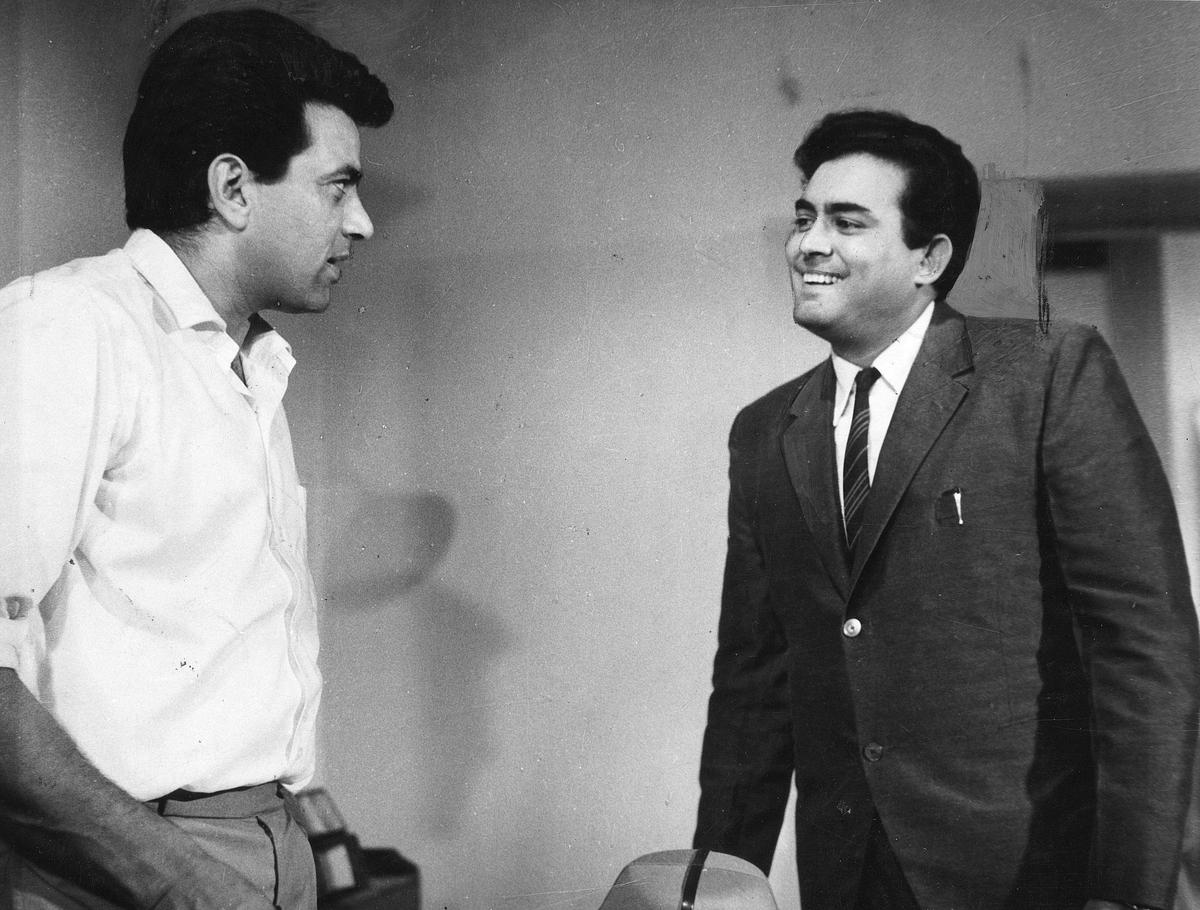
Dharmendra played the unflinching idealist engineer in ‘Satyakam’ (1969), also starring Sanjeev Kumar.
| Photo Credit:
HINDU PHOTO ARCHIVES
Repeatedly ignored at popular film awards, the Padma Bhushan would say in jest that someone who was never considered for the best actor award was deemed suitable for lifetime achievement awards.
An endearing but unfiltered conversationalist, it was almost impossible to conduct a formal interview with the simpleton. In 2001, when he developed a back problem and had to spend a lot of time in the hospital’s loneliness, Dharmendra turned to poetry. In later years, he would often come up with impromptu verses to reflect on the deeper meanings of human existence. Never keen on self-promotion, he consistently radiated warmth and humility, continually reminding people of his pedigree as a performer, with notable performances alongside a new generation of filmmakers. Srirram Raghavan rekindled his action-romance days with Johnny Gaddar, and Anurag Basu touched his emotional core in Life in Metro. Karan Johar’s Rocky Aur Rani Kii Prem Kahani, where he channelled his impish charm, was his last hurrah, and in Sriram’s upcoming Ikkis, Dharmendra still has one more ace up his sleeve.
The emotional outpouring that we have seen in last fortnight proves what he would say about himself. “Dharmendra wasn’t the best actor, nor was he the biggest star, but he was the most loved.”