




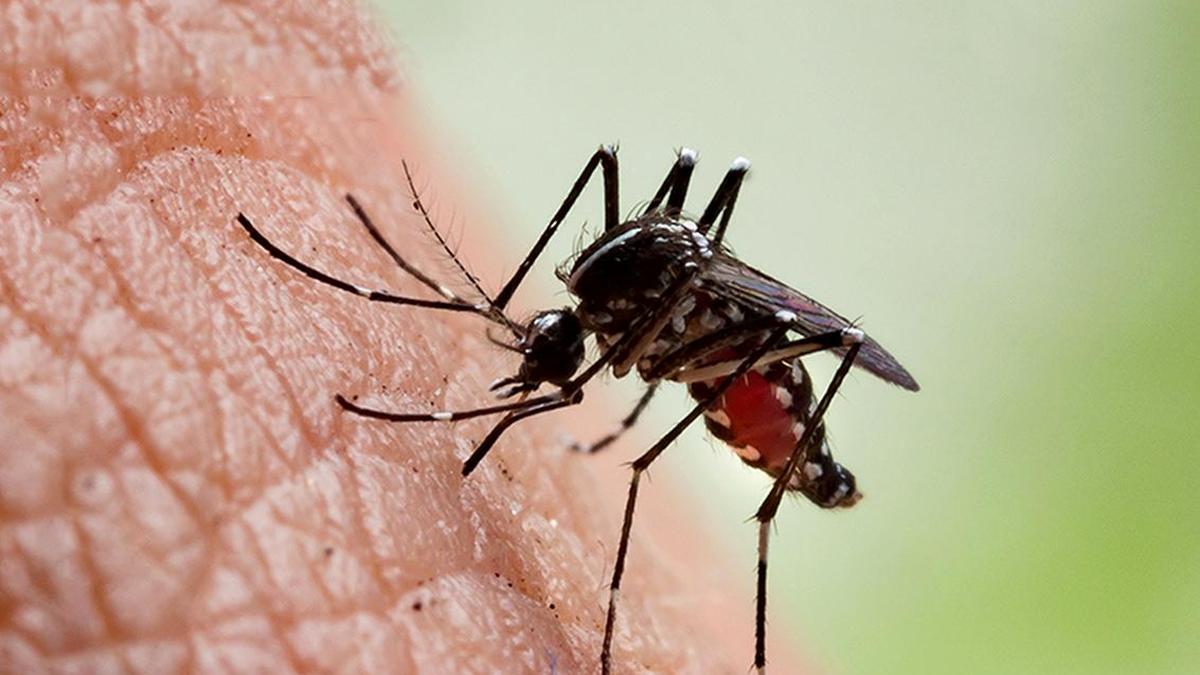


While the flu is rampant, there are a lot of dengue cases now.
| Photo Credit: iStockphoto
It is that time of the year when hospitals witness a steady influx of patients with fever. At present, flu, chikungunya, and dengue are among the most commonly reported illnesses in the city. However, doctors raise certain causes for concern, particularly the risk of dengue-related complications, and are calling for greater awareness about timely diagnosis and appropriate treatment.
“There seems to be an uptick in fever cases for the past week. It is mostly flu-like symptoms, but the fever is relentless in some. The infection spreads quickly within families, and is severe for many patients. Several require intravenous paracetamol, and it takes five to seven days to resolve,” a government physician said.
While the flu is rampant, there are a lot of dengue cases now. “Mixed infections are on the rise making diagnosis difficult, and cumbersome investigations are needed. Mask etiquette and hand hygiene is advisable,” he said.
S. Chandrasekar, professor and head, Department of Medicine, Government Stanley Medical College Hospital, said that there has been no dip in fever cases. “We usually see cases from November to January-end. We are receiving two to three dengue-positive patients with complications in a week. Being a tertiary care centre, such patients are referred to us. In 95% cases, dengue is self-limiting; around two per cent require supervised treatment and three per cent develop complications,” he said.
He added that a key observation is that most patients who have developed complications are teenagers. “Factors such as lack of physical activity, poor dietary habits, irregular sleep patterns and being mildly obese/overweight could cause low-grade inflammation in the young. What we are seeing is an inflammatory cytokine storm in dengue,” he said.
“It is the winter season, and we are seeing a mixture of organisms. We are seeing influenza, chikungunya, and dengue. In chikungunya, fever lasts three to five days and is accompanied by joint pain including the small joints in the hands and feet, leaving patients unable to get up and move. There is a skin rash as well. We usually see dengue at this time of the year. Now, chikungunya is also prevalent. Since it is transmitted by a day-biting mosquito, checking breeding sources is essential,” Suresh Kumar, senior consultant, Infectious Diseases, Apollo Hospitals, Chennai, said.
He added that influenza cases continue, though symptoms, particularly cough, are not as intense as compared to three to six months ago.
Dr. Chandrasekar noted that usually, in dengue, there is a drop in platelet count and bleeding manifestations. “Now, there is also involvement of the liver – dengue hepatopathy – in patients. Dengue complications usually depend on the serotype. The commonly prevalent ones in Chennai are serotype 2 and 4. This time, however, the involvement of the liver and haematological system is significant. So, we have redefined our treatment strategy and have prioritised tests for liver parameters, bleeding parameters, and serum albumin when patients come in with dengue complications. Based on the findings, we are triaging patients and admitting them to the hybrid intensive care unit and are putting in place a multidisciplinary treatment strategy. In addition, there is also minimal cardiac involvement in such patients,” he explained.
Published – November 25, 2025 08:04 pm IST