


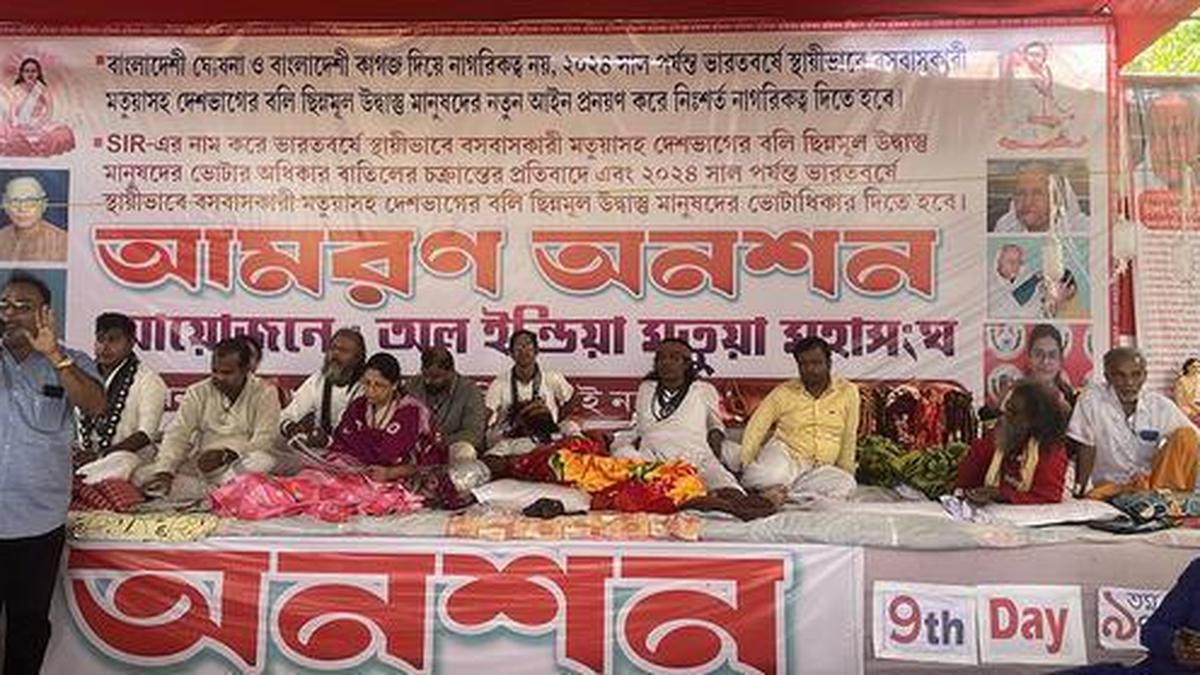

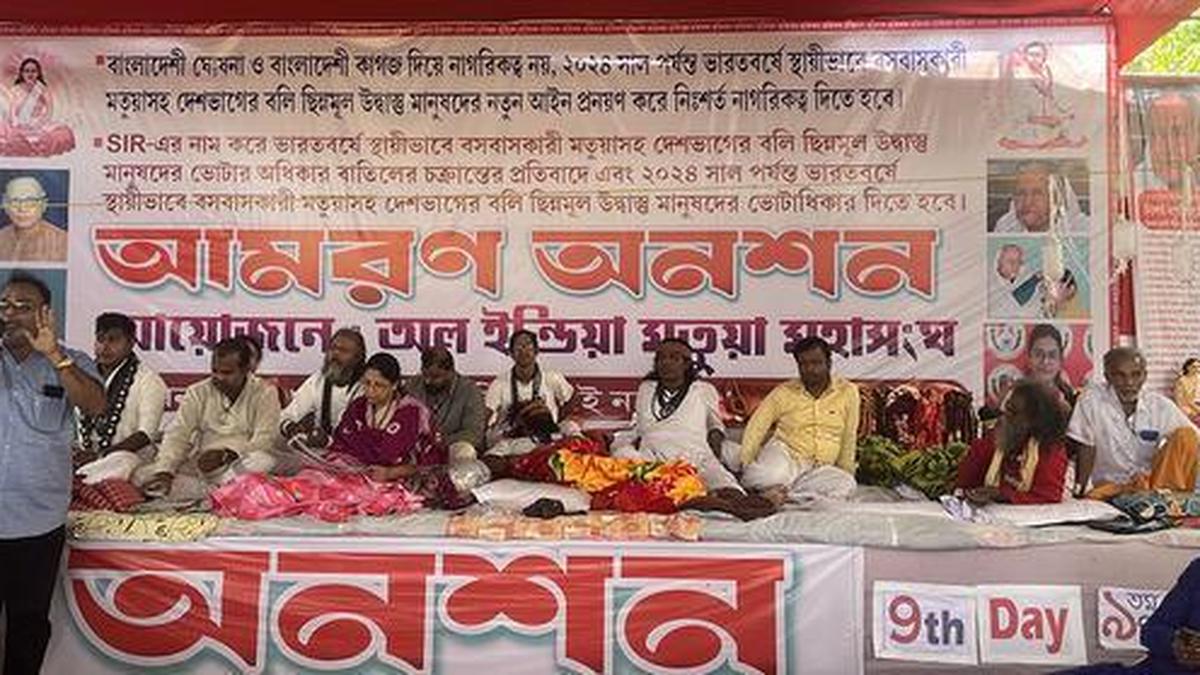
Trinamool Congress Rajya Sabha member Mamata Bala Thakur staged a hunger strike with members of the Matua community at Thakurnagar to protest against the SIR.
| Photo Credit: Shrabana Chatterjee
After the announcement of a pan-India Special Intensive Revision of electoral rolls in 12 States, including election-bound States Tamil Nadu, Kerala and West Bengal, the exercise has emerged as a flash point between Central government and Opposition parties.
Opposition parties including the Congress, DMK, Trinamool Congress and Let parties, alleged the SIR was aimed at deleting the names of genuine voters, particularly those from minority communities and Scheduled Castes/Scheduled Tribes (SC/STs).
In West Bangal, Chief Minister Mamata Banerjee led a protest march in Kolkata against SIR and asserted that she would ensure the fall of the Bharatiya Janata Party-led government at the Centre if a single eligible voter was omitted from the electoral rolls. Ms. Banerjee also claimed that NRC was the real intent behind the special intensive revision (SIR) of electoral rolls.
Being a border State, West Bengal has a considerable population of migrants and refugees from Bangladesh and Myanmar. The State, like every other State, is no exception to internal migration. A massive clean-up of the electoral rolls months before the elections have caused panic to voters, stress to booth-level workers, and fears of disenfranchisement to migrants.
Here’s a collection of ground reports and analyses, uncovering the impact SIR on people of Bengal, how a voter roll revision exercise has triggered the conversation on citizenship, migration, statelessness anew.
Published – November 28, 2025 12:29 pm IST