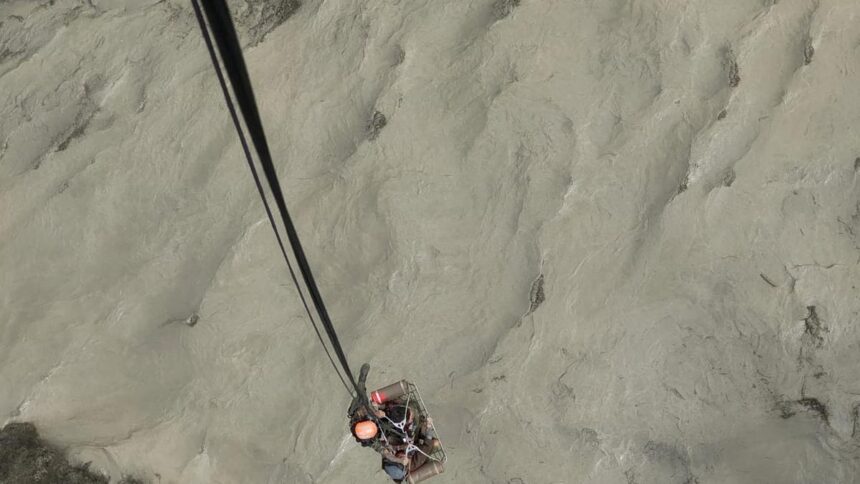




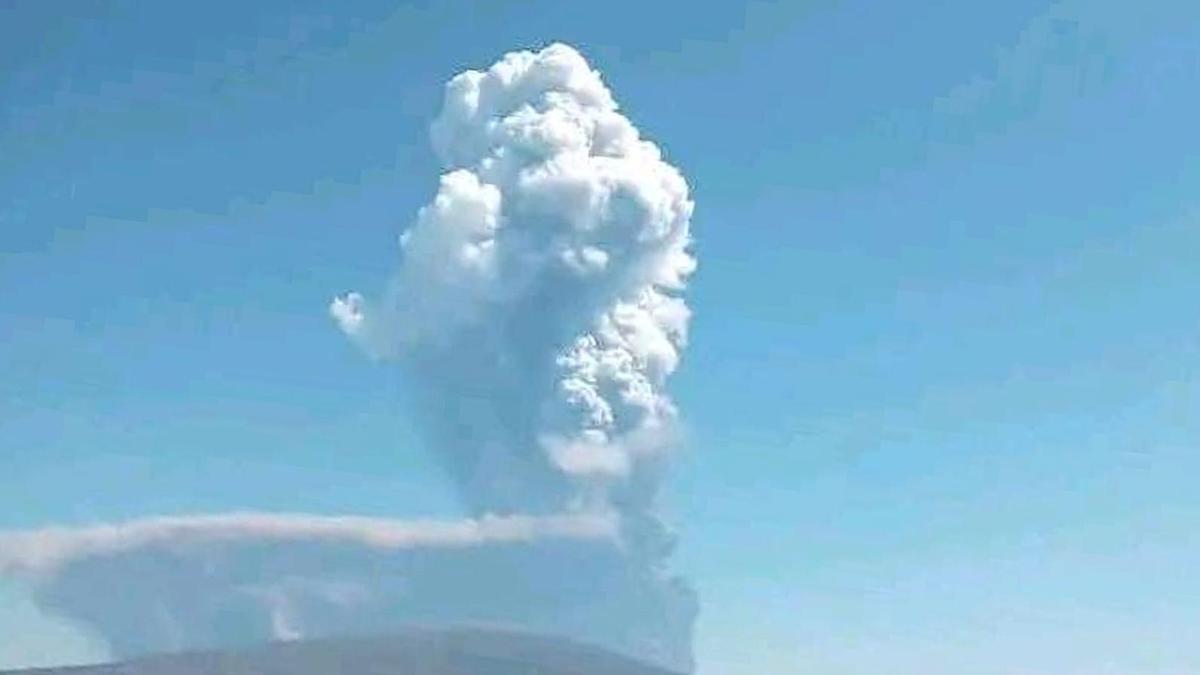


In this photo released by the Afar Government Communication Bureau, ash billows from the first time eruption of the Hayli Gubbi Volcano in Ethiopia’s Afar region on November 23, 2025.
| Photo Credit: AP
A volcano in Ethiopia’s northeastern region erupted for the first time in nearly 12,000 years, sending thick plumes of smoke up to 14km into the sky, the Toulouse Volcanic Ash Advisory Centre (VAAC) said.
The Hayli Gubbi volcano, located in Ethiopia’s Afar region about 800km northeast of Addis Ababa near the Eritrean border, erupted on Sunday (November 23, 2025) for several hours.
The volcano, which rises about 500m in altitude, sits within the Rift Valley, a zone of intense geological activity where two tectonic plates meet.

Ash clouds from the volcano drifted over Yemen, Oman, India, and northern Pakistan, the VAAC said.
In videos shared on social media, which AFP could not immediately verify, a thick column of white smoke can be seen rising.
The Smithsonian Institution’s Global Volcanism Program said Hayli Gubbi has had no known eruptions during the Holocene, which began around 12,000 years ago at the end of the last Ice Age.
Simon Carn, a volcanologist and professor at the Michigan Technological University, confirmed on Bluesky that Hayli Gubbi “has no record of Holocene eruptions”.
Afar authorities have not yet responded to AFP inquiries about possible casualties or the number of displaced people.
Published – November 24, 2025 06:51 pm IST