






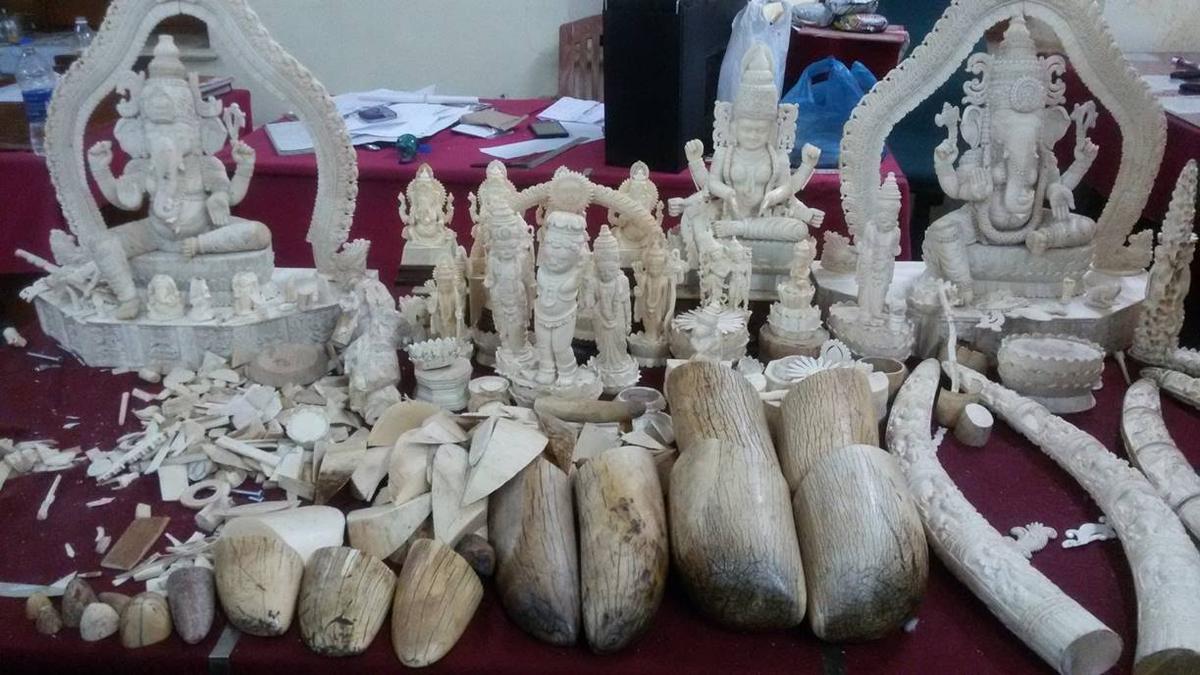
Ivory and ivory artefacts seized in connection with the Malayattoor elephant poaching case.
A dimly lit workshop in Kozhikode. Forest officers in plain clothes wait outside as their informant signals with a quick flick of a handkerchief, the sign that the “goods” are inside. Moments later, the team bursts in and catches the trader red-handed with what appears to be a tiger skin, folded neatly inside an old trunk. But as they unroll the hide, a mouse darts out, revealing the pelt’s long abandonment and a secret the trafficker had hidden for years.
Gritty and tense scenes like these fill former Deputy Conservator of Forests J.R. Ani’s new book Naagamanikyam, Gajamuthu, Vellimoonga: Vanam Kallakkadathinte Kanappurangal’ (Snake stone, elephant pearl, barn owl: the unseen side of wildlife smuggling), a first-hand chronicle of the secretive and often perilous world of wildlife trade enforcement in Kerala.
From snake-stone hoaxes and ivory smuggling networks of Kerala to raids on tiger pelt traders and poachers in the Western Ghats, the veteran officer, who also served as the Divisional Forest Officer of the Flying Squad, sheds rare light on real-life undercover operations conducted by the Forest department to curb the illegal trade in tiger skins and other wildlife products.
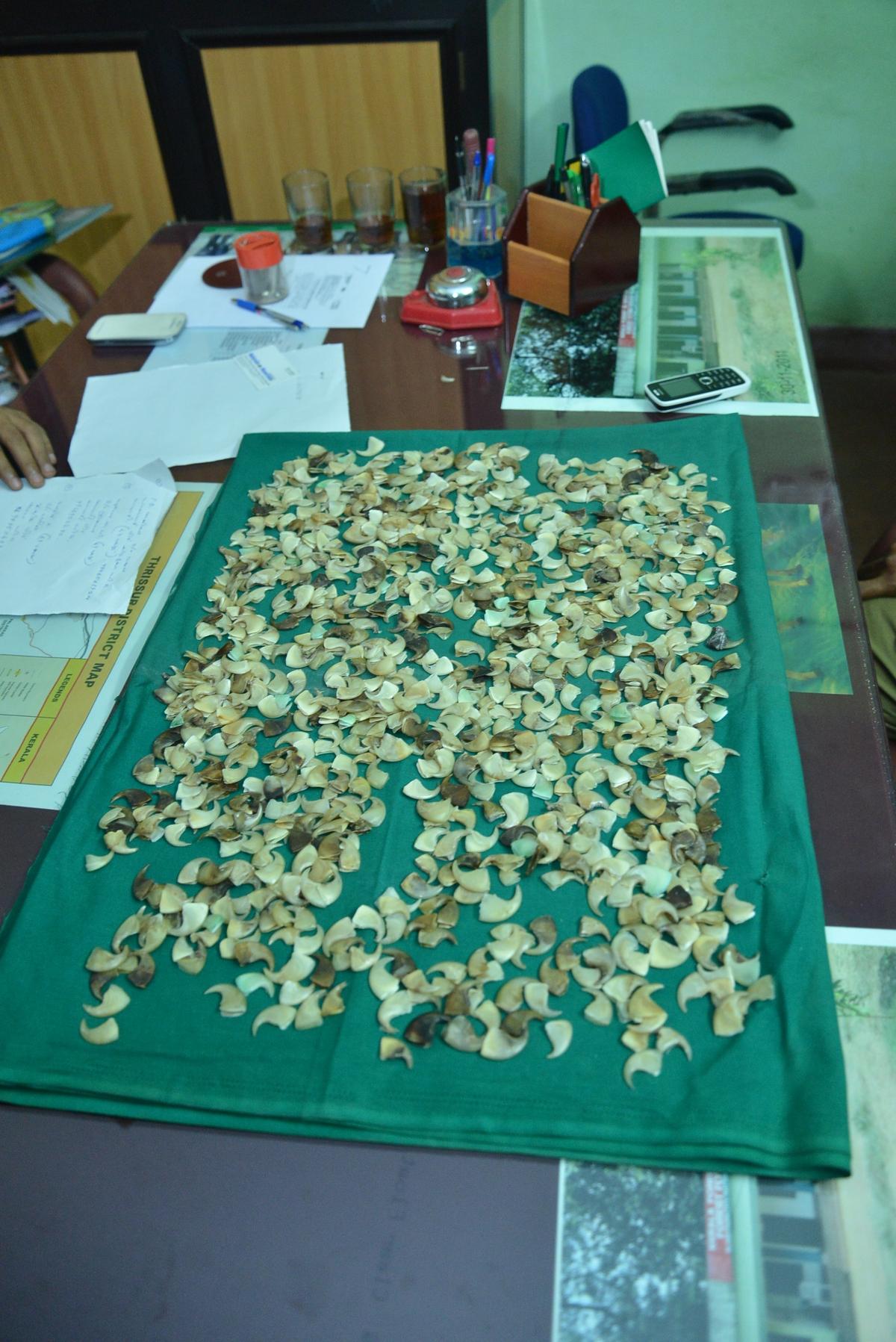
Tiger claws
In one chapter, Mr. Ani details a tense operation in Kozhikode where his team tracked down a rare tiger pelt being traded in a city workshop, only to find that many so-called ‘skins’ were actually dyed cattle hides, painstakingly painted to deceive buyers. Another episode set in Silent Valley describes a high-risk mission to recover a tiger hide from an armed poacher, carried out deep inside rain-soaked forests that lacked mobile connectivity.
Equally riveting are his accounts of ivory trade busts, from encounters with notorious poachers like ‘Kezha’ Vasu and ‘Karadi’ Raghavan to the unravelling of intricate trafficking networks that stretched from Wayanad to Tamil Nadu.
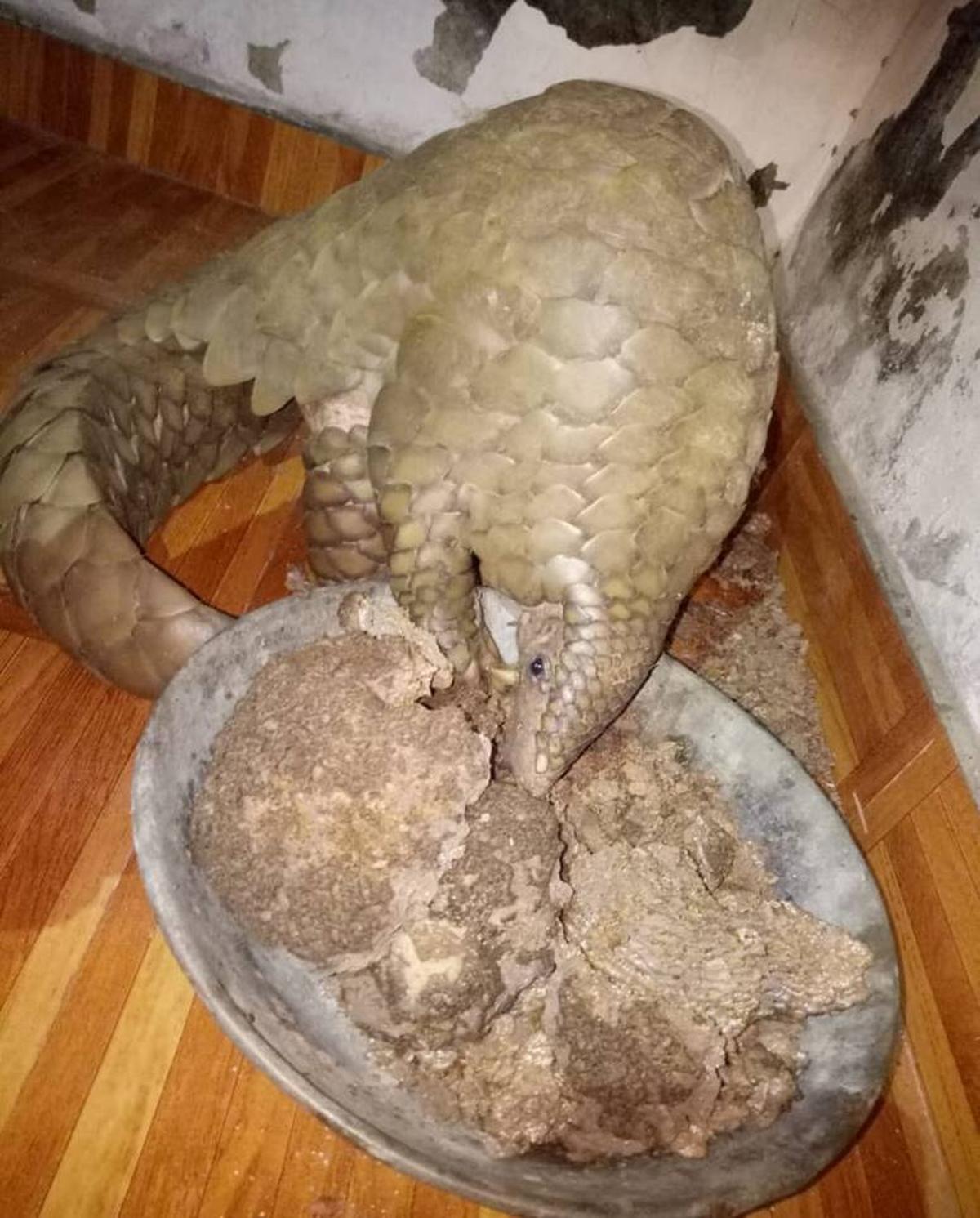
A pangolin rescued from wildlife traffickers.
Mr. Ani also exposes the underbelly of wildlife-related superstition and fraud. He delves into how gullible buyers were duped into purchasing the ‘snake stones,’ ‘elephant pearls’ and ‘rice-pulling’ vessels that are fake relics marketed with pseudoscientific demonstrations. These scams, often operating under the guise of traditional healing or occult power, became fronts for illegal wildlife trade and financial exploitation.
He also elaborates on how fraudsters falsely claim that animals such as barn owls, red sand boas and star tortoises contain traces of iridium, which gives them magical or ‘money-attracting’ powers. Such superstitions have fuelled a multi million-dollar black market across India and abroad.
Innocent creatures are captured, tortured and sold for such mythical “miracle powers”, the retired official laments.
Published – November 11, 2025 08:45 pm IST