




India recorded extreme weather events on 270 of the 273 days between January and September 2025, according to an assessment by the Centre for Science and Environment (CSE) and Down To Earth. The analysis draws on data from the India Meteorological Department (IMD), the Disaster Management Division of the Union Home Ministry, and media reports.
Extreme weather events, as defined by IMD, include lightning and thunderstorms, heavy to extremely heavy rainfall, floods, landslips, heatwaves, cold waves, snowfall and cloudbursts. All 36 States and Union Territories reported such events during the period.
Nearly 90% of adults in Maharashtra say they have personally experienced global warming
The report, published on November 19, 2025, states that these events resulted in 4,064 deaths, damage to 99,533 houses, and the loss of 58,982 animals. Crop losses were extensive, with 9.47 million hectares affected. Maharashtra reported the largest agricultural impact at 8.4 million hectares, while Madhya Pradesh recorded the highest number of fatalities at 532, followed by Andhra Pradesh with 484 and Jharkhand with 478.
Regionally, the northwest experienced the highest frequency of extreme weather, with 257 event days and 1,342 deaths. The east and northeast recorded 229 event days and 878 deaths, the central region had 200 days and 1,093 deaths, and the south peninsula reported 205 days and 745 deaths. Himachal Pradesh saw extreme weather on 217 days, the most for any State.
Back-to-back weather systems to bring heavy rain to Tamil Nadu this week
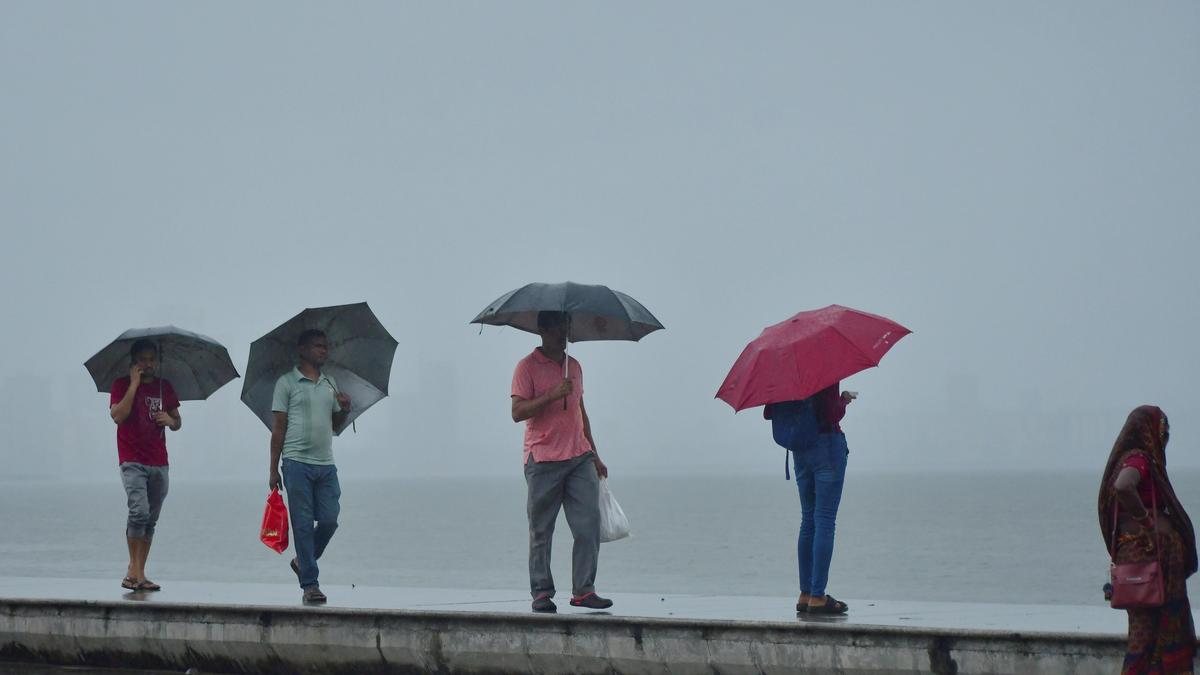
Lightning and storms accounted for 1,456 deaths, while heavy rain, floods and landslips caused 2,440 deaths. Heatwaves were reported on 52 days across 19 States and Union Territories, and cloudbursts occurred on 19 days, resulting in 135 deaths. Snowfall was recorded on two days, causing 12 deaths.
Seasonal analysis shows that winter months of January and February saw extreme weather on 57 of 59 days, with 64 deaths and 0.02 million hectares of crop loss. The pre-monsoon period from March to May recorded extreme weather on 91 of 92 days, claiming 993 lives and affecting 0.006 million hectares of crops. The monsoon season from June to September witnessed extreme weather on all 122 days, resulting in 3,007 deaths and crop damage across 9.44 million hectares.
The report notes that January was India’s fifth driest since 1901, while February was the warmest in 124 years. March recorded a mean maximum temperature of 1.02°C above normal, and September registered its seventh-highest mean temperature on record. Rainfall anomalies were significant, with January recording a 71% deficit and February 30% below the long-period average, while May saw a surplus of 106%. July and August brought widespread heavy rainfall, including extremely heavy downpours in several States.
The number of extreme weather days has risen from 241 in 2022 to 270 in 2025. Fatalities have increased by 48% over the same period, from 2,755 in 2022 to 4,064 this year. Crop losses have grown more than fourfold since 2022, from 1.84 million hectares to 9.47 million hectares.
State-level data shows Uttar Pradesh reported 321 deaths and crop damage across 2,10,528 hectares, while Punjab lost 2,62,831 hectares of crops. Himachal Pradesh recorded 380 deaths and damage to 1,67,000 hectares. Gujarat saw 110 extreme weather days but the data for cropped area affected was not available.
The report highlights gaps in official data, noting that loss and damage figures are compiled seasonally rather than daily and may underestimate the true impact. It calls for comprehensive public databases to track the full extent of economic and human losses.
The report warns, “What the country has witnessed so far in 2025 is the new normal in a warming world. Without decisive mitigation efforts, the disasters of today will become the new normal of tomorrow.”
Published – November 21, 2025 01:14 pm IST