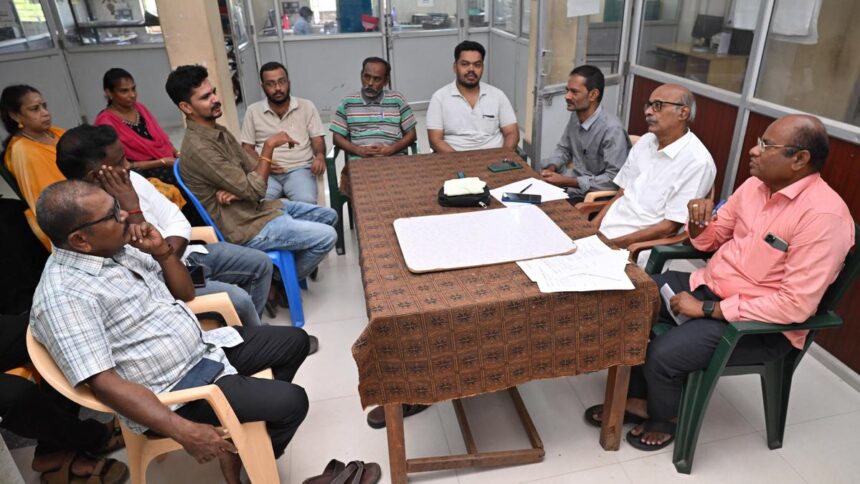






The Centre for Advanced Research in Environmental Radioactivity, a national facility established by Mangalore University for radiation protection studies, has commenced an International Intercomparison Experiments on Radon Measuring Devices from October 30, 2025 in Mangaluru.
| Photo Credit: SPECIAL ARRANGEMENT
The Centre for Advanced Research in Environmental Radioactivity (CARER), a national facility established by Mangalore University for radiation protection studies, has commenced an International Intercomparison Experiments on Radon Measuring Devices from October 30, 2025, in Mangaluru.
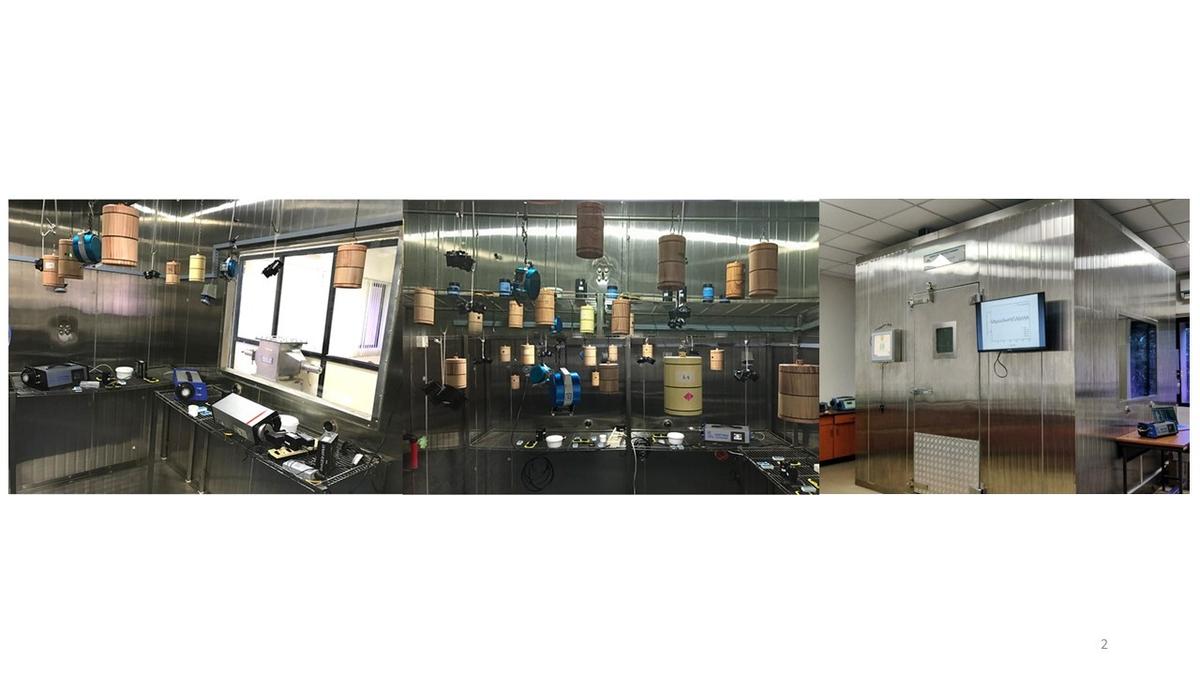
A release here said the one-month programme will utilise the state-of-the-art Radon Calibration Facility at CARER, Mangalore University, the largest and most advanced in Asia. Organised in collaboration with the Asian and Oceanic Radon Association (AORA) and the Bhabha Atomic Research Centre (BARC), Mumbai, this exercise will involve laboratories in Japan, Australia, Spain, Sweden, the U.S., the U.K. and India.
The organisers said Radon, a naturally occurring radioactive gas, is a key contributor to indoor radiation exposure and accounts for nearly 50% of the total natural background radiation dose (2.4 milli Sievert per year).
Around 300 radon detectors will undergo intercomparison and performance evaluation under controlled environmental conditions, using CARER’s in-house-developed technologies.
The inter-comparison experiments are vital to ensure accuracy, precision, and global harmonisation of radon measurements. The current inter-comparison exercise aims to strengthen the reliability and consistency of data across laboratories worldwide—an essential step toward refining global standards and improving our understanding of radiological risks from radon exposure.
Originating naturally from soil, rocks, and building materials, radon can accumulate in enclosed spaces such as homes and offices. While radon poses a greater risk in temperate countries, India’s tropical climate and well-ventilated dwellings generally keep indoor radon levels lower and safer.
Centre Coordinator Karunakara Naregundi said, “Advanced radon detectors — including RAD7, RAD8, RADUET, ARP monitors, DRPS, Eurofins alpha-track devices, Pinhole dosimeters, Smart RnDuo, and Alphaguard — from leading international laboratories will be evaluated during this exercise.”
Commissioned in 2015 with financial assistance from the Board of Research in Nuclear Sciences (BRNS) and technical support from BARC, the Centre is the largest in Asia and the second-largest globally.
Published – October 30, 2025 06:50 pm IST