



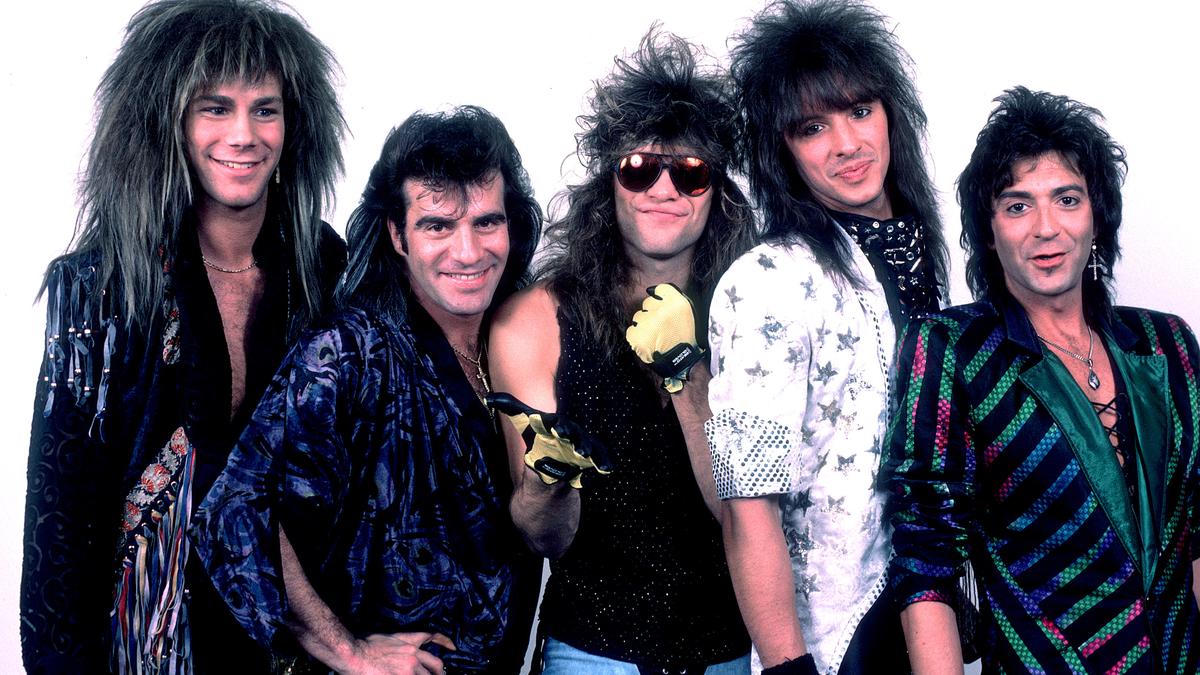

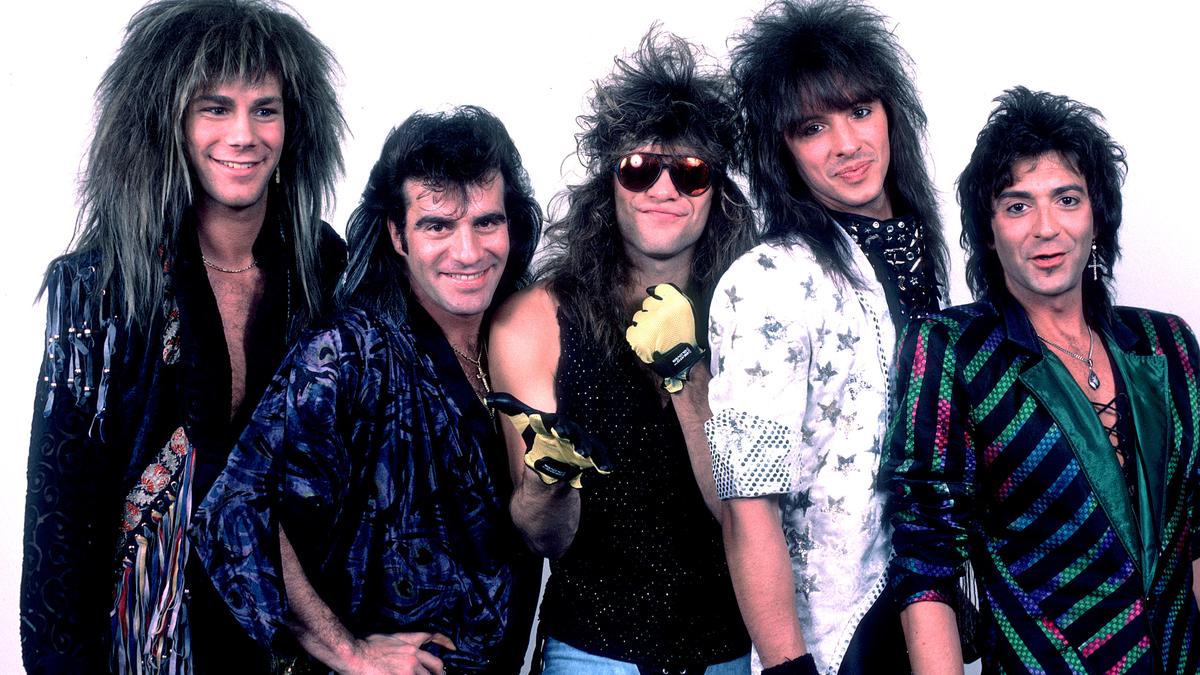
American rock band Bon Jovi before a performance in Illinois in 1987. (From left) David Bryan, Tico Torres, Jon Bon Jovi, Richie Sambora, and Alec John Such
| Photo Credit: Paul Natkin
There are artistes who define an era, and then there are those who transcend it, shaping not only the sound of their time but the emotional vocabulary of those who listen. Bon Jovi, over four decades after their debut, continue to exist in that rare space where nostalgia and endurance meet. For many listeners who discovered them long after their peak years, their music still feels like a living memory: loud, hopeful, unashamedly heartfelt.
When Bon Jovi announced their world tour for July 2026, it felt less like a comeback and more like a return to a shared language. The announcement pairs with the release of ‘Forever’ (Legendary Edition), a reimagined version of their 2024 album featuring Bruce Springsteen, Robbie Williams and Avril Lavigne. That Jon Bon Jovi has fought his way back to this point after major vocal cord surgery only adds to the sense of triumph.
To understand why this moment resonates, one has to trace the long, unbroken line of Bon Jovi’s story. It began in 1980 in Sayreville, New Jersey, when a young Jon Bon Jovi recorded ‘Runaway’ at his cousin’s radio station. The song became a local hit, and soon after, the band — Richie Sambora on guitar, David Bryan on keyboards, Tico Torres on drums and Alec John Such on bass— was born. Their self-titled debut in 1984 hinted at promise, but it was ‘Slippery When Wet’ (1986) that changed everything. With ‘Livin’ on a prayer’, ‘You give love a bad name’ and ‘Wanted dead or alive’, Bon Jovi didn’t just dominate charts; they redefined arena rock. They made it cinematic: part streetlight romance, part blue-collar defiance, with choruses built for stadium echoes.
The late 1980s belonged to them. ‘New Jersey’ (1988) cemented their superstardom, while relentless touring turned them into one of the most recognisable acts. But where many of their contemporaries faded with the excesses of the era, Bon Jovi adapted. As grunge swept through the 1990s, they pivoted to something leaner and more mature. ‘Keep the Faith’ (1992) traded hairspray bravado for soulful introspection, and ‘These Days’ (1995) gave the band its most lyrically nuanced work, a meditation on growing older, losing ground, and still holding on. Songs like ‘Always’ and ‘Something to believe in’ proved that sincerity could evolve without losing power.

Jon Bon Jovi performs during the 25th Latin Grammy Awards at Kaseya Center on November 14, 2024 in Miami, Florida
| Photo Credit:
John Parra
Then came ‘Crush’ (2000), and with it, ‘It’s my life’. In three minutes, Bon Jovi reinvented themselves for a new millennium, the chorus an anthem for a generation that hadn’t even been born when ‘Slippery when wet’ ruled MTV. The 2000s saw them flirt with country influences (’Lost highway’), write from a place of social conscience (’Have a nice day’), and deliver some of their most introspective records (’The circle, what about now’). Even as trends shifted from CD racks to streaming playlists, Bon Jovi remained, perhaps less fashionable, but always recognisable. Their evolution mirrored that of their audience: less reckless, more reflective, but still chasing something true.
Their music has always thrived on that delicate balance, the space between anthem and confession. ‘Livin’ on a prayer’ and ‘It’s my life’ may have soundtracked high school halls and karaoke bars alike, but it’s the quieter tracks — ‘Bed of roses’, ‘I’ll be there for you’, ‘Thank you for loving me’— that endure as reminders of how the band gave vulnerability a rock melody. Bon Jovi never shied away from emotion; they simply made it sound grand.
In recent years, as Jon Bon Jovi faced the loss of his vocal range, the band’s music took on new meaning. Albums like ‘2020’ and ‘Forever’ turned inward. His recovery and return to the studio speak not just of persistence, but of a lifelong belief in what a song can do.
Their music has moved through decades of shifting tastes, from cassette to vinyl revival, from hair metal to hyperpop, and somehow remained relevant— not because they chased trends, but because they have always sung about the constants. Hope. Love. Faith. The things that refuse to go out of style.
As they prepare to tour again, the image is easy to picture: thousands of fans across generations, voices merging under stadium lights, the sound swelling into something both familiar and eternal.
Published – October 31, 2025 06:28 pm IST