


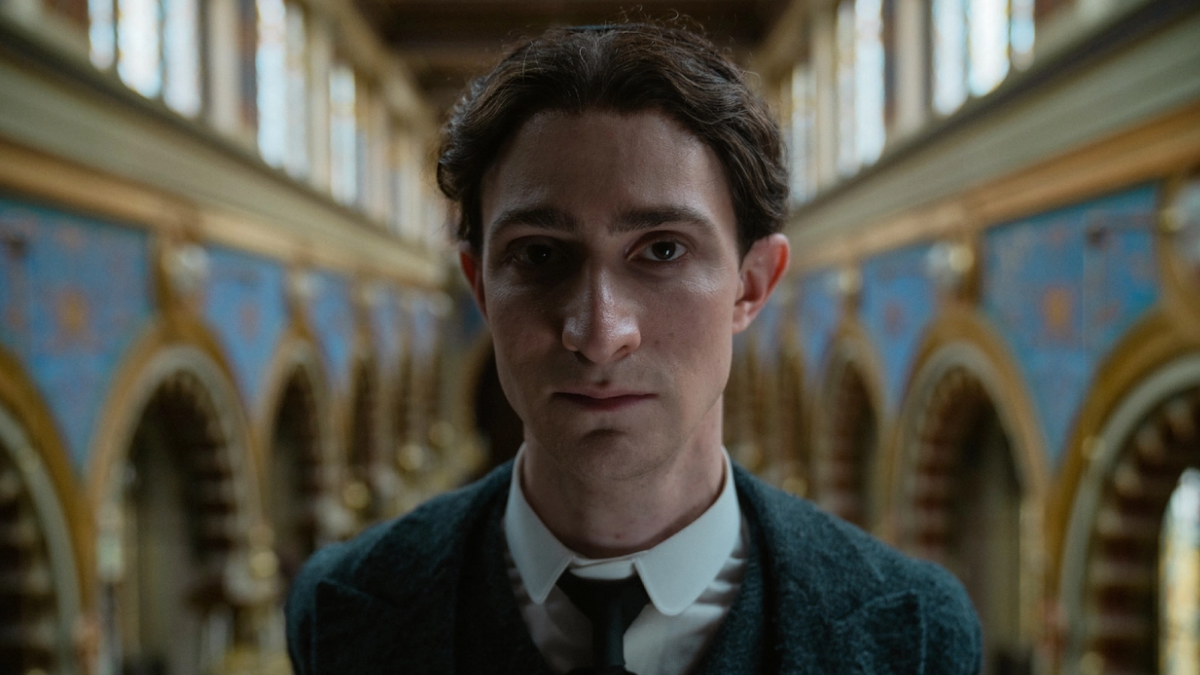

Idan Weiss in a still from ‘Franz’
| Photo Credit: Marlene Film Production
“Why was Kafka not into music?” Given an audience, this is the one question that actor Idan Weiss wants to ask the insurance clerk from Prague who weaponised absurdity to expose the soul-crushing machinery of modern existence.
The young German actor’s robust performance in his first significant role is the highlight of Agnieszka Holland’s Franz. The playfully subversive biopic had its India premiere at the ongoing 31st Kolkata International Film Festival 2025. Franz is Poland’s official entry for the 98th Academy Awards, and the good old Nandan was filled to the brim as cineastes turned up in large numbers to celebrate the 20th-century author whose works, dealing with alienation and oppressive bureaucracy, deeply resonate with Indians.

The lanky actor has not just acted but inhabited the character, making the fragile strangeness of Kafka absolutely tangible through those darting eyes that establish the outsider status of the subject with a layered identity.
In an online conversation, the winner of this year’s Best Actor award at the Polish Film Festival in Gdynia says he is not at all like Kafka. “He was not into music; I am surrounded by music all the time. He was an introvert, while I am a complete extrovert. However, I could relate to his sensitivity. When playing a character, one looks for the emotional core of the character. Like Kafka, I didn’t have the easiest of childhoods. In school, for three to four years, there was not a single day when I was not pushed against the lockers and shouted at.” Idan says it was a hard time, but he is thankful to those people who bullied him. “When you go through a difficult time, you start appreciating life.” He says theatre and life experiences helped him improvise for the role. “There was a time when I watched so much theatre that I could not pay my rent.”
An iconoclast, Agneiszka has chosen the form of a non-linear, fourth-wall-shattering biopic to resurrect Kafka for the modern-day audience that constantly seeks virality and triviality. A tour guide in the film says the ratio of words written by Kafka to those written about him is now one in ten million. Seeking to separate the brand Kafka from Franz, Idan admits biopics are the flavour of the season. “There are numerous biopics available that share a similar form and presentation. Agneiszka had an image, a vision of Kafka, and she wanted to be different. So we created something that we can call an anti-biopic. It is like someone standing behind the door and filming Kafka through the peephole. Together, we tried to search for Kafka. After every day of the shoot, we got closer to him. It was quite a journey,” gushes Idan, relating how he was discovered through the audition process.

Right from Angry Harvest (1985), Agnieszka’s films are deeply political. Even in Franz, the political undertones are palpable. Kafka’s bureaucratic nightmares aren’t just personal; they’re prophetic warnings about totalitarianism. The discerning could sense the Shoah’s shadow without Agnieszka referring to the Holocaust. The comment on Kafka being turned into a commodity works as a jab at the materialistic times we live in, where every memory becomes a gram-worthy gimmick. Idan says the film is not overtly political, but in Agnieszka’s interpretation, “small moments make a greater impact.”
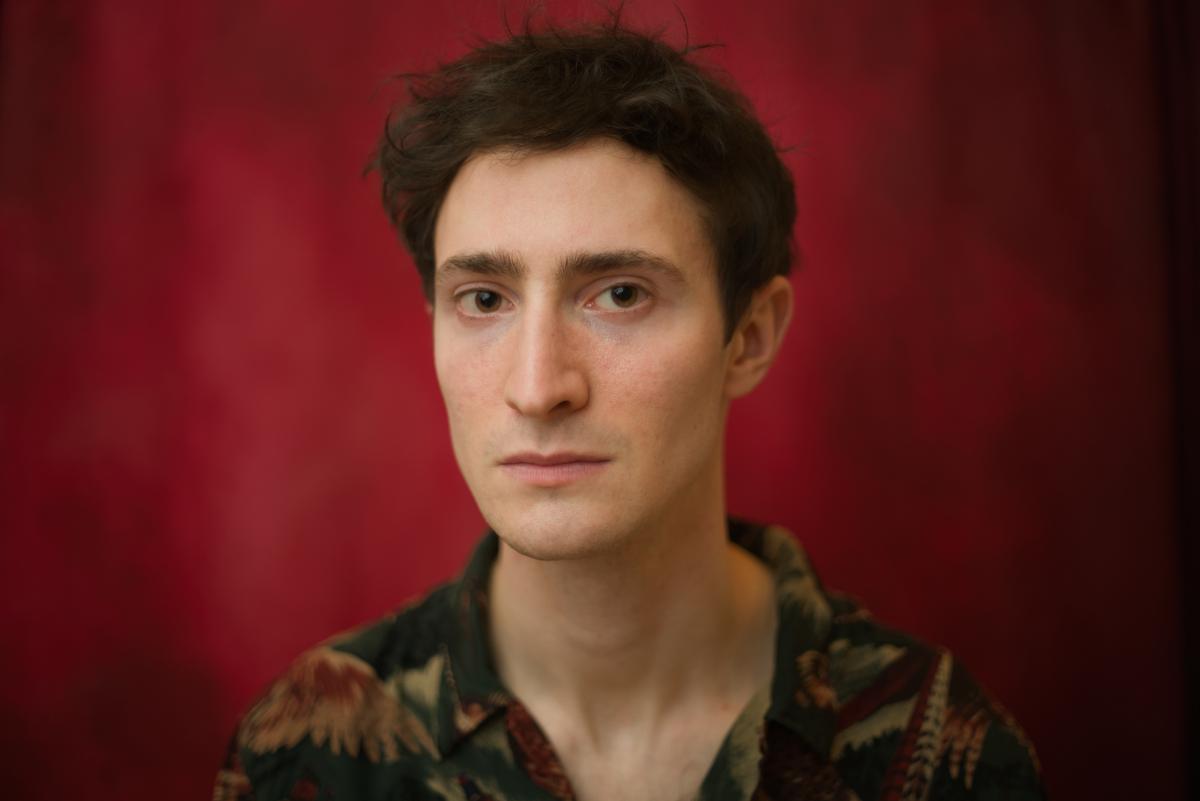
Idan Weiss
| Photo Credit:
Special Arrangement
In a previous interview with this journalist, Agneiszka had said that she was grateful that nobody else’s eye fell on the gifted stage actor and was perhaps waiting to be discovered by her. Idan says it helped that he didn’t have an image. “But having done little film work made doing intimate scenes a bit difficult.” To play someone who dissects himself like a fly under a microscope, as part of the preparation, Idan locked himself in a room for two months and read every single thing about Kafka, including his novels, diaries, and short stories. “I moved out only when the daylight began to dim. Agneiszka told me that he was a bit neurotic!” His strong background in experimental theatre makes him realise the complex character. “While playing a role, there is always a struggle between how much of yourself, your emotions, you bring to the role and how much you lose yourself to the character — a combination of the two works for me.”
He thanks Agneiszka for providing him with the energy-filled atmosphere to do his thing. He refers to the haunting sequence in which he indulges in calisthenics. “It is a reference to the system of calisthenics popularised by Danish athlete J.P. Muller that Kafka practised. The scene helps you understand the man.”

Impressed by Payal Kapadia’s All We Imagine As Light, Idan is open to working on an Indian film. “Now I want to play something opposite to Kafka. I am working on an ecological thriller, a French-German co-production, where I play one of the three activists who try to die by suicide.”
For now, Idan is on his way to Los Angeles to support Agneiszka’s yet another shot at the Oscars. “I will do my very best, but I am a guy who looks for acceptance rather than attention,” he logs off.
Franz was screened as part of the Polish Focus at KIFF 2025
Published – November 10, 2025 02:28 pm IST