




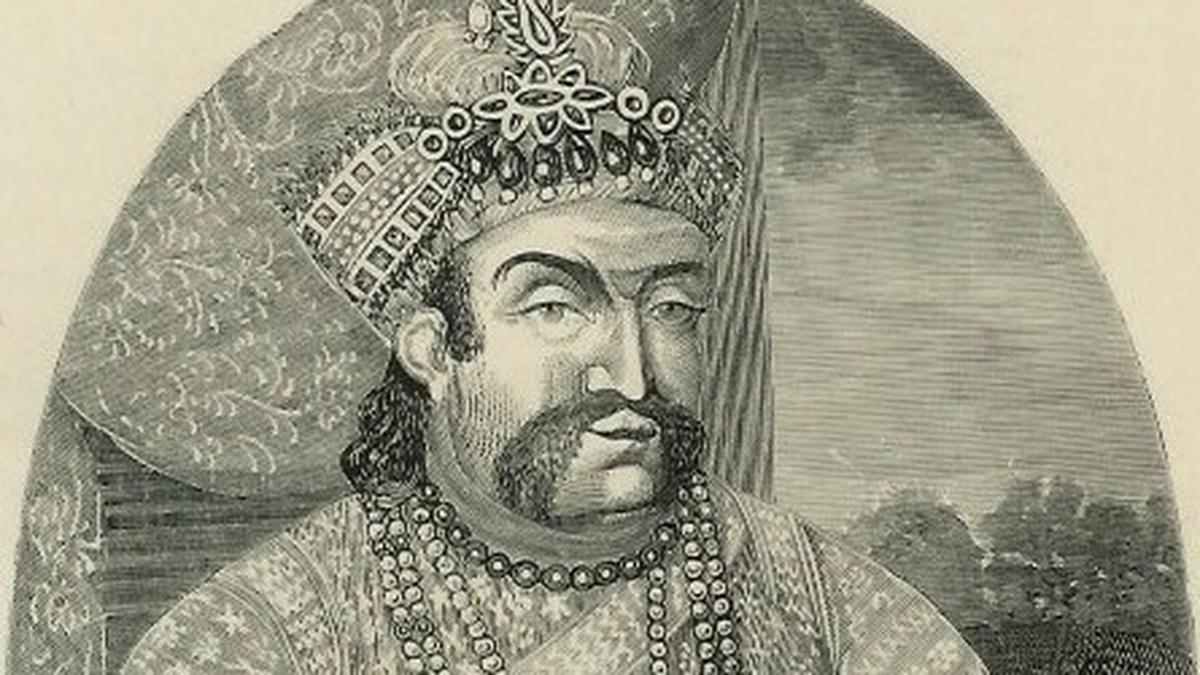


Wajid Ali Shah, the last Nawab of Awadh. Photo: Wikimedia Commons
Old Lucknow will come alive in Kolkata this month with two events — a heritage walk and a two-month long art exhibition — that will not only celebrate Wajid Ali Shah, the last Nawab of Awadh who stood for communal harmony, but also look beyond what is already known about him.
In the exhibition, titled Shahrashob — Letters between Lucknow and Calcutta and to be held from November 23 to January 20 at Studio Bari, the works of artist Soumyadeep Roy, one of whose favourite subjects happens to be the Nawab, will be based on eight years of his research on the links connecting the two cities.
“The back and forth between the two cities led to the publication of several seminal works. Then there were artists travelling from Calcutta/Santiniketan and working in Lucknow, like Lalit Mohan Sen and Asit Haldar — that’s another thing I am touching upon. There are also drawings I’ve done on the letters that Satyajit Ray wrote to his mother from Lucknow while he was still a college student. Then, of course, I’m presenting all the people who migrated from Lucknow to Calcutta during Wajid Ali Shah’s time and their almost unknown stories,” said Mr. Roy.
Manzilat Fatima, foodpreneur and great-great granddaughter of Wajid Ali Shah and his wife Hazrat Mahal, who will be inaugurating the exhibition, said the Ganga-Jamuni Tehzeeb (culture of communal confluence) had reached its peak during the reign of Wajid Ali Shah in Awadh.
“He not only pioneered mixed cultural celebrations, he personally practiced and promoted them. There are stories that during Janmashtami, he played Krishna with a bunch of gopis on the banks of River Gomti. During Basant Panchami and Holi, he participated actively in the celebrations. His life in Metiabruz [near Muslim-dominated Kidderpore in Kolkata, where he settled after being exiled by the British] reflected the same living style. Today Awadhi cuisine in Kolkata, biryani in particular, is a celebration of the same culture,” Ms. Fatima said.
The heritage walk, titled Biryani and Beyond, will take place on November 29 and will be essentially a food walk where participants will get to taste traditional but lesser-known delicacies that will be accompanied with stories of migration, culture and cuisine.
“From age-old bakeries to Mughlai eateries to traditional sweet and snack shops, Kidderpore’s culinary landscape reflects centuries of cultural exchange shaped by traders, migrants, and local communities. This shared passion for food not only preserves the neighbourhood’s heritage but also acts as a unifying thread that fosters harmony and a sense of belonging among its people. The effort is to unite people against hate, because food can help to bridge the gap,” said Sabir Ahamed of Know Your Neighbour, the social initiative that is organising the event.
“Our walk would contest the stereotypical notion of Kidderpore being a Muslim ghetto. We would highlight varied eateries that challenge the politics of misrepresentation of the area’s social, cultural, and linguistic lineage, something that has been vibrantly co-existing from the end of the 19th century until today, reflecting the Ganga-Jamuni Tehzeeb,” said Antara Mukherjee, a professor of English and a life member of Know Your Neighbour.
Published – November 20, 2025 09:23 am IST