




Speaking at the inaugural Tribal Business Conclave in New Delhi on Wednesday (November 12, 2025), Commerce and Industry Minister Piyush Goyal announced that the application fee for the Geographical Indications tag (GI tag) had been reduced to ₹1,000 from ₹5,000. He urged tribal artisans to register and protect traditional products and crafts. He further assured the support of his Ministry in creating export and e-commerce linkages for tribal enterprises, as well as international warehouses for their products.
The conclave, held by the Ministries of Tribal Affairs and Culture, and the Department for Promotion of Industry and Internal Trade (DPIIT) at the Yashobhoomi Convention Centre, featured panel discussions and masterclasses on topics like financing innovations for and investments in tribal enterprises, partnerships, industry linkages, and skilling, among others.
Addressing the event, Mr. Goyal said schools, universities, industries, and the government “must work together” to ensure that products made by tribal artisans and craftspersons reach the larger domestic and global markets. The Commerce Minister further assured the “full support” of his Ministry and the DPIIT in this mission, by creating export and e-commerce linkages and facilitating international warehouses for tribal goods.
The conclave was held as part of the Government of India’s Janjatiya Gaurav Varsh celebrations, to mark the 150th birth anniversary year of tribal icon Birsa Munda. Tribal Affairs Minister Jual Oram thanked Prime Minister Narendra Modi for coming up with the initiative to celebrate the icon’s birth anniversary year in this manner.
Mr. Oram stressed that when he became the first Tribal Affairs Minister of the country at the turn of the 21st century, the country barely had the means to understand what these communities were capable of, the products they could produce, and the national wealth contained in this knowledge. He said this conclave was a fresh opportunity for all of this to reach the entire world.
Minister of State for Tribal Affairs Durgadas Uikey added, “This ‘Tribal Business Conclave’ is not just a conference, but a movement — a unique step towards economic self-reliance for tribal society, access to markets, and gaining global recognition.”
Explaining the concept behind holding this Tribal Business Conclave, Himani Pande, Additional Secretary, DPIIT, said, “The idea was to get tribal enterprises and get them to work with formalised financing mechanisms because that is one of the problems we find, which is that credit is not available. There were pitching sessions where such enterprises were being pitched. There were interactions with financers. Another important part of this conclave was to figure out how they can promote and pitch better.”
Some of the topics around which panel discussions were held included branding, market access, and value-creation; sustainability and geographical identity; financing innovation and equity; and art, identity, and indigenous expression. Further, masterclasses were held on building value chains for forest produce, micro-entrepreneurship readiness index, tribal innovation, aesthetics, global branding, and structuring social capital for community-led growth.
The Commerce Ministry, in a statement, said that at the conclave, a total of 115 enterprises were selected after two rounds of pitching sessions at the Roots to Rise pitch event. Of these, 43 already had DPIIT registrations, the Ministry said, adding that 10 incubators had agreed to provide support to these selected enterprises. The government also said that 57 enterprises received interest in investment from over 50 venture capitalists and investors, who participated with a total commitment of more than ₹10 crore.
“These start-ups and enterprises have created around 1,500 direct employment and more than 10,000 indirect employment, cumulatively serving over 20,000 tribal people in various sectors,” the Ministry said.
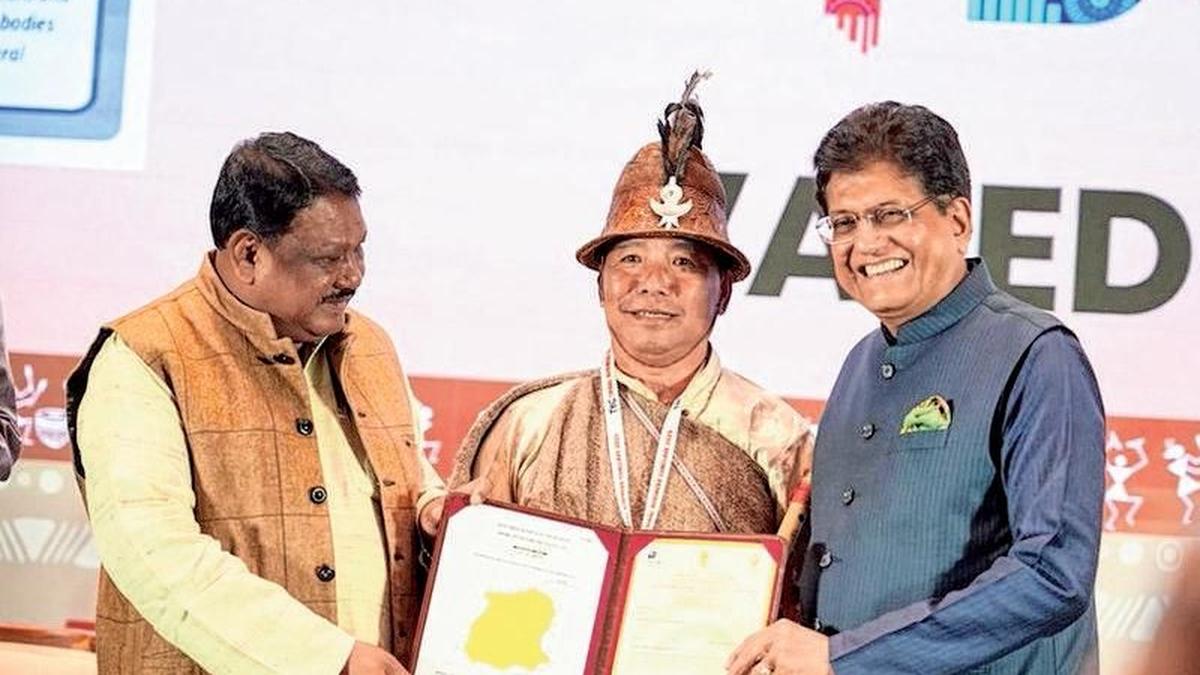
The event on Wednesday also saw GI tag certificates being distributed for crafts and products such as Kannadippaya (Bamboo Mat) of Kerala, Apatani textile of Arunachal Pradesh, Marthandam honey of Tamil Nadu, Lepcha Tungbuk of Sikkim, Bodo Aronai of Assam, Ambaji White Marble of Gujarat, and Bedu and Badri cow ghee of Uttarakhand.
Further, at the conclave, the Gramya Yuva Arth Niti (GYAN) was also launched. A public policy interactive lab, GYAN is meant to use real-time pilots, policy frameworks, digital innovation, and capacity-building to “create scalable solutions for inclusive and sustainable enterprise growth”. The government said that this lab will roll out pilots like the Tribal Entrepreneurship Index and micro-equity-based incubation models throughout the next year, calling this a collaboration between government, academia, and industry.
The Tribal Affairs Ministry also announced a Tribal Affairs Grand Challenge at the conclave, inviting start-ups and enterprises to design solutions for tribal communities.
Published – November 12, 2025 09:21 pm IST