


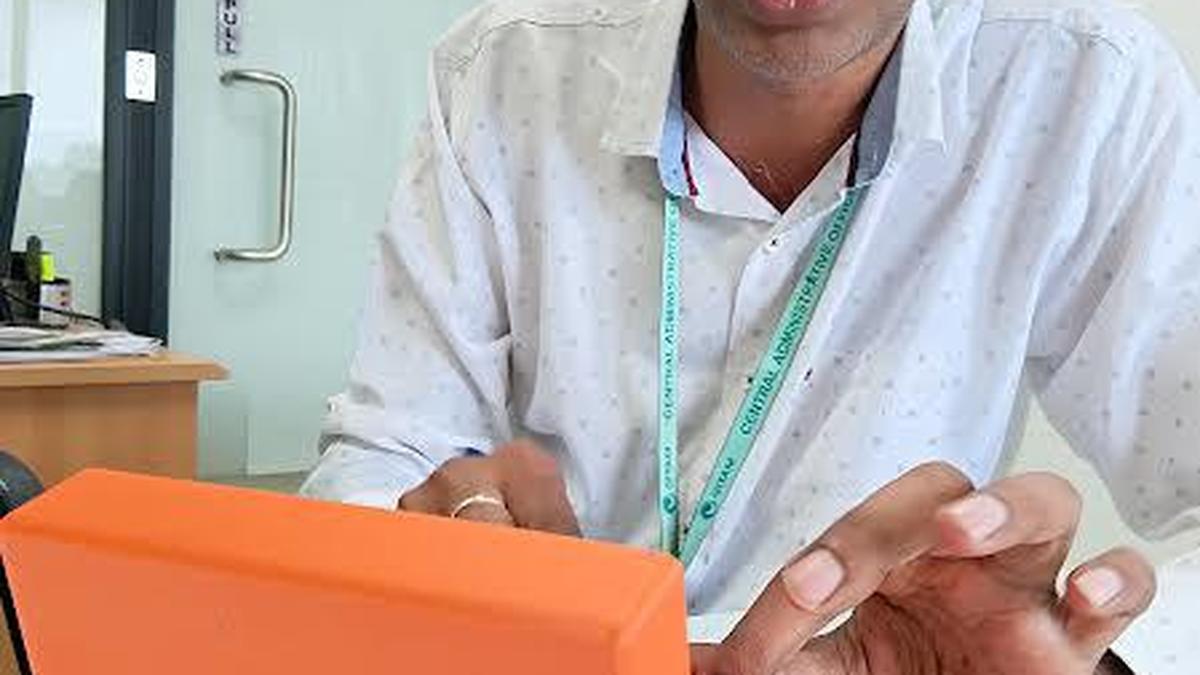


Mohammed Khwaja Muinuddin Chisti, Assistant Professor, Department of EECE, GITAM-deemed-to-be University, with the Learning Assistant Embedded Kit (LAEK) he designed for visually impaired students.
| Photo Credit: The Hindu
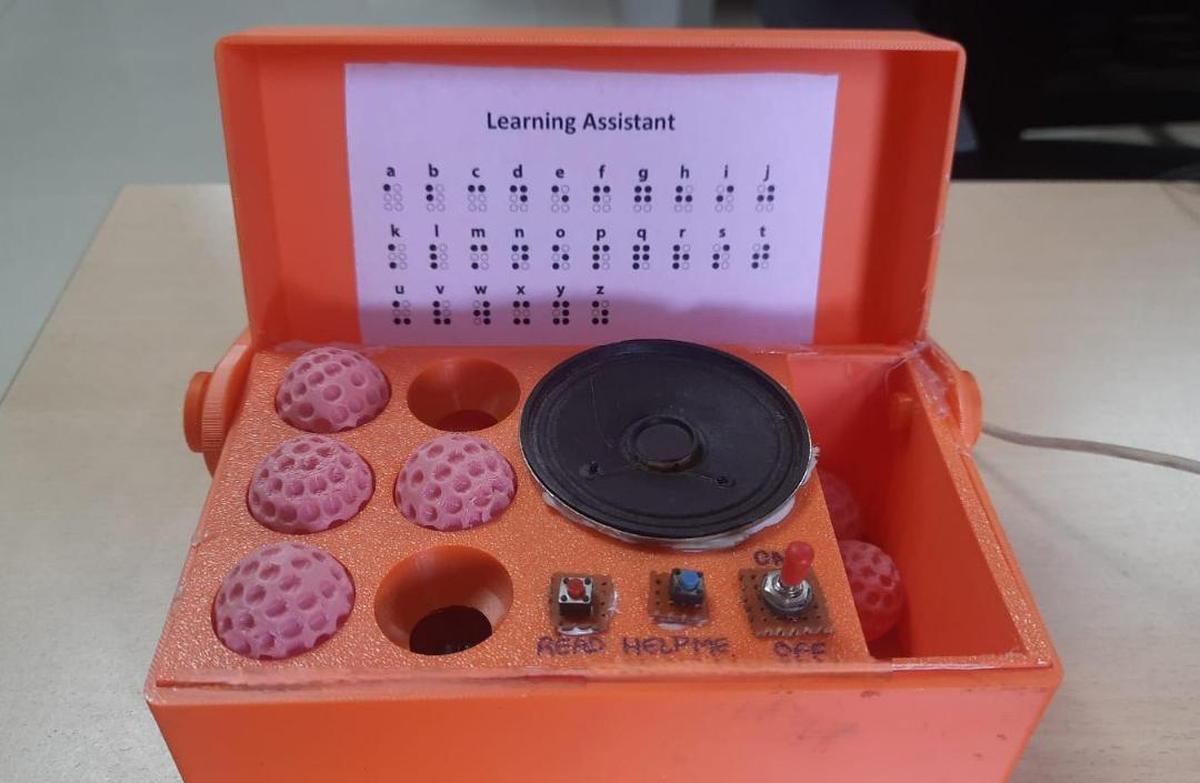
The Learning Assistant Embedded Kit that allows visually impaired students to learn Braille independantly.
| Photo Credit:
The Hindu
Teaching Braille to visually impaired people usually requires considerable time and individual attention from instructors.
For these reasons, Braille literacy rate in the country is low (1%, much lower than the general literacy rate of 77.7%).
To address this challenge, Mohammed Khwaja Muinuddin Chisti, Assistant Professor, Department of EECE, GITAM-deemed-to-be University, designed an innovative Learning Assistant Embedded Kit (LAEK) to empower visually impaired students to learn Braille independently. He says he has registered for a patent on his invention.
The device consists of a 3×2 hollow hemispherical Braille cell equipped with sensors that accurately detect embossed patterns placed by the student. The system decodes these patterns and provides audio feedback, announcing the corresponding letters, numbers or instructions.
“This technology will enable students to learn and modify Braille independently, significantly reducing their dependence on teachers. It will enhance the self-learning experience, build confidence among learners and enable teachers to effectively manage multiple students without overloading them – making the teaching-learning process more efficient,” said Mr. Mohammed.
While appreciating Mr. Mohammed’s innovation, Dosapati Chaitanya Sai Ratna Kumar, Regional Centre Manager, Visakhapatnam, Vision Aid, and who suffers from 30% visual impairment said: “India is home to a third of the world’s blind people. Braille is currently an outdated method for the visually impaired after the introduction of the smart education system. Almost 99% of the visually impaired rely on smart gadgets like laptops, smart phones, apps, to express themselves either orally or through writing.
Speaking to told he Hindu, Mr. Chaitanya said: “On behalf of the visually challenged, I would suggest that technologist should work on upgrading the white cane (which helps the visually impaired navigate safely by sensing obstacles like side-walks and stairs and alerting others about their vision impairment) with Bluetooth enabled audio sensors. We want white canes that can guide us more effectively by detecting objects say a dog, a snake or a small pothole on the road. The white canes must be synced to our smartphones. If it is developed, it can benefit people with 80% to 100% visual impairment. More importantly, these devices must not be costly.”
Eom
Published – November 24, 2025 09:06 pm IST