



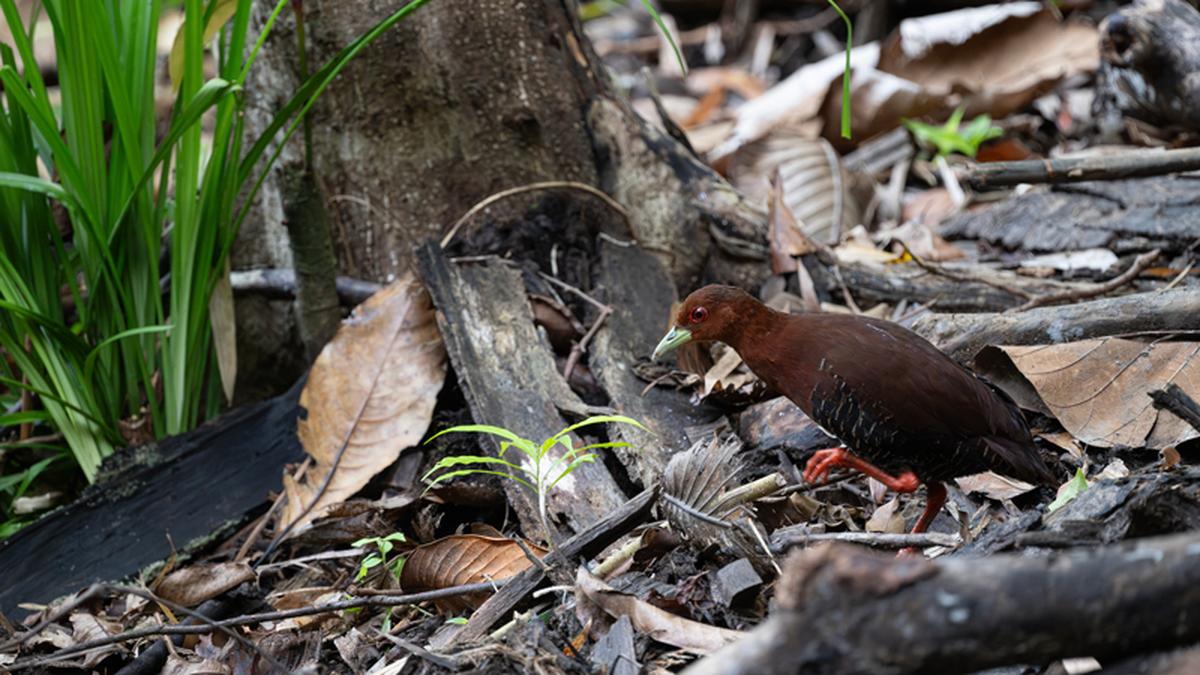

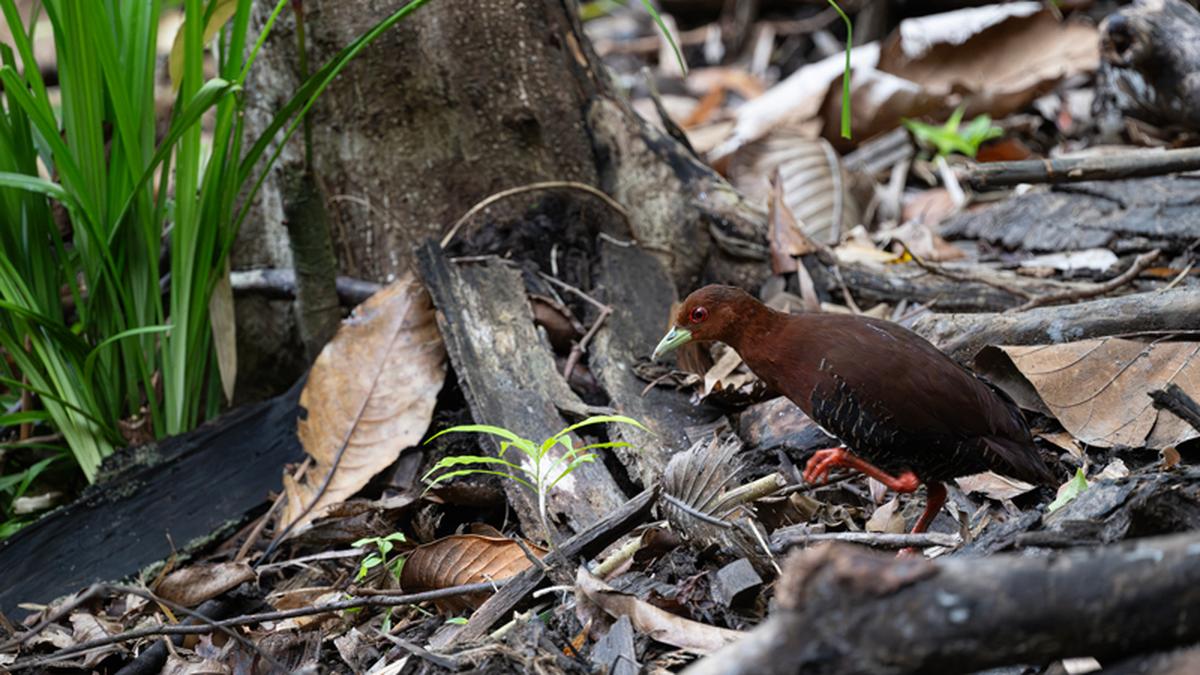
Great Nicobar Crake. Photo credits: Special Arrangement
A new species of snake with only four records to date, and a potentially new species of bird photographed only thrice in over a decade, are among the latest finds from the site of the Great Nicobar Island mega infrastructure project. Described in November 2025, the two are among the nearly 40 new species reported from here since 2021. These include two species of frogs, four crabs, two geckos and a number of insects including flies, moths and beetles. Nearly half of these have been described in 2025 alone.
Named after Steve Irwin
Named Lycodon irwini after the renowned Australian zookeeper Steve Irwin, the new wolf snake was described in the journal Evolutionary Systematics by a team of researchers that included R.S. Naveen and S.R. Chandramouli of Pondicherry University, Zeeshan A. Mirza of the Max Planck Institute for Biology, and naturalist Girish Choure. Given the snake’s rarity, its sharply restricted range and potential threats, the researchers have recommended that it be classified as “Endangered” under the International Union for Conservation of Nature (IUCN) Red List criteria.
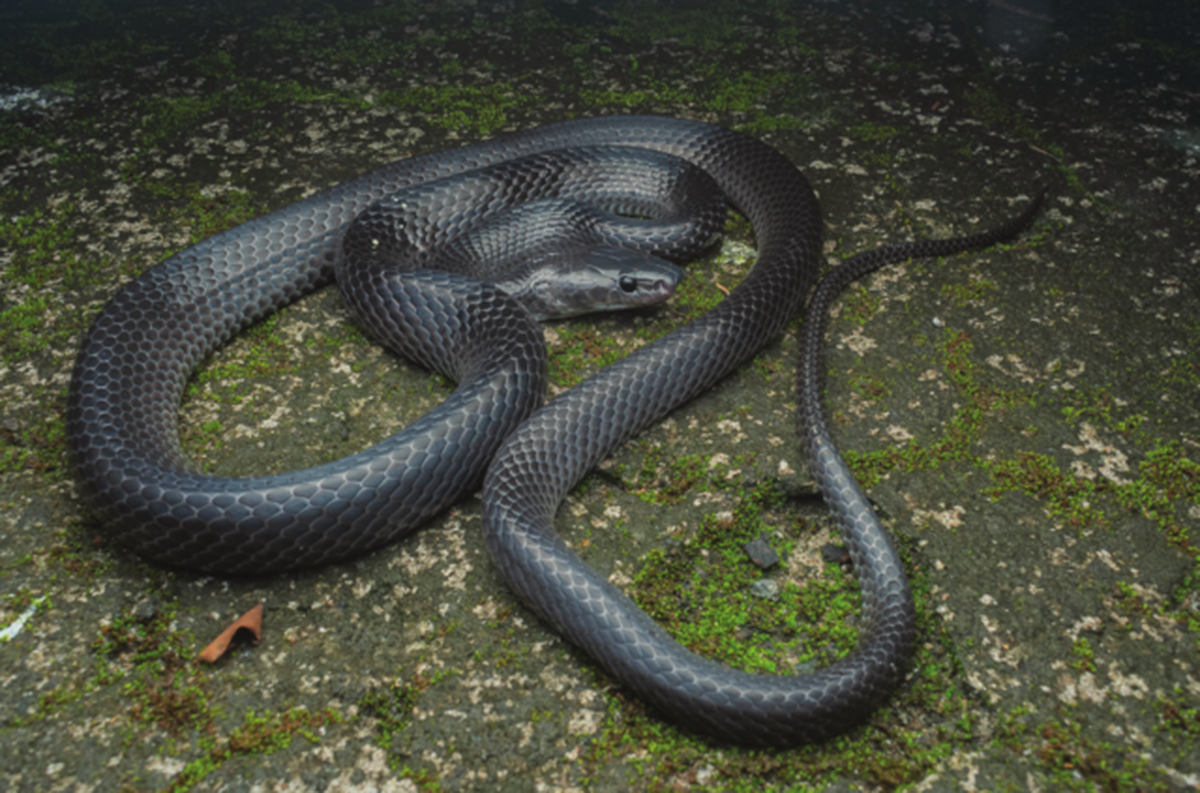
A female Lycodon irwini.
| Photo Credit:
Wikimedia Commons
A new species of crake?
It is from the same east coast of Great Nicobar that birders Pia Sethi and Nitu Sethi from Delhi and Vikram Shil from Port Blair had recently published a paper on the Great Nicobar Crake species Rallina. Writing in the journal Indian Birds, the authors note that very little is known of the “biology, distribution, or population status” and suggest this could be a new species to science given the “distinctive set of [its] morphological features, including several novel ones”.
Great Nicobar is reported to have 650 species of plants and over 1,800 species of fauna. The region also boasts of remarkable genetic biodiversity, exhibiting about 24% endemism among some faunal groups. The regular discovery of new species, including the latest finds, highlights the island’s rich biodiversity.

“I am delighted to hear of the new snake and of a new species of crake that has been tentatively described from Great Nicobar,” said Asad Rahmani, prominent ornithologist and former director of the Bombay Natural History Society. “Great Nicobar has perhaps the finest tropical rain forest left in India and this calls for its total protection.”
(Pankaj Sekhsaria is author/editor of seven books on the A&N Islands, including The Great Nicobar Betrayal (The Hindu Group, 2024) and Island on Edge – The Great Nicobar Crisis’ (Westland 2025). Views are personal)
Published – November 30, 2025 09:26 pm IST