


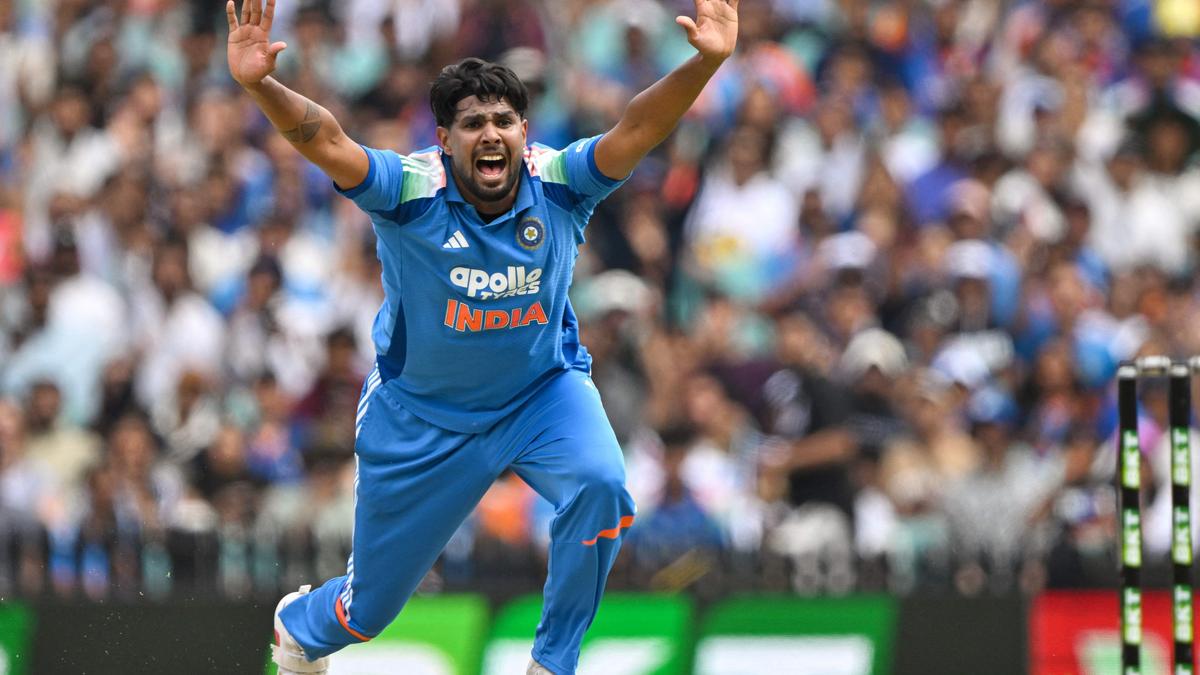

For any bowler, their first international wicket will remain one to cherish and savour, for obvious reasons. When that wicket corresponds to the name of Travis Head, it becomes even more special. And when it comes through a delivery for the ages, well…
In his second Test as stand-in captain in Perth last November, Jasprit Bumrah produced numerous unplayable deliveries on the first day at the Optus Stadium. He had to; having chosen to bat, he watched with growing consternation as Mitchell Starc, Josh Hazlewood and Pat Cummins, his opposite number, made the most of helpful conditions to send India, minus Rohit Sharma, packing for 150.
Fortunately, if there is any good fortune associated with being bowled out in 49.4 overs on day one of a five-match series, India still had a session to make optimal use of the best bowling phase of the game. Bumrah got down to business, firing out debutant Nathan McSweeney, Usman Khawaja and Steve Smith, trapped leg before first ball, to leave the Aussies hopping at 19 for three.
Enter Head, to join Marnus Labuschagne. The left-handed South Australian had been a thorn in India’s side on numerous occasions, including in the finals of the World Test Championship and the 50-over World Cup the previous year. Head is the living example of ‘offence being the best form of defence.’ He thinks little of making room and crashing the ball through point, or picking it up and depositing it over the infield on the leg-side, no matter what the situation of the game is. An hour of Head, and Australia would have rapidly closed in on India’s anaemic tally.
The arrival of Head at the batting crease heralded the arrival at the bowling crease of Harshit Rana, the strapping 22-year-old on debut. Harshit didn’t have a great deal of First Class experience — he had played less than 10 matches — but was picked on potential, promise and faith, if not hope. The young man from Delhi largely made a name for himself with Kolkata Knight Riders in the Indian Premier League, but this was an entirely different challenge. Australia in Australia, never mind the score, is the most demanding of initiations.
At 19 for three after seven overs, most teams would have focussed on survival and innings-building, but Australia are not most teams and Head is definitely not most batters. In Harshit’s introduction after a three-over spell by Mohammed Siraj, the left-hander sensed a chance. A chance to target the newcomer, a chance to impose himself, a chance to feed on nerves and tension, a chance to show who the boss was.
Harshit’s brief would have been equal parts to maintain the pressure with wicket-taking deliveries, equal parts to enhance the pressure with consistent accuracy. Determined not to let him settle down, Head seized on two short balls in the right-arm quick’s first over, lashing the first to square third-man for four and then brazenly upper-cutting in the same direction for another boundary.
Within 12 deliveries, Head had raced away to 11. So what if it was 19 for three? So what?
Then came the moment that Harshit must have dreamt of a million times after he was told he would be making his Test debut. His seventh ball in Test cricket was delivered from round the stumps, a little wide of the crease. It slanted in with the angle, the length somewhat indeterminate in that Head couldn’t commit to playing off the front-foot with confidence, he couldn’t go right back either. Stuck in the crease, he hopefully offered a hesitant prod, playing the initial line of the ball. The little orb, however, had a mind of its own, perhaps taking its cue from the wobble seam Harshit had turned to. On pitching, it snaked away from Head — horror, horror — and whizzed past his outside edge to hit the top of off. Top of off. That’s what the coaches tell you to target, and that’s what the bowler did. Not just target but find the target. The bails went flying, Head went scurrying to the dressing room, Harshit went bananas, celebrating with gusto and justification.
Those seven balls seemed to have provided a window to Harshit’s mind, to his heart. The bloody-mindedness not to allow Travis to get into his head. The ability to bounce back after receiving stick, however brief. The ability to produce magic balls. The ability to hoodwink the best. Harshit seemed a good punt at the time, a feeling that intensified when he cleaned up Nos. 9 and 10, Starc and Nathan Lyon respectively, to finish with excellent returns of three for 48 in his first bowl at the highest level.
In a 51.2-over innings where the next highest economy rate was Bumrah’s 1.66, Harshit had gone at 3.13 to the over. It happens, you said. That’s the price of looking for wickets. That’s also why one for 69 from 13.4 second-innings overs flew under the radar. But none for 86 from 16 overs in the pink-ball Test, no less, at the Adelaide Oval a fortnight later was harder to overlook. Harshit hasn’t played any of India’s 10 Tests since.
Harshit might be out of favour so far as Test selection is concerned — he was only held back from the India-A squad for the Leeds game against England in June as cover, before being released after the five-wicket defeat — but is making strides in the two white-ball versions, and especially in the 50-over format where he boasts a terrific strike-rate of 21.3 deliveries per wicket. Since taking three for 53 on debut at the beginning of the year against England in Nagpur, he has picked up 16 wickets in eight outings, more than making up for an economy of 5.82. In Australia last month, he took six wickets in the three matches, including a career-best four for 39 in the consolation win in Sydney when he brought his wide repertoire into play. In T20Is, he still has a way to go to justify a very high economy of more than 10.5 an over.
Strong support
Harshit has been in the eye of a storm not of his making, his sustained selection questioned in various quarters. Gautam Gambhir, the tetchy head coach, made an aggressive and stirring defence of his fellow Delhiite, cautioning the critics from refraining from personal attacks against the ‘23-year-old boy’ – wonder how he will refer to Vaibhav Suryavanshi, all of 14! — and throwing his lot behind Harshit. The latter will surely realise that he needs to justify this show of trust and confidence, and the only way he can do it is by pulling his weight on the park.
For a 23-year-old playing professional cricket in this era, Harshit isn’t the fittest by a long way. Ponderous and slow-moving on the field, he has much work to do in an era where fielding is no more an afterthought but as integral as the other two ‘primary’ disciplines. Fitness and fielding are proactive attributes that aren’t impossible to master through commitment, tireless effort and a determination to not let oneself and the team down. Constant travel and the increasing demands of sustained matchplay might sometimes act as a deterrent, but for one so young and still so new in the unforgiving cauldron of international cricket, that is no excuse.
It is incumbent upon Harshit to get lighter on his feet and to provide the other bowlers with the same support that he would expect from his fielders when he is thundering in to bowl. If he is to be a permanent member of India’s white-ball squads for the immediate future, and indications are that he will be so, then he can’t afford to be at anything less than his best. Harshit has shown himself to be a quick learner, so one can only hope that that spills over to his fielding too, especially if he gets a bite at the cherry in T20s ahead of Arshdeep Singh, the only Indian bowler with 100 wickets in that format internationally.
Skills with the bat
One of the reasons for Harshit being preferred to Arshdeep is his perceived skills with the bat. A First Class average of 31.18 from 14 matches, inclusive of an unbeaten 122 and two other 50-plus scores, indicates reasonable batting prowess; 28 sixes in 19 innings which have yielded 499 runs prove that he is also a ferocious ball-striker (first-class strike-rate 82.34) though he hasn’t been required to bat a great deal for the country, given how bountiful the top-order has been in the last year since his debut.
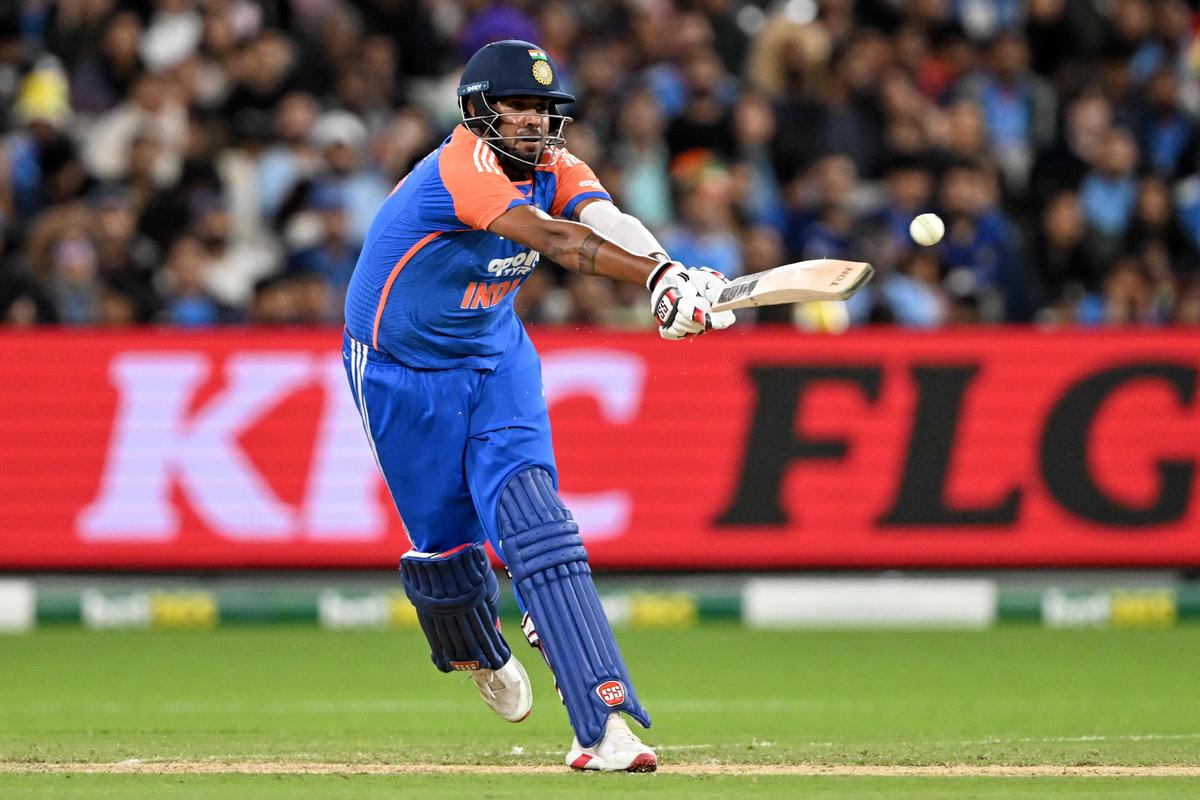
But when he did get a chance to showcase his skills in Melbourne the other night, Harshit wasn’t found wanting in the second T20I. India were staring down the barrel, 49 for five, when he linked up with the punishing Abhishek Sharma. Harshit held his own during a stand of 56, making 35 off 33 and showing glimpses of what he can do with the bat from time to time. Especially in India, we are quick to affix labels and therefore the temptation of lump Harshit in the ‘all-rounder’ category, but let’s just accept him for what he is – an attacking, aggressive, craft, intelligent if expensive paceman who can strike important blows lower down the order on a sporadic basis. At least for the time being.
India don’t play a lot of Test cricket in the next 10 months. Within the ambit of the WTC, they take on South Africa in two home matches this month, then must wait until August for their next assignment, a two-Test showdown in Sri Lanka. From a red-ball point of view, there isn’t a lot to look forward to for Harshit, though for now, he is more of a limited-overs specialist and that’s where the big prize is, the T20 World Cup at home and in Sri Lanka in February-March. When Hardik Pandya returns from injury, Harshit is unlikely to be a regular member of the playing XI but if he can use the time with the team to work on his cricket — fielding, bowling and batting, potentially in that order – the world could be his oyster. Over to you now, Harshit Rana.