



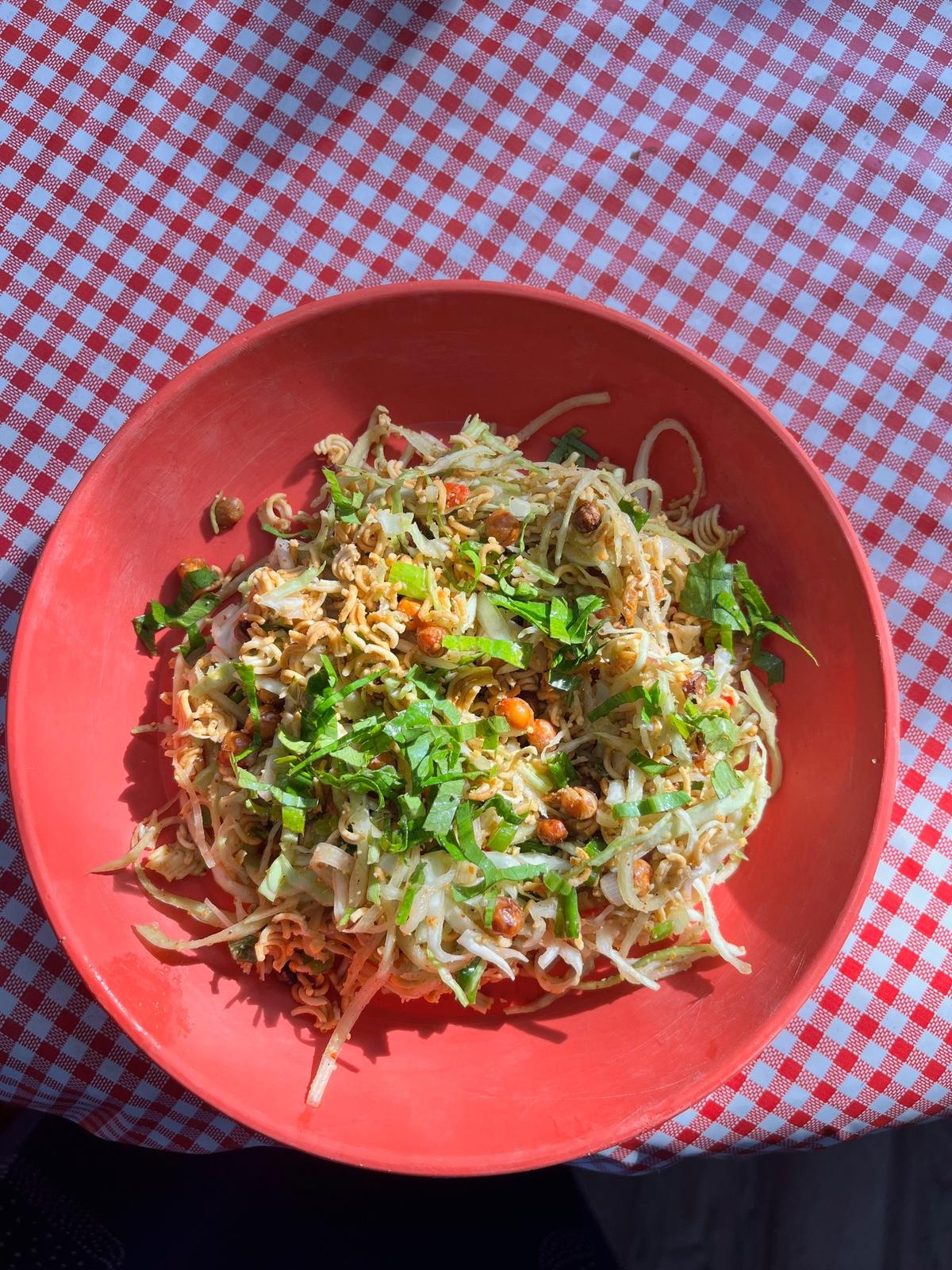
Singju at Simkha Kitchen
| Photo Credit: Prabalika M Borah
Singju is one of those dishes that tells you where it comes from before you even taste it. Born in Meitei kitchens and later embraced by various ethnic communities across Manipur, it began as a simple side dish — quick to assemble, fresh, and always shared. Think of Singju as a hearty salad, that is fiery and tangy without the use of store bought sauces. Over the years, it has stepped out of the sidelines to become a familiar snack across the Northeast. What started as a modest mix of vegetables and roasted white peas powder has grown into a symbol of the region’s snacking culture, shaped by whatever is seasonal and close at hand.
As Singju travels beyond Manipur, it continues to evolve. Each new version keeps the core idea intact — fresh vegetables, texture, ease — while leaving room for instinct and local quirks. That mix of continuity and reinvention is what makes Singju so compelling to follow, and even more interesting to taste.
One of the most memorable versions I came across was at Simkha Kitchen, The Aakhikh Cafeteria, a modest canteen-style spot in Silpukhuri, Guwahati, known for its pocket-friendly plates. Curious, I asked if they could prepare Singju at my table, and the staff agreed immediately.
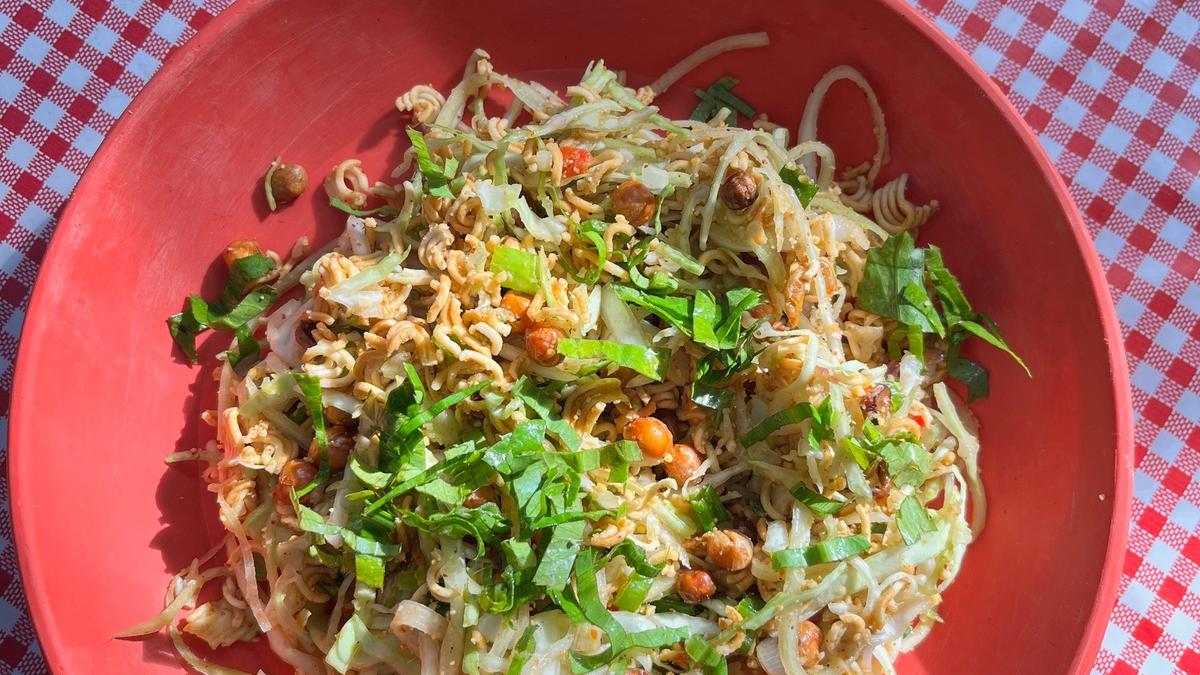
A few minutes later, a platter arrived with neat piles of julienned cabbage, raw papaya, chopped onions, spring onions, coriander and fish mint. As everything came together in a bowl, the cook slipped in half a finely chopped ghost chilli — fiery enough to make its presence known from a distance. A handful of roasted peas followed, along with a good scoop of coarse white peas powder. What seemed to be missing in this Singju was the perilla seed powder.
This rendition came with an unexpected but welcome addition: raw Wai Wai noodles for crunch. After a quick toss and a squeeze of lemon to brighten the mix, the bowl was finished with more coriander and fish mint.
The first spoonful unfolds in layers. The ghost chilli is what strikes first; sharp and unapologetic. Then comes the crunch, with the Wai Wai noodles weaving through the vegetables. The lemon offers brief respite before the heat returns, and the white peas powder brings a quiet, smoky depth. Surprisingly I am told no two Singju’s taste the same. Sanjay Ingti who is member of the kitchen staff at Simkha kitchen said, “That is because we have to make do with the vegetables available locally. Traditionally thin slices of lotus stem is also used. We avoid using the fermented fish paste because not everyone likes the smell and taste of it.”
Vandana Khatiwada who grew up in Manipur says Singju is an anytime food. She added, “In Manipur it is also enjoyed alongside pakodas with chai. Call it a side dish, main dish or snack it fits any category of a meal.”
Sanjay also mentioned that their non-vegetarian version includes thin strips of roasted chicken—an easy protein lift to a snack already designed to win you over.
Ringshungla Horam from Manipur says, “The key to a Singju is finely chopped fresh vegetables of your choice.”
Published – December 05, 2025 01:19 pm IST