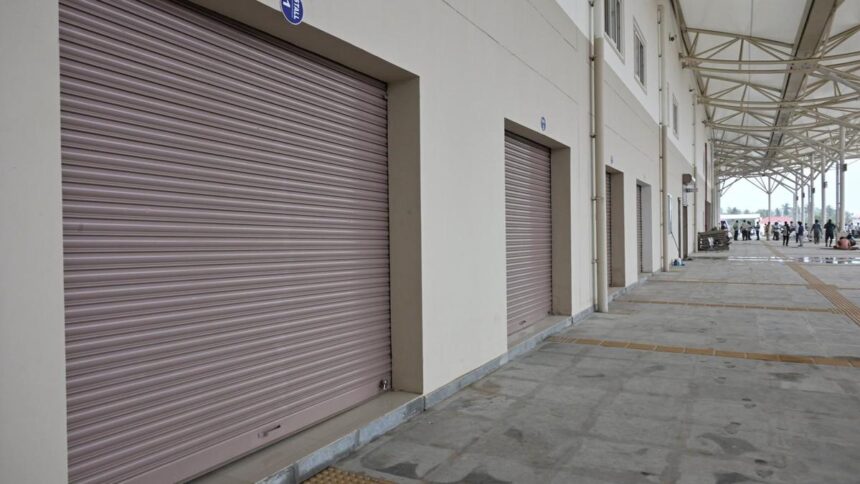




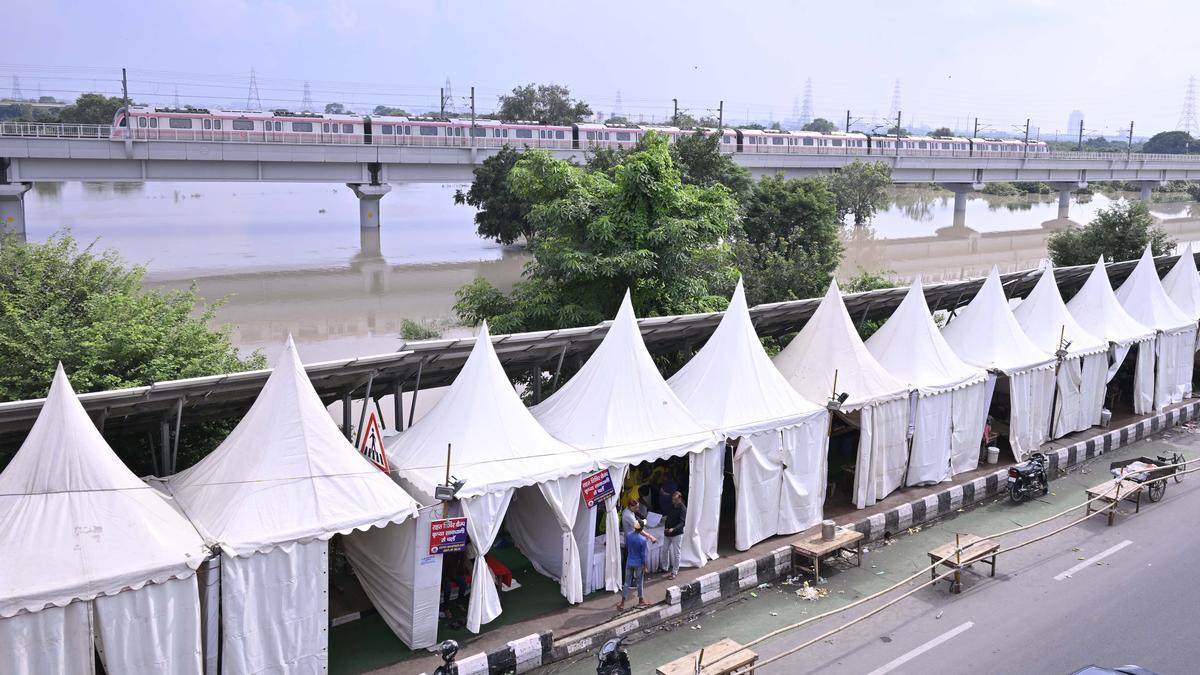

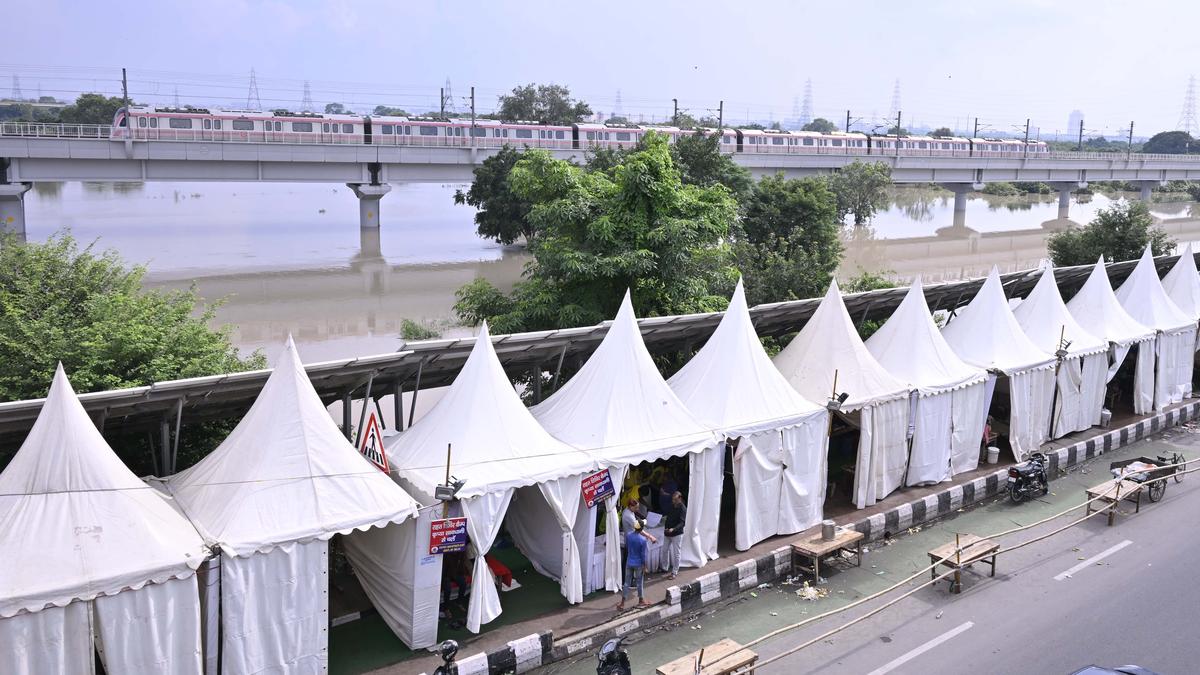
Relief camps sheltering displaced families near the Yamuna river in east Delhi on Friday.
| Photo Credit: SHIV KUMAR PUSHPAKAR
NEW DELHI
” As the Yamuna waters subsided on Friday, doctors in Delhi warned of serious health consequences arising from unsanitary relief camps, absence of toilets, and shortage of clean water and food.
At Vijay Ghat, rows of tents house displaced families. Outside, a Municipal Corporation of Delhi health advisory reads: “Don’t let mosquitoes breed”. Inside, however, women and children say they are forced to walk long distances through stagnant water to relieve themselves in the open.
On one side of the tents lies the main road; on the other, floodwater that has submerged their homes. Radha Devi, 35, mother of three, said: “There are no washrooms set up by the authorities. We search for places in the water. It is very unsafe for women and children, especially at night.”
Kalawati, 55, added: “When we go near the water at night, we see snakes. Mosquitoes bite us constantly, and some children are already sick. Some of them might have dengue.” Young girls like Radha, Chanchal, and Mansi say they go to the toilet in groups but still feel unsafe. Residents of a colony near Bela Road moved into tents on Tuesday and have had no access to washrooms or bathing facilities since.
Advisories aplenty
Dr. Rajat Sharma, a community medicine doctor at Guru Teg Bahadur Hospital, said: “Diseases like cholera, typhoid, hepatitis A and E are common during this season. Lack of toilets and sanitary napkins increases the chances of contamination. Authorities must set up clean toilets and ensure proper waste disposal to prevent outbreaks.”
He also cautioned that “vector-borne diseases like dengue and malaria may spread due to stagnant water. Medical teams should be stationed at camps to provide timely and correct diagnosis and treatment of diseases”.
Despite widespread complaints of mosquito bites, nets are absent; and only advisories have been put up.
Surbhi Singh, gynaecologist and founder of NGO Sacchi Saheli, which is distributing medicines and sanitary napkins across north India, said: “Most requests we have received are for fever, cold, and oral rehydration solution as diarrhoea is common. Many women also need sanitary napkins and medicines for urinary tract infections,” she said.
Published – September 06, 2025 01:26 am IST