



Story so far: Finance Minister Nirmala Sitharaman introduced the Health Security se National Security Cess Bill, 2025 on Thursday (December 4, 2025), kicking off the Centre’s reform agenda for Parliament’s Winter session. The Bill proposes to levy cess on “machines installed, or other processes undertaken in the manufacture of pan masala” to fund India’s ‘health and national security’.
The Lok Sabha has already passed the Central Excise (Amendment) Bill, 2025 and the amended Manipur Goods and Services Tax (GST) Bill, 2025 while the above-mentioned Bill is currently slated for debate and passage. Introduced as a money Bill, the Health security se National security Cess Bill, 2025 need only be passed by the Lok Sabha. The Upper House has 14 days to provide its recommendations on such a Bill which may or may not be accepted by the Lok Sabha.

What does the Bill propose?
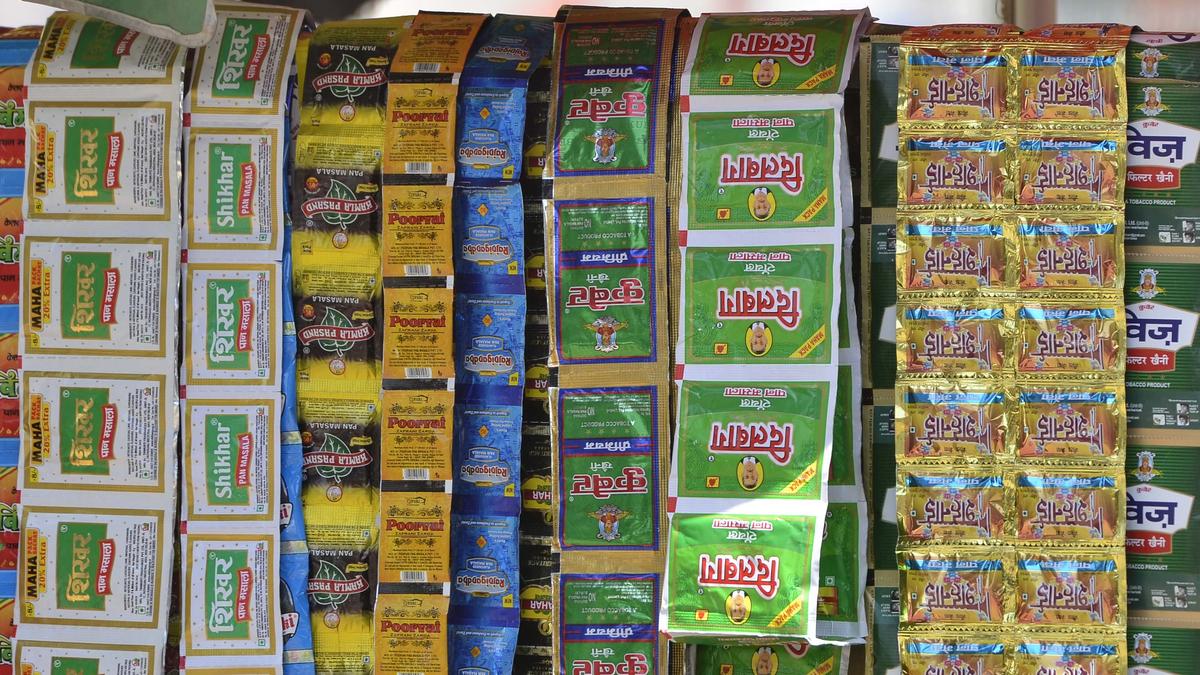
Termed the ‘Health Security se National Security Cess’, the Centre proposes to tax all those people who have machines installed for production of pan masala. The machines include fill and seal machines and any packing machine used to fill pan masala in in pouches, tins or other containers.
The cess will be decided as per number of pouches (tins or containers) produced by the machine per minute and pan masala weight packed in a pouch, tin or container. It will be collected at the beginning of each month, but no later than the seventh. Those paying the cess can self-declare the machine installed or processes undertaken in their factories producing pan masala. Centre can exempt anyone or any class from this cess, if it deems necessary in public interest.
The cess has been classified into four categories based on the number of pouches it produces per minute – upto 500, 501-1000, 1001-1500 and above 1500. Correspondingly based on the weight of pan masala packed in each pouch (varying from 2.5 grams to above 10 grams), the cess varies from ₹101 lakh per month per machine to ₹2.5 crores (approximately). It also criminalises any violations upto 5 years imprisonment.
India’s tobacco use
According to the Global Adult Tobacco Survey (GATS-2), nearly 42% of men and 14% of women in India use tobacco. Moreover, India amounts to 70% of the world’s smokeless tobacco (SLT) users i.e. gutkha, pan masala and among smoked tobacco, bidis are preferred over cigarettes, especially in rural and lower income families. As both SLT and smoked tobacco use increase cancer risk in lung, head, neck, stomach, and pancreas, India ranks first globally in male cancer deaths.
Experts found that the economic cost of both SLT and smoked tobacco amounted to ₹1.77 lakh crore in 2016-17. Centre’s ban on use of gutkha has more or less remained ineffective as the tobacco industry has ensured wide accessibility of its products via policy interference, pricing tactics, targeted marketing and dense tobacco shop networks. Though WHO has recommended taxing tobacco products at 75% of its MRP, very few have followed through. Also, study has shown that affordability of cigarettes and bidis remain the main hamper. 87% of Indian cigarette vendors sell single sticks, frequently operating near tea stalls, found research. This practice is banned in 88 countries but not in India.
What are the issues raised?
While titled ‘Health security se National security’, the Bill does not have any provisions to allocate the cess collected to anti-tobacco campaigns/schemes. In Parliament, many MPs raised this policy gap, stating that the increased cess will affect incomes of obacco farmers and labourers working in beedi rolling factories – mostly women. Opposition MPs also highlighted that the Bill was aimed to fill a fiscal hole in the Centre’s coffers due to the discontinuation of ‘compensation cess’.
Several members also highlighted that the Bill will not curb tobacco usage and only increase its illegal smuggling. Non-BJP MPs shed light that the Bill does not speak of the devolution of cess to States, while non-expenditure of other cess collected by Centre remain at an all-time high. TMC MP Sougata Roy pointed out that the Bill only focused on the machines and not the actual amount produced and decried the criminalisation of any violations.

Indirect campaign has been used effectively to advertise their products by these tobacco producing companies, adds Mr. Roy. As advertisements of gutkha, alcohol, cigarrettes are banned, these companies often display ads of ‘elaichi powder’, ‘mouth refreshner’, ‘bottled water’, produced by the same company under the same brand – thereby indirectly promoting their tobacco-based products.
In response, Finance Minister Nirmala Sitharaman has claimed that this Bill was aimed to wean farmers away from tobacco, thereby ensure decrease in tobacco cultivation, production, sale and consumption. Moreover, the passage of the Central Excise (Amendment) Bill, 2025 has ensured that Centre will be collecting higher excise duties on tobacco as compensation cess will be discontinued. Ms. Sitharaman has assured that 41% of the duties collected will be distributed among states. A similar arrangement is expected to be followed for the Health security se national security cess.
Published – December 04, 2025 04:50 pm IST