



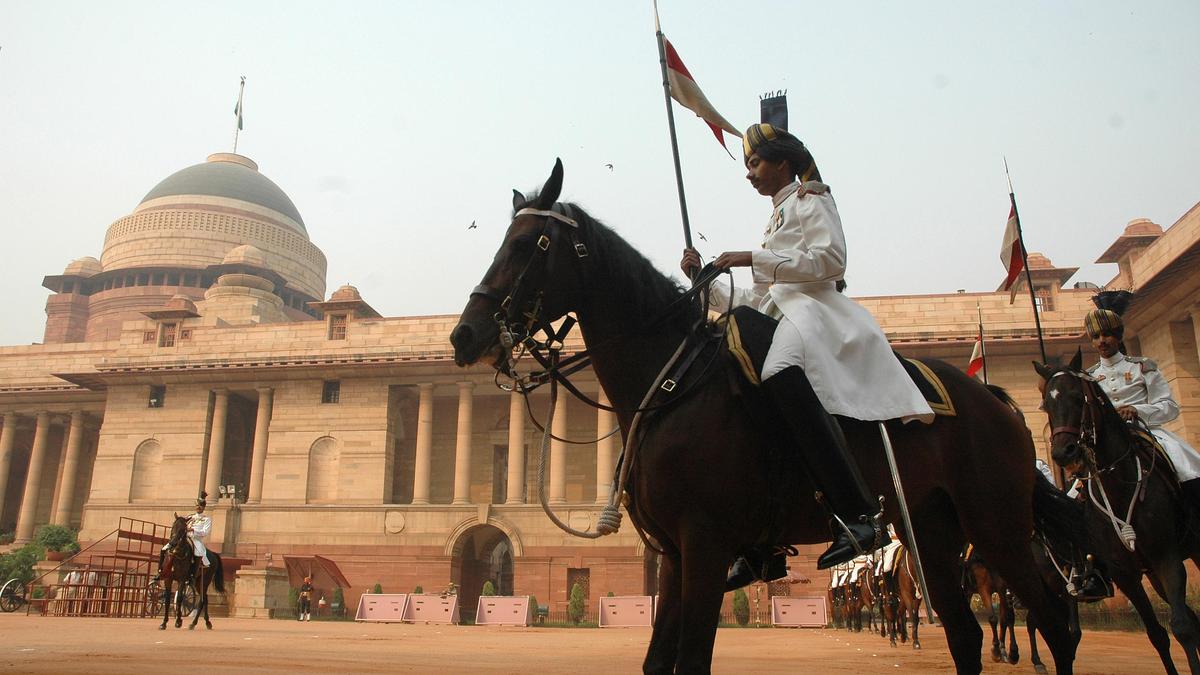

India’s elite mounted troopers, the President’s Bodyguard (PBG) and their equine warriors, who participate in almost 70 mounted parades and rehearsals each year, have started their annual cycle of training for India’s most prestigious ceremonial events — Republic Day, Beating Retreat, and the opening day of Parliament.
Inside the first citizen’s home, aided by modernisation — in terms of covered and self-sustaining training arenas and a closely monitored feeding routine assisted with supplements — the final selection of horses is pending. About 50 or 60 out of the 100-odd horses of the regiment will be chosen. This year’s parade will see a mix of veterans and young horses showcasing the discipline, training, and tradition that goes into making the Household Cavalry of the President’s House.
The PBG is the seniormost regiment of the Indian Army and has the dual mandate of both operational capability in war and serving as the Household Cavalry of the President of India in times of peace.
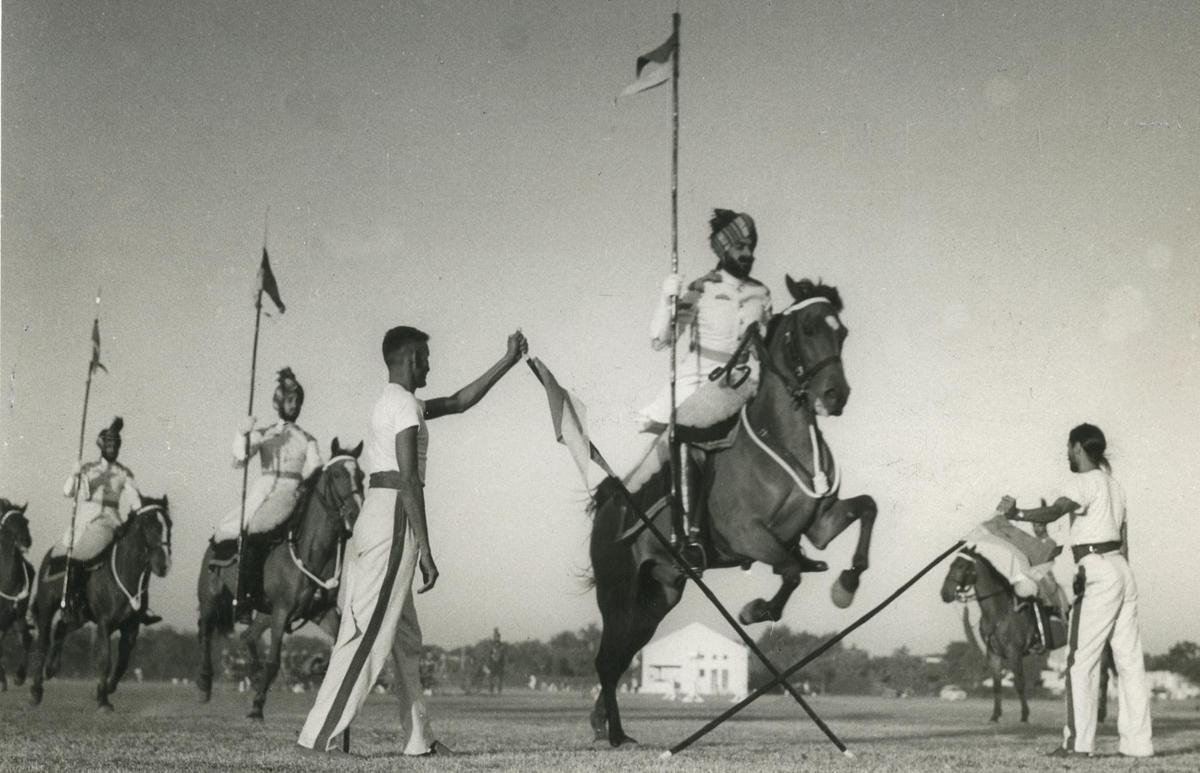
A scene during the musical ride by the President Bodyguard at the Mounted Gymkhana held on November 29, 1959 at Jaipur Polo ground, New Delhi.
| Photo Credit:
The Hindu Archives
Steady temperament needed
“Every horse (typically standing at 157 cm or more) undergoes rigorous evaluation before induction,” said PBG commandant Amit Berwal told journalists during a tour of Rashtrapati Bhavan’s stables. “Horses must exhibit a steady temperament under noise, crowds and they should have a powerful, fluid gait, ability to adapt to ceremonial equipment, and overall sound health and build. The regiment now primarily employs Indian horses bred by the Indian Army,’ he added.’
He explained that every PBG horse undergoes deliberate and continuous training, being taught to walk, trot, and canter with discipline, and then gradually being desensitised to drums, crowds, and even gunfire, ensuring their composure under pressure. The horses are trained to perform for extended periods, maintain precise spacing, and respond to subtle cues.
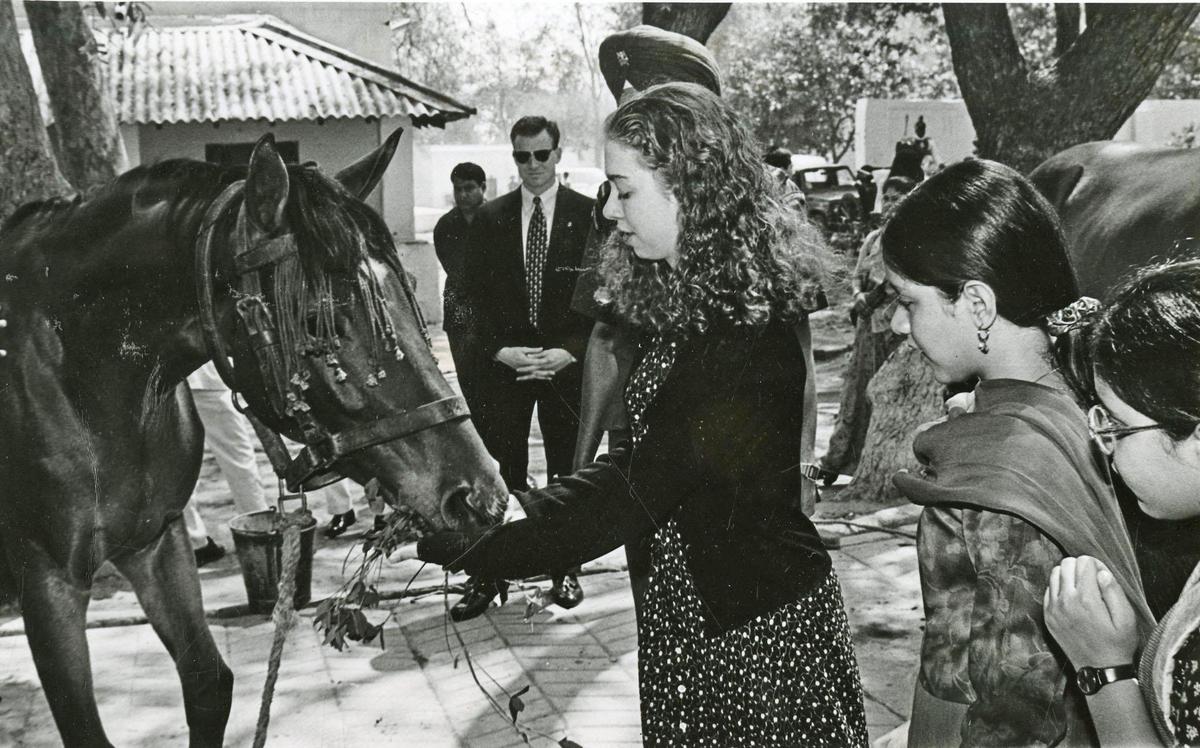
Ms. Chelsea Clinton, daughter of the U.S. President, feeding a President’s Bodyguard horse when she went around the Rashtrapati Bhavan on March 29, 1995. The President Dr. Shankar Dayal Sharma’s grand daughters are also seen in the picture.
| Photo Credit:
The Hindu Archives
Discipline, tradition, and spectacle
The new covered training arena and parade grounds enable daily mounted training, ensuring that the horses remain in peak condition. “For us, every appearance of these horses is a blend of discipline, tradition and a spectacle witnessed by millions across India and the world,’’ Colonel Berwal said.
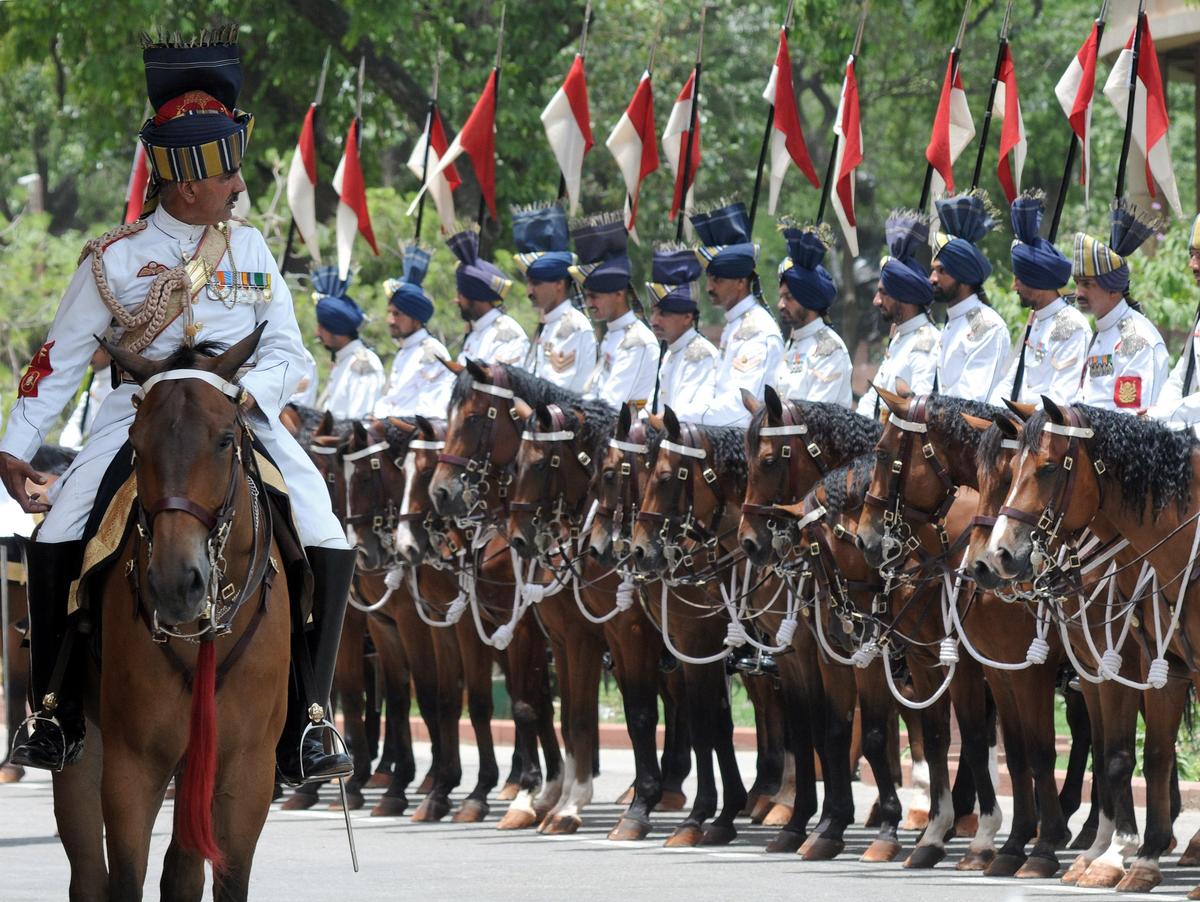
President’s bodyguards seen during President Pratibha Patil’s address on joint session of Parliament in New Delhi on June 04, 2009.
| Photo Credit:
Rajeev Bhatt
A PBG horse’s daily routine begins with early grooming, followed by exercise, a mid-day rest, and an evening grooming session. Horses are provided with a carefully balanced diet of grains, concentrates, and green fodder, tailored to their metabolism, temperament, and workload. Regular health checkups, farrier care, and rigorous stable maintenance keep them healthy.
A lifetime of service
When a PBG horse reaches retirement age, typically between 18 and 22 years, it is relocated to an Army Remount and Veterinary Corps Depot.

Some horses, however, are commemorated within the regiment for their unique service. Viraat, for instance, who was awarded the Chief of Army Staff commendation card in 2022 and patted by the President and Prime Minister during that year’s Republic Day parade, has been adopted by the PBG post-retirement.
A trooper often partners with the same horse for extended periods, said Col. Berwal, fostering mutual trust, a predictable response during high pressure ceremonies, and heightened discipline. “For us, the horse becomes an integral part of the soldier’s identity,’’ he said.
Published – November 22, 2025 08:02 pm IST