



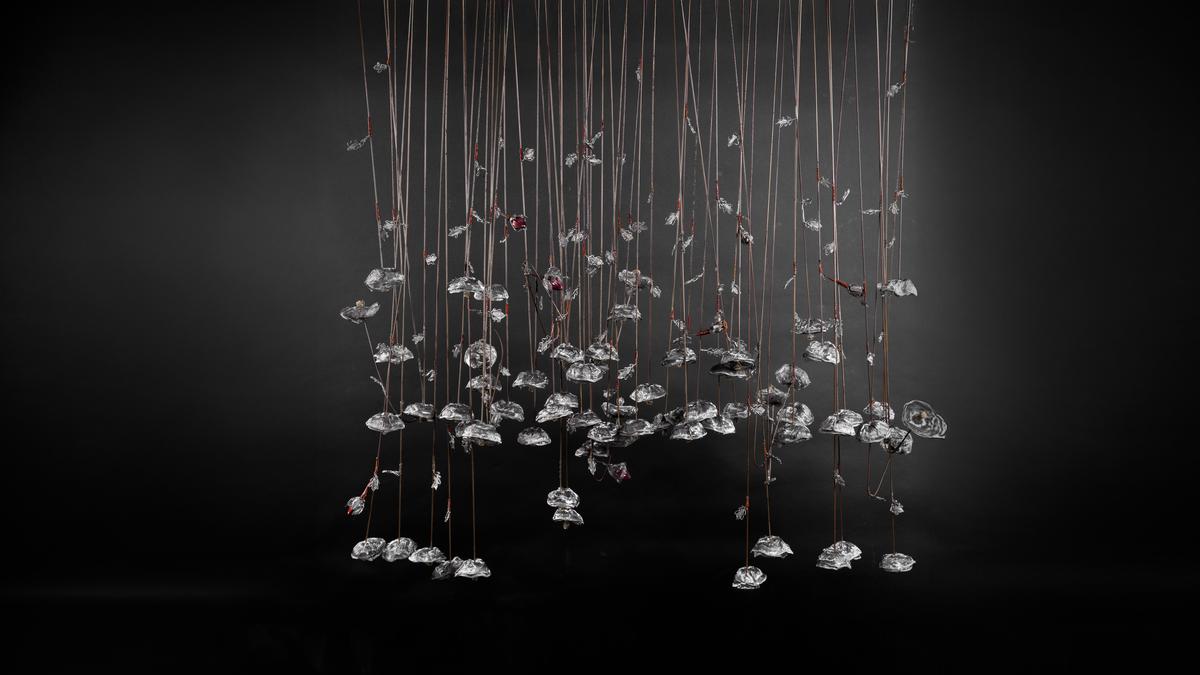
Garden inverse
| Photo Credit: Special Arrangement
In one of the sculptures titled Can I Call You Rose? at Method Delhi’s ongoing exhibition, Gul, industrial scrap, metal discards, old mirrors and discarded brass jewellery come together in a wooden frame. It takes the shape of the charbagh of an 18th Century Kishangarh painting of Maharaj Sawant Singh’s poetry. Poet Mir Taqi Mir’s verses made of burnt copper wires surround the empty centre. It is in a sense, vanished or gul, a reminder of all we have lost.
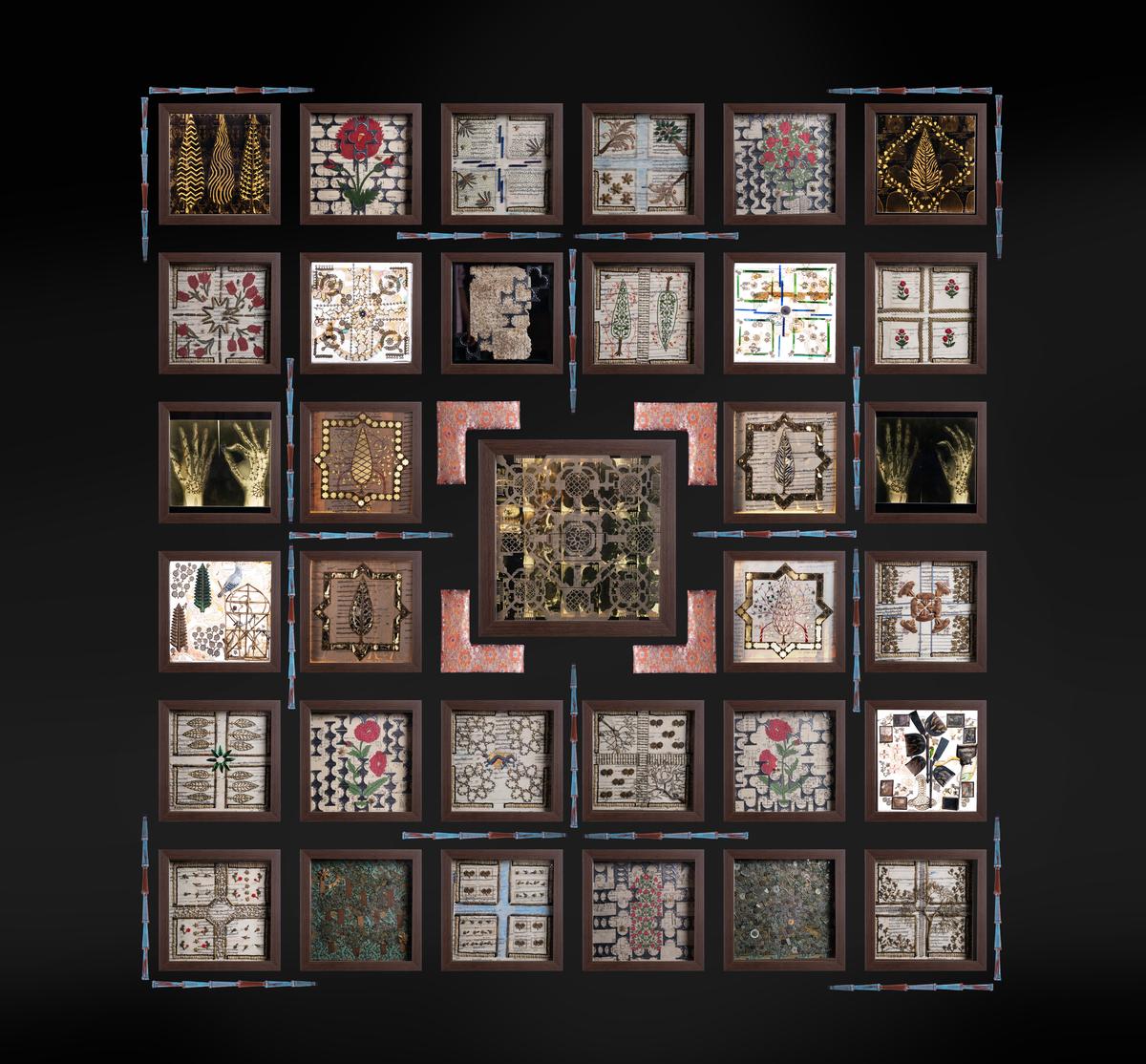
Eternal Garden
| Photo Credit:
Special Arrangement
Read between the lines, and you will find this emptiness lurking beneath the sculpted flowers in every piece designed by Ritu and Surya Singh of Wolf Jaipur for their debut exhibition in Delhi. “Gul means flower, rose in particular, but it also means to vanish,” explains Ritu, adding that they were led to the idea of reimagining the charbagh — the traditional four-part garden — as both a site of refuge and an act of resistance because of Brigitte Singh, a pioneer in textile designing. “The charbagh and the Mughal Gardens have been her inspiration for over 40 years, and we were influenced by that. Also, we live in Jaipur where there are many charbaghs. We held on to both the physical and the symbolic aspect of this being a safe space for leisure, pleasure, poetry, and politics. We held on to it because these safe spaces for freedom of speech are slowly decreasing,” she adds.
Gul also mirrors paradise and is a personal outpouring. “What do you do in situations where you don’t have anything else? You look for beauty and poetry, and you let that help you endure it. For us, the beauty was in scraps and discards,” she says. For this exhibition, they also held on to the words of 18th-Century Urdu poet Mir Taqi Mir for finding beauty and hope even amidst violence and destruction. “We also read that he was known as the romancer of Delhi and that made even more sense for our first show in the capital,” says Ritu.
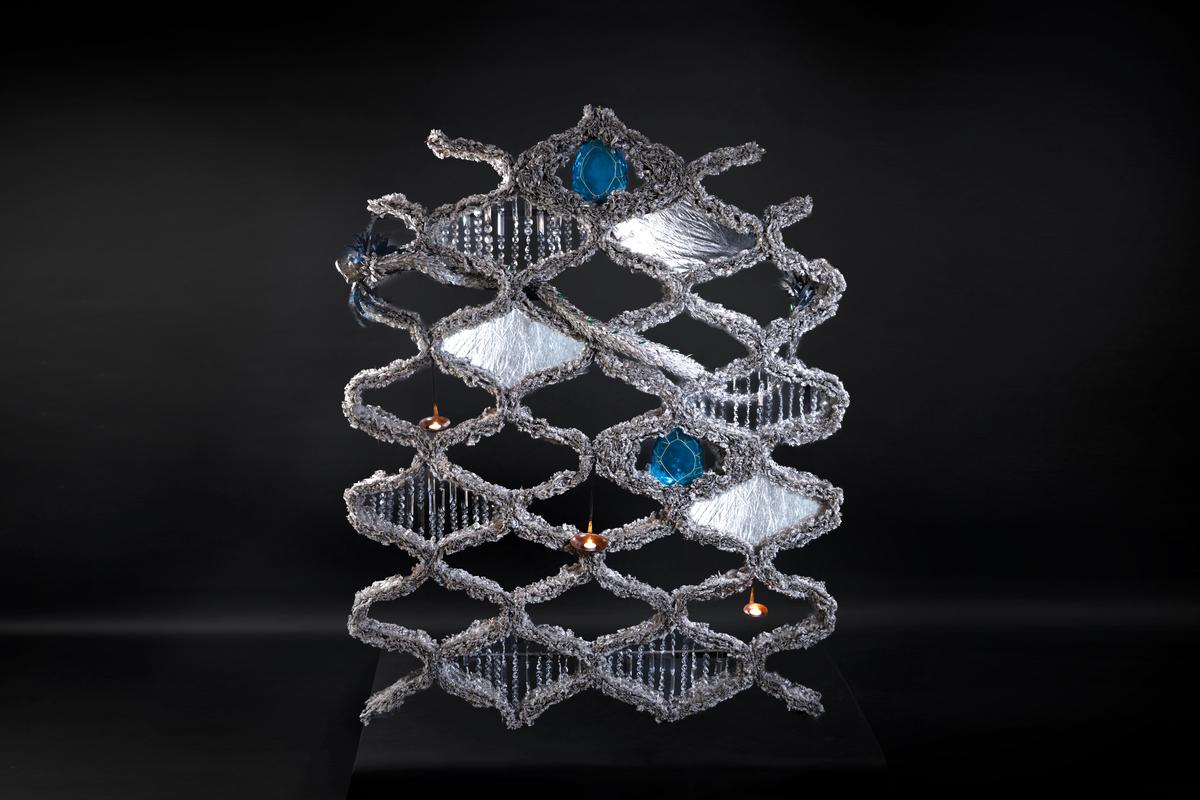
Watercouse
| Photo Credit:
Special Arrangement
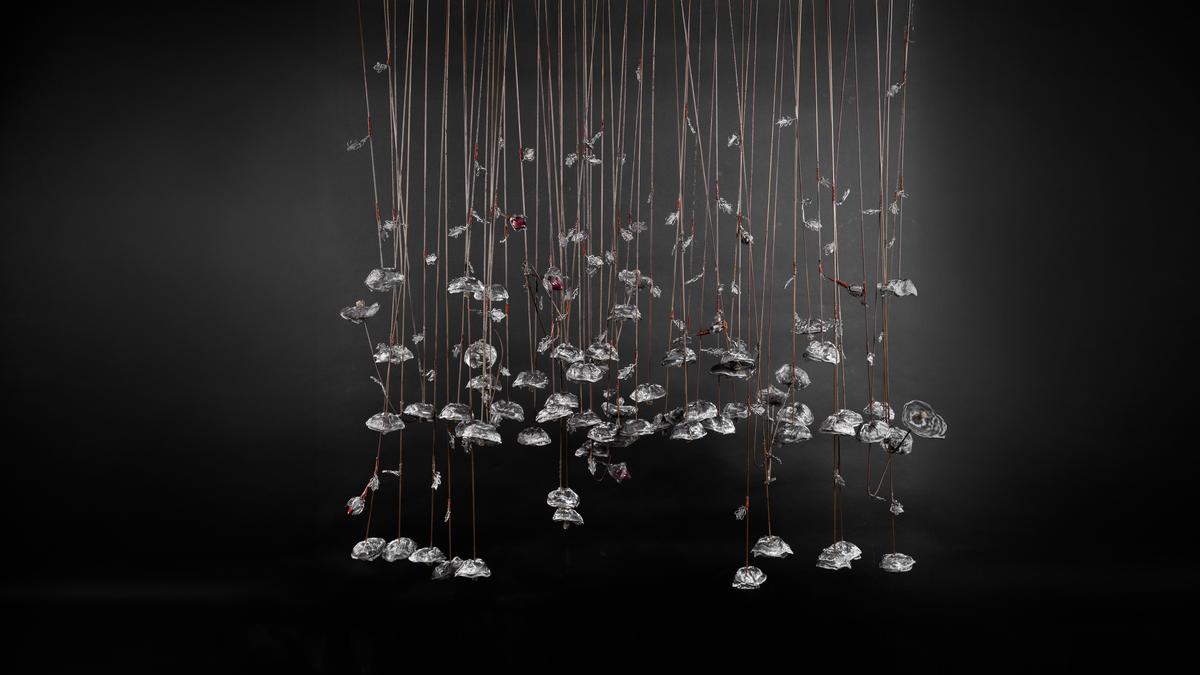
Their garden of symbolism unfolds in four parts with the sculptural dreamscape divided into the inner garden of the self, the physical garden of the world, the ideal, utopian garden of a plural, humane future, and a garden of verse. In Gul Baghi, a vault bursts forth with flowers in full bloom, an act of resistance suggesting love and beauty against plunder. A damaged Jamawar shawl becomes the canvas for Tear Fed, with discarded jewellery, mirror pieces, ceramic eyes and metal joineries that act as tears — tears that were shed for gardens lost. A discarded lawn mower turns into a gun in Resting Place — a reminder that just as Babur’s homesickness led to the charbagh, , lawns ploughed through orchards and parterres as nostalgia for the British. “Lawns are sterile and seasonless. It’s a monoculture which supports nothing. In a sense, it’s beauty at gunpoint. The obsession with lawns continues and if you have a patch of land outside your house, you won’t think of planting a tree or flowers, but you would think of a lawn. The flowers have vanished,” she states.
The Eternal Garden, inspired from Humayun’s Tomb, is a multi-layered, multi-textured 33-piece akin to the layout of the garden in Delhi and a spectacular example of the early charbaghs in India. From X-rays — as an analogy to look deeper within — to Brigitte’s poppy prints, vintage shaving blades, discarded watch parts, iron rods and glass beads among others, the materials created a work that, according to the gallery’s note, “foregrounds continuity through rupture: the garden as a structure that absorbs violence. Rather than an idyll outside of history, the eternal garden is understood here as history itself — wounded, altered yet persistently generative.” Says Ritu, “The fact that it’s a 16th Century monument and gardens are still enjoyed, proves the endurance of gardens and its ideologies.”
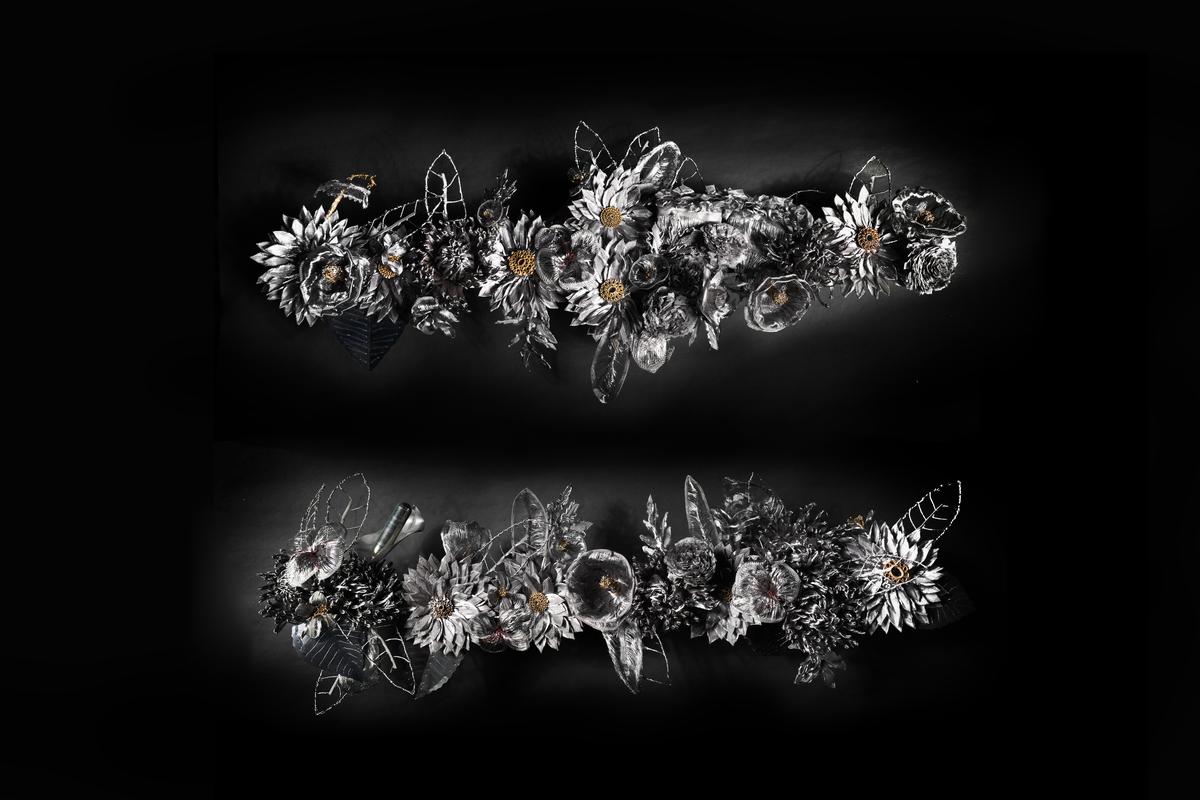
Flowerspeak
| Photo Credit:
Special Arrangement
Another highlight is the four altars — Word, Breath, Rhythm, and Song. Created out of broken chairs, as a symbol of rising above inequality, they create spaces to reflect, breathe, de-weed and surrender. Perhaps the most introspective of all the pieces is Flowerspeak, created as a language of flowers where each flower stands for a specific alphabet. Correlate the alphabets and flowers to Mir’s verses written on the walls, and you would be able to decode the script for a time when gardens and free speech find themselves in constraints.
Gul continues at Method, Delhi till November 30.
Published – November 21, 2025 12:12 pm IST