





When U.S. President Donald Trump announced a 50% tariff on Indian textile exports on August 27, 2025, Tiruppur — India’s knitwear nerve centre — was momentarily stunned. However, the disruption also pushed many in the industry to rethink resilience, innovation, and the very foundations of how they operate.
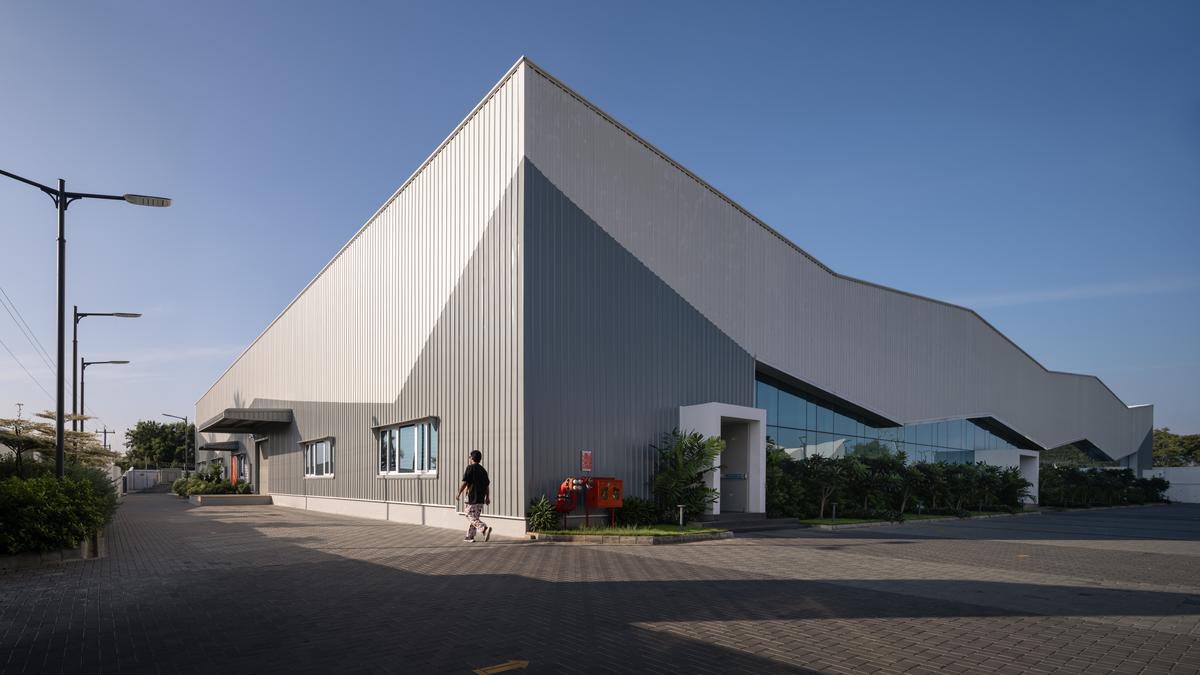
One striking example stands right in the heart of Tiruppur. A dynamic glass facade that plays on optical illusion turns heads for its minimal yet striking design as one enters the garment manufacturing facility of SAGS Apparels in Tiruppur.
On a built-up area of 52,900 sq.ft., with one-third of the land devoted to landscaping, this industrial building buzzing with over 400 staff has earmarked spaces for greenery, and boasts naturally-lit workspaces, and energy-efficient air-cooling systems that ensure comfort even in peak summers.
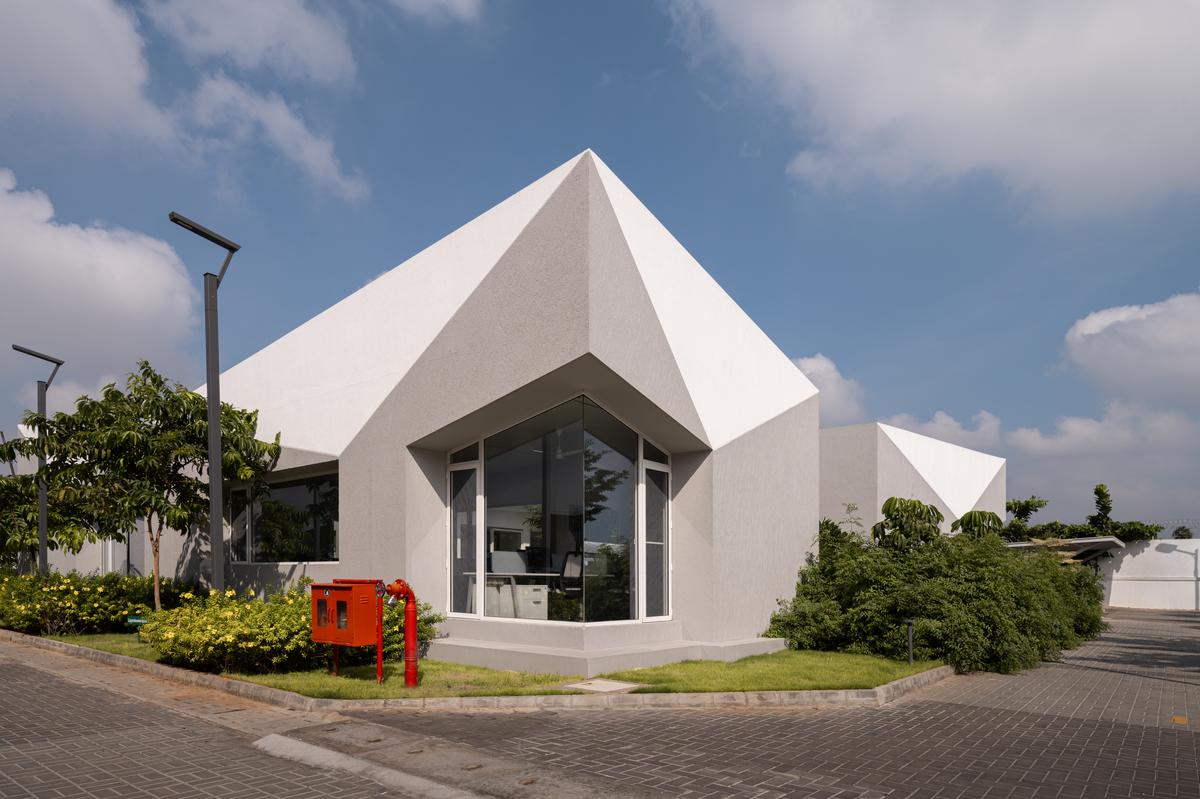
A view of the facility.
| Photo Credit:
JUSTIN SEBASTIAN
“How to reduce environmental footprint at every step was the first question that popped up,” says architect Arun Prasad Prakashan of Coimbatore-based Arun & Associates. His building design for SAGS Apparels, called Samya, Sanskrit word for balance, harmony, and proportion, marks a paradigm shift in industrial architecture. While it was designed to meet LEED Platinum standards in sustainability (the highest level of green building rating awarded by the U.S. Green Building Council), including net-zero in energy and water usage, comfort and health of the occupants have also been prioritised.

Arun Prasad Prakashan of Coimbatore-based Arun & Associates.
Smart facade controls
“All the glass windows at the office open to canopied trees in the courtyard or the garden, bringing in a sense of calm. There is no air-conditioning. We have adopted an evaporative cooling system that keeps the factory six degrees cooler than outside,” explains Prakashan, adding that the smart facade controls energy and light flow. Right from the orientation stage, the team focused on design that helps cut down heat and energy usage wherever possible. For example, the roof uses Tata Borescope sheets with a high Solar Reflectance Index (SRI) to minimise temperature.
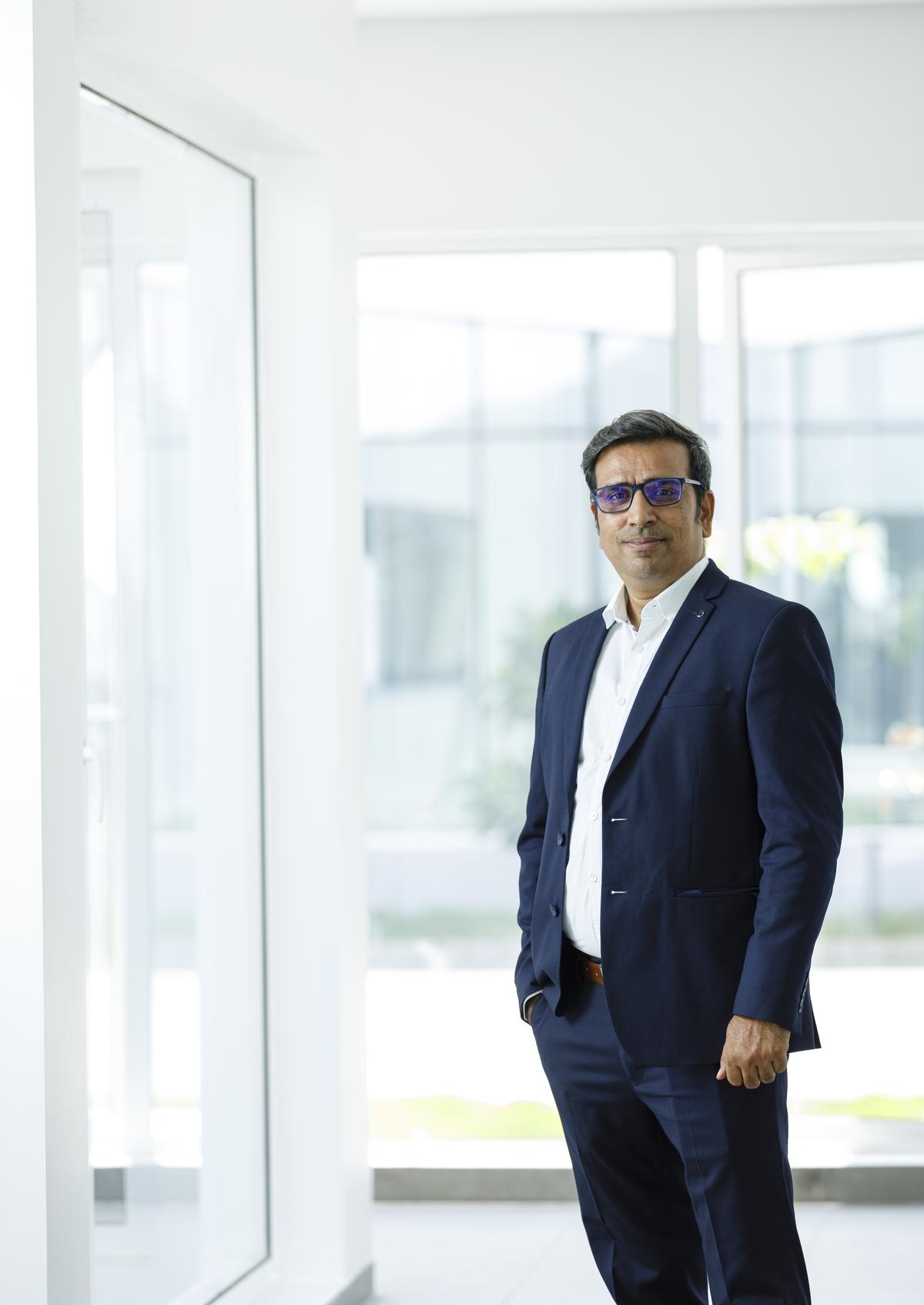
Ganesh Anantharaman, managing partner and CEO of SAGS Apparels.
“We wanted our garments, be it the T-shirts, hoodies or jackets, to have ‘life’ and stand for something meaningful,” says Ganesh Anantharaman, managing partner and CEO of SAGS Apparels.
“We produce sustainable garments with 100% organic and fair trade cotton. We started out with just 30 people. Today, we have employed 450 people and export to premium clients across Germany, from Bundesliga football clubs to gas stations and automotive brands like Mercedes-Benz. We won the German Sustainable Award in 2020 for our achievements. We wanted our building to be iconic, dynamic and an inspiration for other MSMEs in the region to achieve high standards in sustainability,” Anantharaman explains.
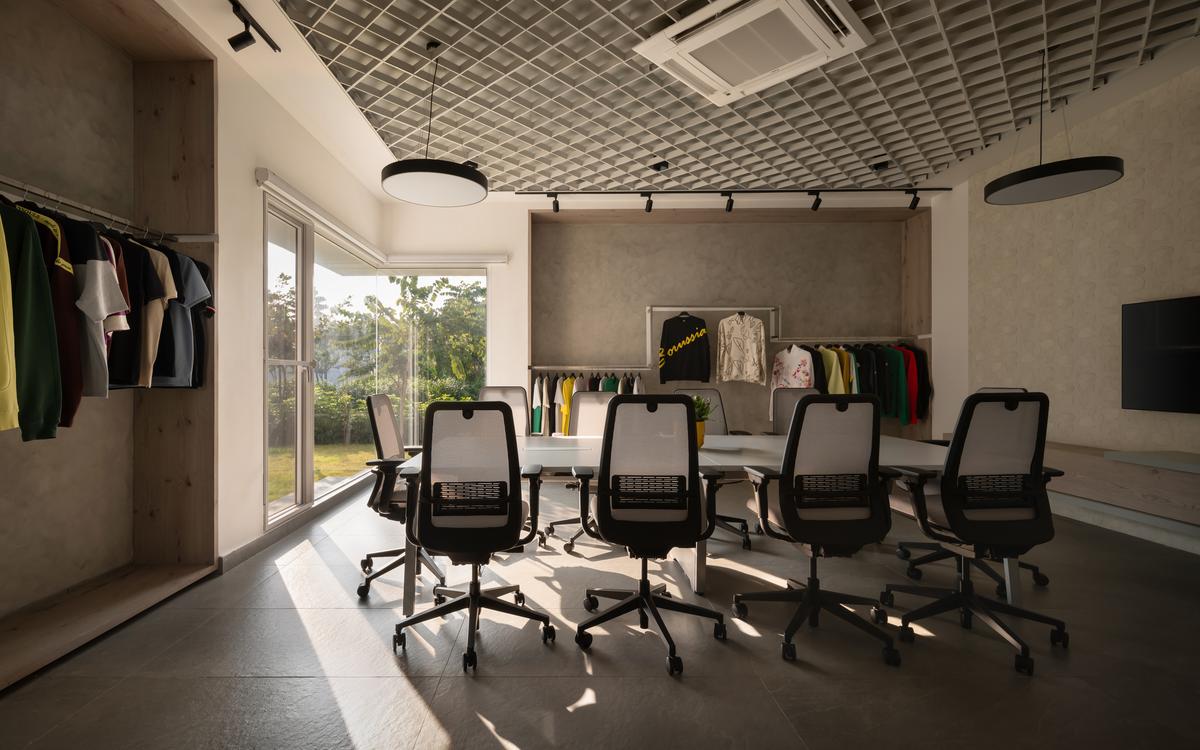
A view of the facility.
| Photo Credit:
JUSTIN SEBASTIAN
The factory is solar-powered with a 250-KW solar photovoltaic (PV) system, which is 35% more than its actual energy requirement. Rainwater is harvested in a 5-lakh litre underground tank, and the storage is used to meet the water requirements for three months. The rest of the stormwater is diverted into an intelligent borewell recharge system.
“Our objective from day one has been to cut down carbon emissions. Our garment manufacturing facility has achieved net zero in energy, water, waste, and carbon. The amount of energy consumed is equal to the amount of renewable energy created on-site from renewable sources, the solar panels. Same with water,” says Anantha- raman.
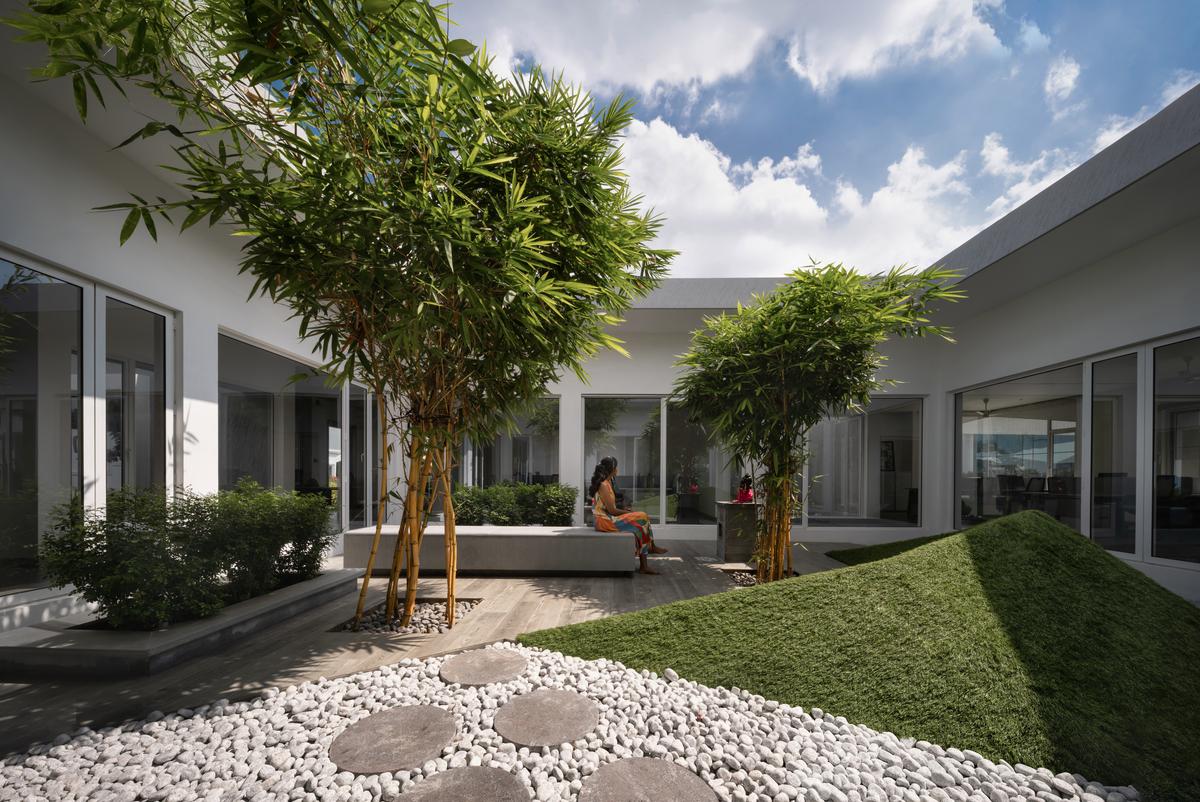
A view of the facility.
| Photo Credit:
JUSTIN SEBASTIAN
He added that they minimise water use while tapping into alternative sources like rainwater or treated wastewater to meet requirements.
According to Prabhavathi Paramedian, senior partner at Chennai-based Conserve Consultants Private Limited, the sustainability consultants for the project, documenting carbon footprint reduction in green buildings involves meticulous tracking at every stage of the construction. “From the materials chosen and the energy consumed during building to how the structure operates over time, everything counts. It’s all part of a larger goal of fostering sustainability, and it ensures that the project stays true to its carbon reduction objectives,” she adds.
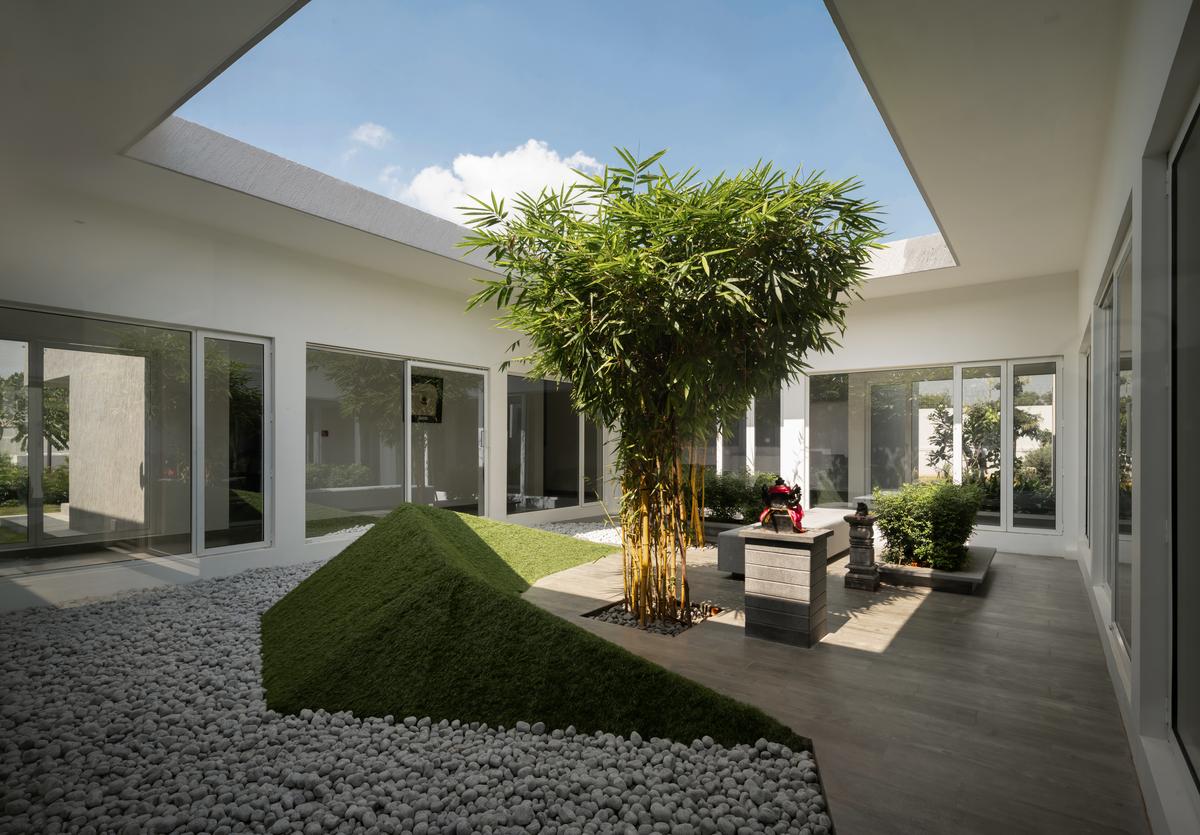
A view of the facility.
| Photo Credit:
JUSTIN SEBASTIAN
Minimal noise pollution
The project followed green standards at every stage of construction and took over a year to complete. “We had to follow the green discipline. We excavated the rich topsoil and stockpiled it in a designated area on-site. Then, we spread it over again after the construction for landscaping. We cannot send debris and waste in any form to the landfill.
We also ensured that the noise pollution was minimal during the construction,” says Prakashan.
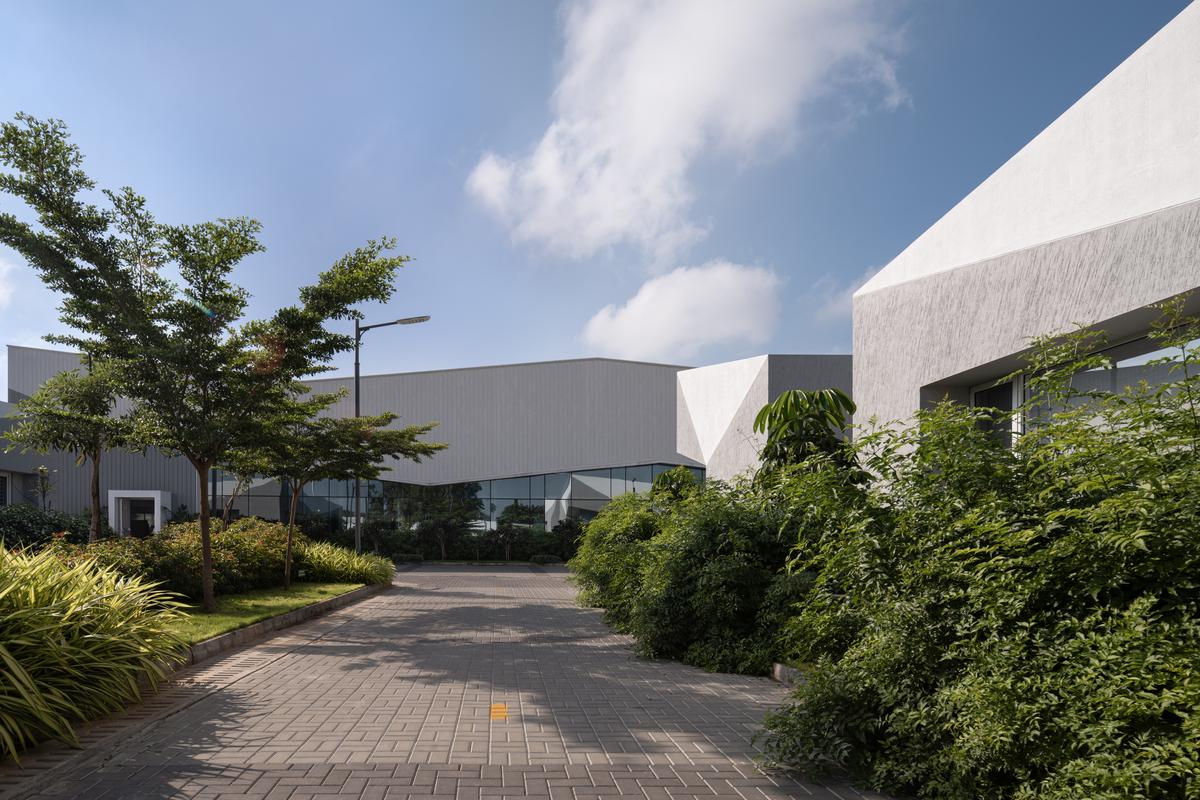
A view of the facility.
| Photo Credit:
JUSTIN SEBASTIAN
However, procuring materials within a radius of 300 km was challenging. All the products, from paints and glass to aluminium and furniture, are green certified. The roofs also feature aluminium cladding integrated with glazing to regulate heat. “We have used a lot of pre-engineered steel structures. And, performance glass that lets in light but blocks heat. We minimised east and west openings to block harsh sunlight. Each zone, from transportation to packaging, is carefully planned to support smooth operations and communication,” explains Prakashan. While landscaping uses native, drought-tolerant species to reduce water needs, the office furniture was chosen from brands like Steelcase, which predominantly uses recycled materials and sustainable innovations.

“Our objective from day one has been to cut down carbon emissions. Our garment manufacturing facility has achieved net zero in energy, water, waste, and carbon”Ganesh AnantharamanManaging partner and CEO, SAGS Apparels
Prakashan points out that sustainability is the way forward for Indian companies. “Statistics say that California alone consumes energy which is equal to our entire country’s consumption. There won’t be enough resources left in the world unless we make judicious choices. Manufacturing units using clean energy attract international buyers in a big way. Soon, buildings will have to comply with mandatory green energy codes to keep energy consumption in check.”
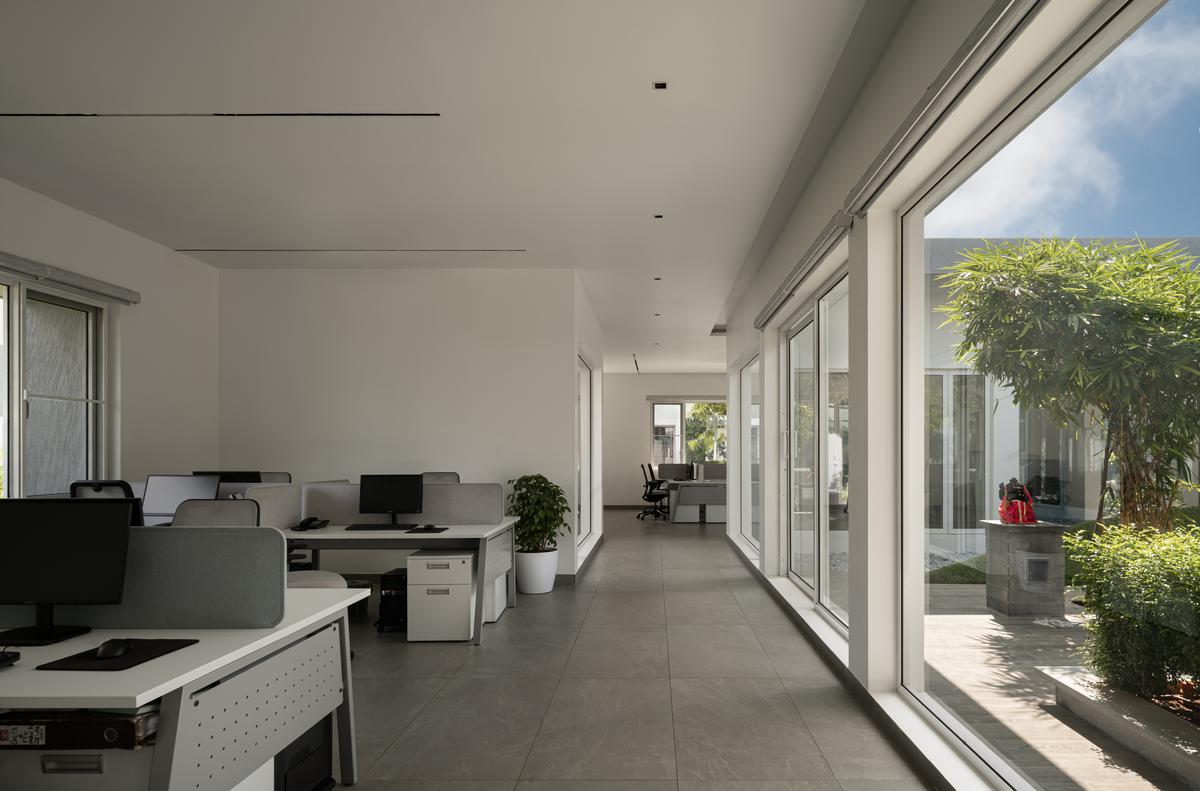
A view of the facility.
| Photo Credit:
JUSTIN SEBASTIAN
Anantharaman adds that with stringent European Union norms, including a possible ‘carbon tax’, sustainable operations become inevitable. “An effective use of the Internet of Things (IoT) also helps. For the landscape, we have an automated irrigation system with smart sensors. We have employed a ‘sustainable executive’ whose job is to keep track of water and energy usage in every block. Being an environmentally friendly operation gives us an edge. We have shown that even as an MSME, it is possible to build a factory that’s truly future-ready. Many exporters in the region are rethinking their approach. It is about doing what is right — for the people who work with us and the planet.”
Published – November 21, 2025 07:43 pm IST