



In early November 2025, B. Yamuna (29) from Visakhapatnam left home for a trip to Araku Valley with friends. Yamuna, who was separated from her husband and living with her parents, supported her family by working at a grocery shop in Madhurawada.
However, her family’s world shattered on November 11, when Yamuna’s brother Nagendra received a call from an unknown number informing him that his sister had passed away at a hospital in Tirupati and asking him to collect her body immediately. Nagendra’s initial reaction was shock, followed by denial, but when he re-dialled the same number, the caller confirmed the tragic news.

Nagendra, who works as an AC mechanic, also manages a small shop in Boddapalem of Anandapuram mandal in Visakhapatnam, while his father, Narsinga Rao, runs a pan shop. They desperately tried to verify the information, but the caller had not provided any further details. The family immediately approached a distant relative with political connections, and soon the information reached the Anandapuram police station in Visakhapatnam, which alerted the Tirupati police.
While Yamuna’s father and brother were en route to Tirupati, the Annamayya police unearthed the biggest organ-trafficking racket in Andhra Pradesh operating from Global Multi-Specialty Hospital in Madanapalle of Annamayya district, and arrested several key suspects. It soon became clear through the investigation how Yamuna found herself at the Tirupati hospital, 900 km from her hometown, rather than heading to Araku Valley.
Yamuna was under the impression that a “paid kidney donation procedure” would end her financial struggles once she received the promised amount of ₹8 lakh — money she hoped would help educate her children in an English-medium school, according to police records.
According to the investigators, the hospital records state that Yamuna slipped into a coma after one of her kidneys was removed. Whether she died on the operating table or during her purported transfer to a hospital in Tirupati is still under investigation.
Yamuna’s untimely demise has blown the lid on the racket involving government doctors, hospital insiders, visiting surgeons, forgery networks, and how vulnerable individuals and families were being exploited.
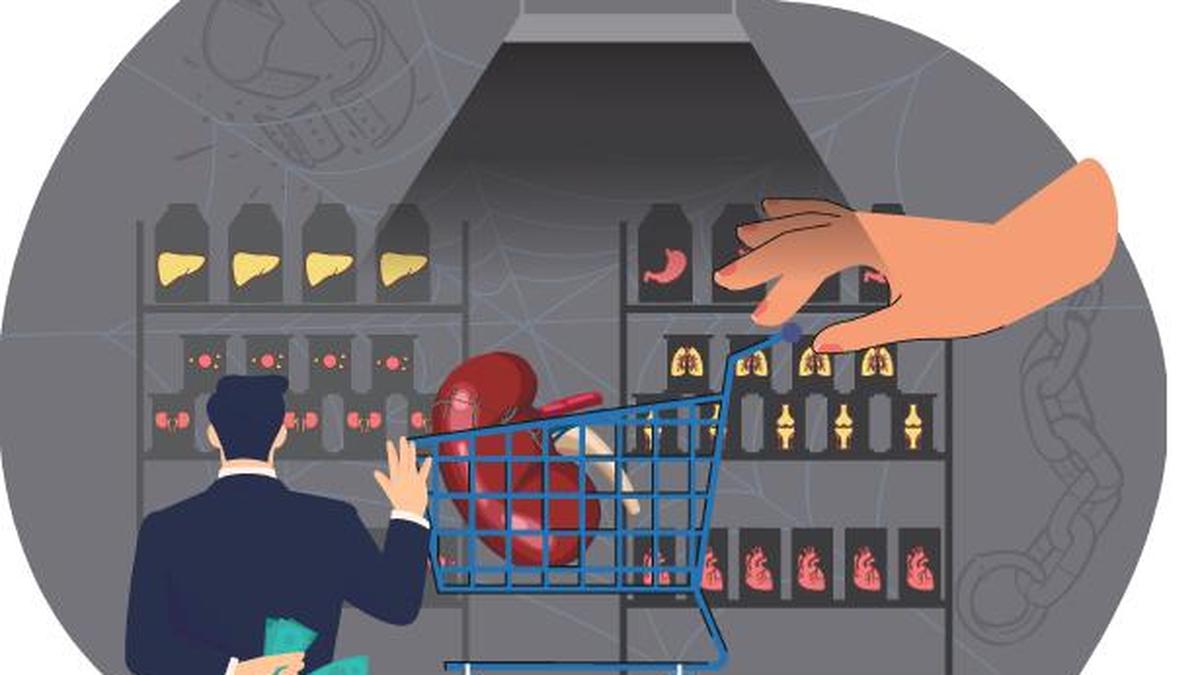
A modest town hospital in Madanapalle emerged as the epicentre of an interstate criminal operation that preyed on the vulnerable, operating in shadows where medicine, money, and illegal organ trade merged into a corporate-like syndicate.
The investigation revealed that another woman from Visakhapatnam had also undergone the same procedure through the same racket at approximately the same time. However, she disappeared after Yamuna’s death and the subsequent police involvement. Preliminary investigation found that Yamuna’s kidney was being transported to Goa for transplantation. What happened to the other woman’s kidney, and how much she was paid, remain under probe.
According to the reports, Yamuna was approached months earlier by a group of middlemen who were aware of her financial struggles. Yamuna who was struggling to make ends meet became an easy target. The brokers promised her a financial relief in exchange for her kidney.
A police officer revealed that the brokers told Yamuna, “kidney donation is absolutely safe. With one kidney, life will be normal. The recipient is a rich businessman from Mumbai and Goa. He will take care of you in the future, and you may even get a good job in Mumbai or Dubai. Immediately after the operation, you will get ₹8 lakh.”
Hoping for a better future for her children, Yamuna arrived in Madanapalle and, using false documents, became a donor prepared to violate the Transplantation of Human Organs and Tissues Act (THOTA 1994).
According to reports, after the operation resulted in her death, the carefully constructed façade collapsed. The hospital authorities desperately tried to cover up and informed her family that “unexpected complications” led to her death and demanded that they take the body home immediately.
Suspicious about the whole episode, the family demanded a post-mortem, which revealed the illegal kidney removal, contradicting the hospital record that cited post-surgical complications as the cause of death. Guided by the Madanapalle police, the family lodged a formal complaint, bringing months of covert illegal operations under the scanner.
A chilling picture of an organised kidney racket exploiting vulnerable communities emerged. The Global Multi-Specialty Hospital in Madanapalle had allegedly become a covert organ transplant centre. Police discovered donors admitted under false identities, and video evidence showed brokers escorting them into restricted zones. Hospital logs, patient records, and administrative entries were riddled with glaring inconsistencies.
Following the exposure, district and police authorities raided the hospital, sealed it, and seized all documents and digital materials. Forensic teams joined a special investigation team (SIT), now probing the entire network.
The police have so far arrested eight people. Among them is A1, Dr. Anjaneyulu, the hospital owner and a senior government doctor serving as District Coordinator of Health Services (DCHS), along with two dialysis technicians from government hospitals in Madanapalle and Kadiri. Police also identified the involvement of a senior consultant surgeon from Bengaluru, believed to have performed the removal of Yamuna’s kidney. Call data records of all accused, including brokers, are under scrutiny. Investigators suspect that many more vulnerable donors may have been brought to Madanapalle under similar circumstances. Some may be suffering silently, while others remain untraceable.
The case has shaken Madanapalle and sent ripples through Visakhapatnam, where kidney racket cases are not new. Social activists note that slum dwellers and low-income communities in Visakhapatnam and tribal hamlets in North Andhra districts are frequently targeted due to financial distress.
Pragada Vasu of Association for Tribal and Urban Development (AUTD), who works extensively in urban slums, stressed the urgent need for stricter monitoring. “Many families depend on daily-wage work. Their incomes fluctuate, and unexpected expenses push them into debt cycles, making them vulnerable,” he said.
Organ brokers exploit these vulnerabilities. They promise large sums, claiming the procedure is safe. Most donors receive only a small advance, with the full payment promised after surgery—which rarely comes, he added.
Visakhapatnam’s connection to kidney rackets dates back years. In 2022, Vinay Kumar of Vambay Colony was promised ₹8 lakh but he received only ₹2 lakh after surgery, prompting a complaint that led to the arrests of medical professionals in Pendurthi. In 2019, Sraddha Hospital near Collectorate Junction was shut down after multiple illegal kidney surgeries were uncovered. A Bengaluru doctor and several others were arrested.
Yamuna’s case is not just an unfortunate incident but “the tip of the iceberg,” where poverty collides with thriving criminal networks in the illegal organ trade. Her story lays bare the dangerous intersection of poverty, lack of awareness, medical misconduct, and organised crime. Her brother, Nagendra, and her mother, Suramma, failed to understand why Yamuna hid the truth. “The guilt is killing me every second. I failed to recognise her distress,” Nagendra said.
Fear and anger enveloped Boddapalem for a week after the incident, but life is slowly returning to normal. However, the threat remains—brokers may still be lurking nearby, waiting for their next victim.
Mala Mahanadu State president Yamala Sudarshan, who met the grieving family, condemned the incident, calling it “an assault on the dignity of the poor” and demanded a judicial inquiry into the “dangerous erosion of medical ethics.”
As investigators probe further, they uncover layers of an interstate network, suspecting that donors are being recruited not only from North Andhra but also from Karnataka, Tamil Nadu, and the urban slums of major metropolitan cities.
A SIT officer said that in cities like Mumbai and Kolkata, there is no shortage of kidney recipients willing to pay ₹70 lakh to ₹1 crore per organ. “The tragedy is that 90% of victims receive barely 5% of the amount. The game always favours the syndicate. Ironically, even the recipients sometimes find themselves cheated. If anything goes wrong, neither side dares to approach the police. Personal shame is what the networks exploit,” he said.
Deputy Superintendent of Police (Madanapalle) S. Mahendra told The Hindu that the investigation has entered a crucial phase. “None from the kidney racket will escape. We have already arrested several key accused. The search is on for A2, a Bengaluru-based surgeon. Our teams are also looking for vital clues in other States, including Goa. If the probe expands or enters new avenues, we are prepared for any challenge,” he said.