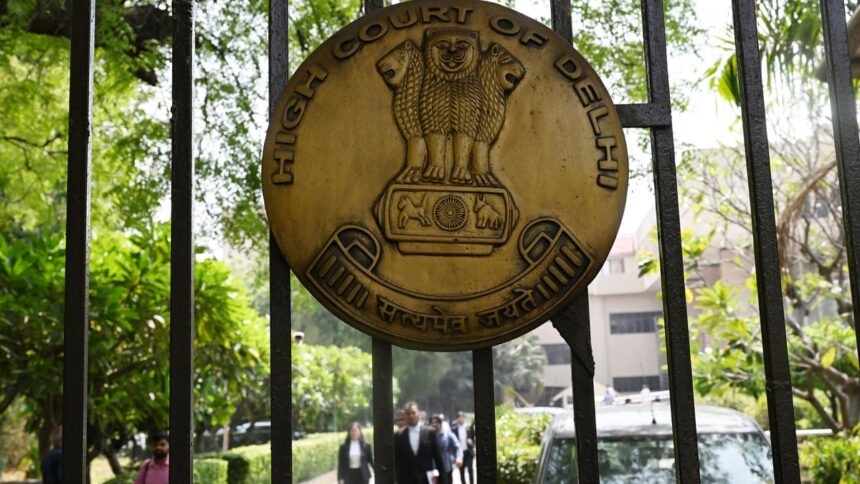





The Madurai Bench of the Madras High Court held that if a public ground belonging to the State is available for use of the general public, a particular section cannot be excluded from using the same. If the sole ground of exclusion was religion, it certainly would offend Article 15 of the Constitution, the court held.
The court was hearing a petition by K. Rajamani of N. Panchampatti in Dindigul district. Kumbabisekam for a temple in the village is to be held on November 3. The petitioner wanted to conduct ‘Annadhanam’. He sought permission to organise the event on an open ground in the vicinity of the temple. However, the request was rejected by the authorities. An alternative site, a public road, was allotted. The rejection order was challenged.
The authorities submitted that if the event was allowed to be conducted on the ground, it would give rise to law and order issues. A counsel representing the Christian community submitted that on a portion of the ground a stage was constructed 100 years ago and that it was known as pascha stage. Every year, during the Easter festival, programmes and dramas were held. According to him, Hindus were never allowed to use the ground for religious purposes. His specific stand was that there should not be any departure or deviation from this stand.
Justice G.R. Swaminathan observed that it was admitted that the open space in front of pascha stage belonged to the panchayat. It had been classified as ‘grama natham’ and that it belonged to the government.
When the land in question is not a patta land, but belongs to the government, it should be available to all sections irrespective of religious or communal background. We are a secular democratic republic. Any pre-constitutional arrangement that is not in accord with the constitutional provisions and ethos cannot be allowed to continue.
A public ground should be available for the use of all communities or none. The right to hold ‘Annadhanam’ can even be brought within the scope of one’s fundamental right under Article 25 of the Constitution. When it comes to upholding fundamental rights, it is the duty of the local administration to stand in aid of the same. If any law and order problem arises, the same must be dealt with appropriately. The police should not choose the easy option of stifling the fundamental rights, the court said..
“In every religious event, there must be participation from the other religionists also. When a Christian friend celebrates Christmas, I should greet him first. I remember an occasion when a Muslim friend prepared only vegetarian Nonbu Kanji so that I can have the same. Needless to say, I relished it. Such is the beauty of our culture. Such interactions alone will ensure inter-religious harmony. Unless such cultural and civilisational unity is demonstrated in practice, there will not be peace in society”, the judge observed.
The court permitted the petitioner to hold the Annadhanam event on the ground in question. But, the ground should be handed over back in the very same condition in which it was entrusted, the court observed and directed Dindigul Superintendent of Police to ensure that the event passes off peacefully.
Published – October 31, 2025 08:09 pm IST