







Gabreil Mascuro (centre) and the cast and crew of ‘The Blue Trail’ at the film’s press conference at the 56th International Film Festival of India, Goa
| Photo Credit: Ayaan Paul Chowdhury
Brazilian filmmaker Gabriel Mascaro arrived in Goa this week for the 56th International Film Festival of India, where his latest feature The Blue Trail was screened as the opener, after a year-long run across major festivals. Known for his body of work that folds social texture into an inventive form, the director was here to discuss why he built a dystopian road story around a 77-year-old protagonist, and how Brazil’s political climate shaped the film’s imagined future. Speaking at his festival Q&A, he outlines how he approached the material and what drew him to Goa at this moment in the movie’s life.

The Blue Trail follows Tereza, who flees the state’s elderly relocation program to pursue a long-delayed dream, played by the flinty Brazilian stage veteran, Denise Weinberg. Mascaro recalls a riff on the usual cinematic habit of linking age to nostalgia. He says his starting point was intimate and immediate: his grandmother. “She’s 97 now, but when she was 80 years old, she started painting when my grandpa had just passed. I was very inspired by someone in the late 80s who could restart and create a new meaning for her life.”
From that brief and concrete anecdote, he draws a corrective insistence that elderly characters occupy the present and not only the past, which determines the film’s formal gamble. Mascaro wanted an older protagonist to inhabit genres that usually exclude them. “Normally, we never think about the elderly being part of this,” he says. “So that’s why I proposed to make this movie blending dystopia, road movie, coming of age; all the genres that do not accept the elderly.” The film ends up dressing those familiar genre trappings in the unexpected skin of clandestine boat voyages and a search for freedom as urgent as any adolescent quest.
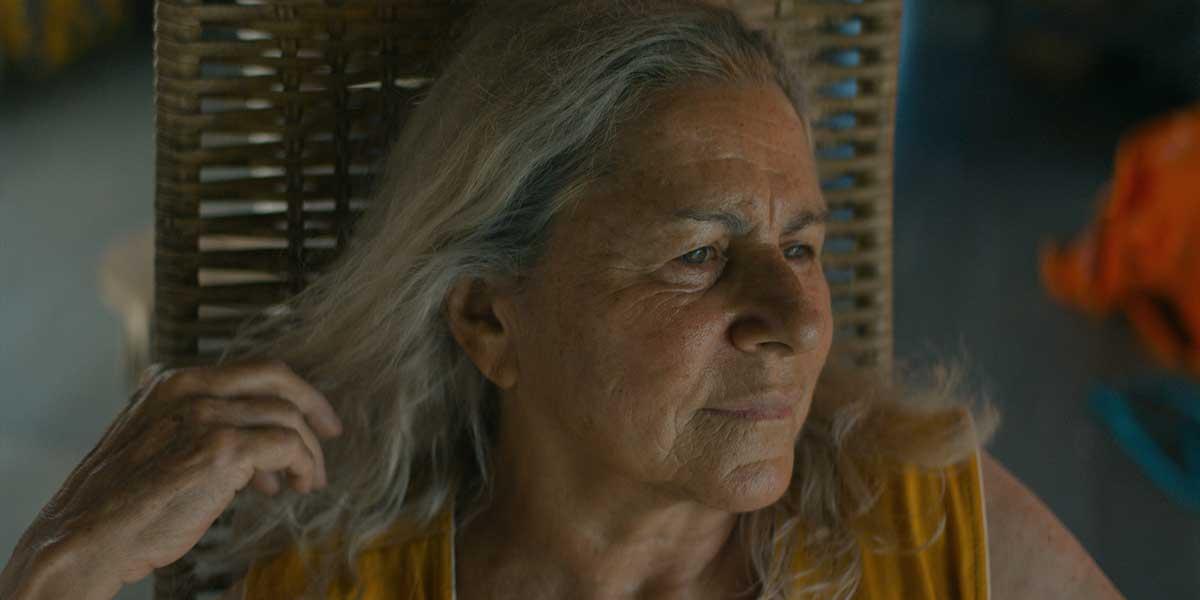
Denise Weinberg as Tereza in a still from ‘The Blue Trail’
| Photo Credit:
Desvia Filmes

The idea of freedom and liberation is the film’s guiding light. “It was very important for me to start thinking about the elderly as able people capable of rediscovering the present, discovering themselves, starting to see a new meaning for life, and capable of having pleasure.” He refrains from sentimentalising Tereza’s arc, and the scenes that probe her desire, sexuality and risk, do so to dislodge a cultural habit that has domesticated old bodies into memories.
Those creative choices sit against a political backdrop Mascaro calls peculiarly raw. He refers to recent Brazilian years as a “second pandemic” beside COVID: “We had the pandemic, and we have our government, led by [Jair] Bolsonaro. It was the equivalent of another pandemic.” He describes Brazil’s cultural aftershocks of funding freezes and administrative dismantling of cultural institutions as material that pushed him toward a speculative fiction that could register as plausible. “It’s more about a suspended reality that deals with something that we can recognise. We think it could be real, but it’s not. But the feelings are still real.”
The film’s small surrealities — the titular psychotropic blue snail slime among them — grew from respect for local ritual and an ethic of invention. “You can find a lot of equivalents that are for real,” says Mascaro, naming ayahuasca and other vegetal medicines, but adding: “I prefer to create by fiction my own allegory to represent and talk about psychotropics.” The blue snail goo in the film functions as an allegory to explore revelation and altered perspective without appropriating sacred practices.

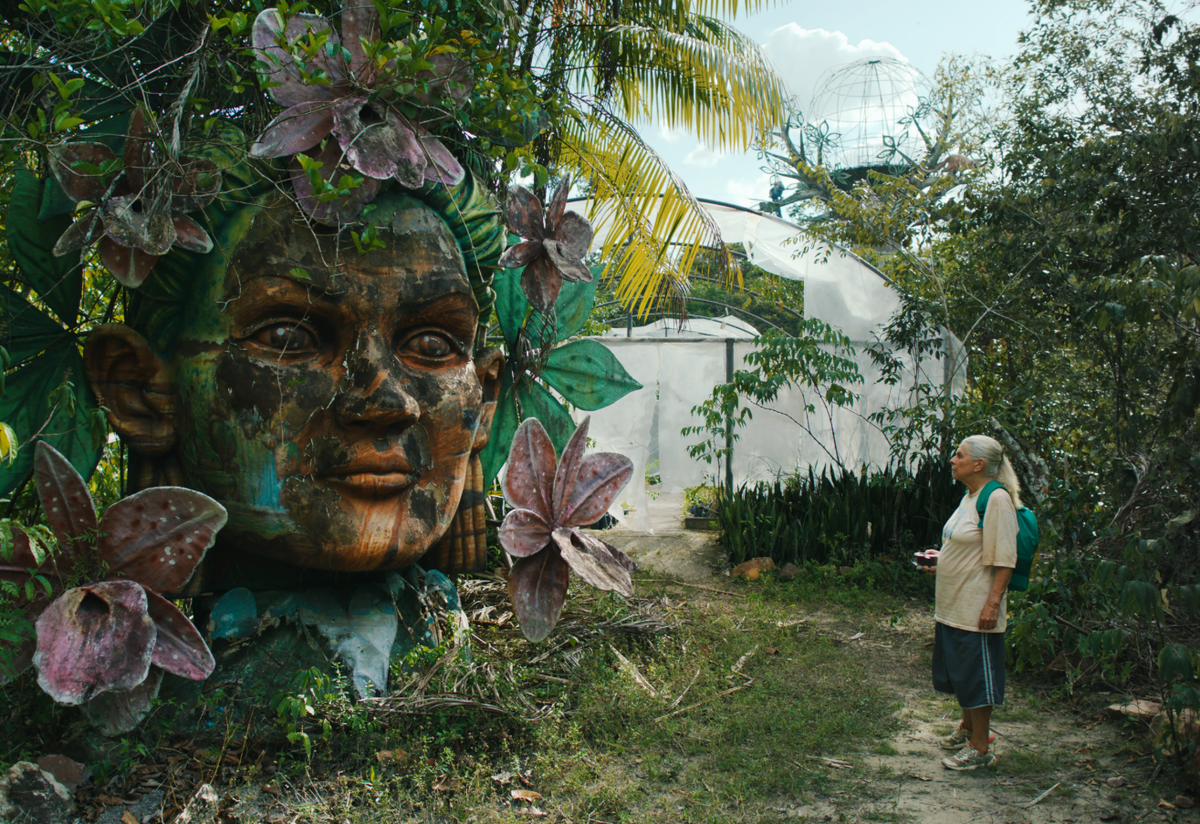
A still from ‘The Blue Trail’
| Photo Credit:
Desvia Filmes
Mascaro also mentions how visual and cultural notes from his time in Goa filtered into the film’s invented spaces and reinforced an unexpected kinship between the two Lusophone regions. He had been thinking about the Amazon when elements he’d observed in Goa suggested mise-en-scène possibilities and sartorial choices like the sharply tailored tropical police uniforms. “I was very obsessed with the casinos, because you don’t have that culture in Brazil, and it worked very well for the movie.” He describes how the likes of the floating Majestic Club casino on the Mandovi River in Goa influenced the Golden Fish, a fish-fighting pit, in his film. “It was very inspiring to be here,” he adds, calling the encounter a strange creative coincidence that later looped back into becoming IFFI’s opening film.

On representation, particularly of Amazonian and Indigenous cultures, Mascaro acknowledges limits and responsibilities. “It wasn’t necessarily a movie about Indigenous people; it was about an elderly subject,” he says. Even so, the Amazon’s cultural weight shaped the production. More than 20 actors and crew members came from the region’s theatre community, which is a choice he describes as both practical and ethical. “When you talk about the Amazon region, there is a huge demand for representation,” he explains. “Hopefully, more and more films can come from that region, directed by people from that region.”
Published – November 21, 2025 07:16 pm IST