



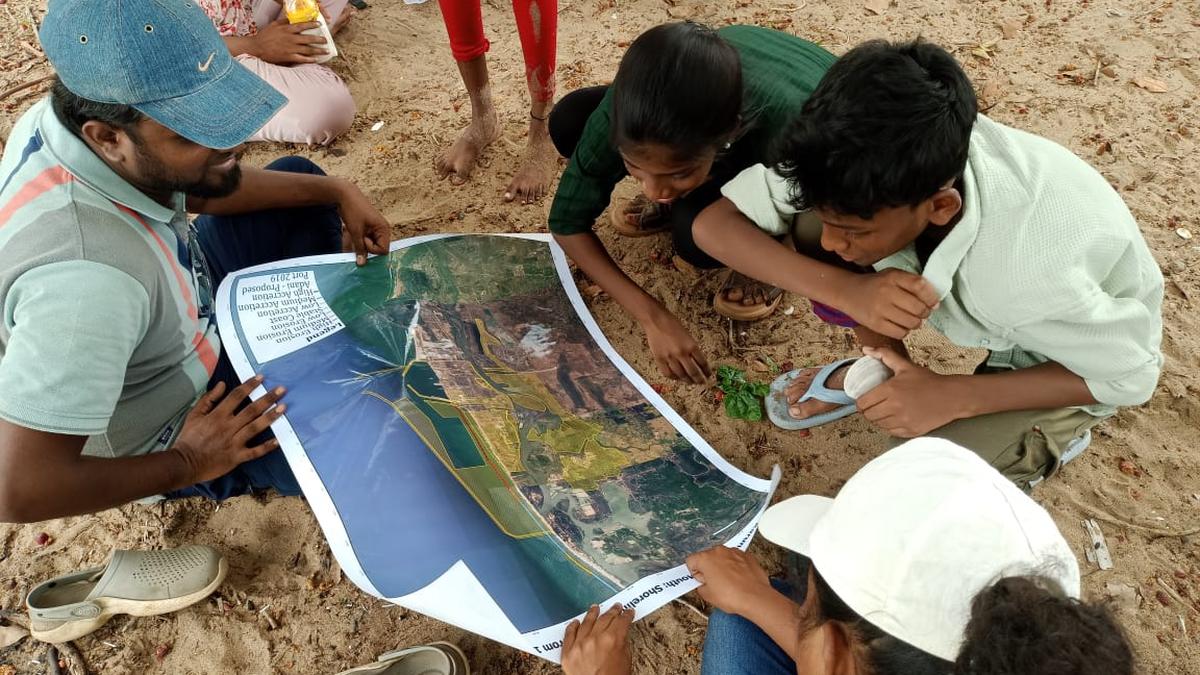

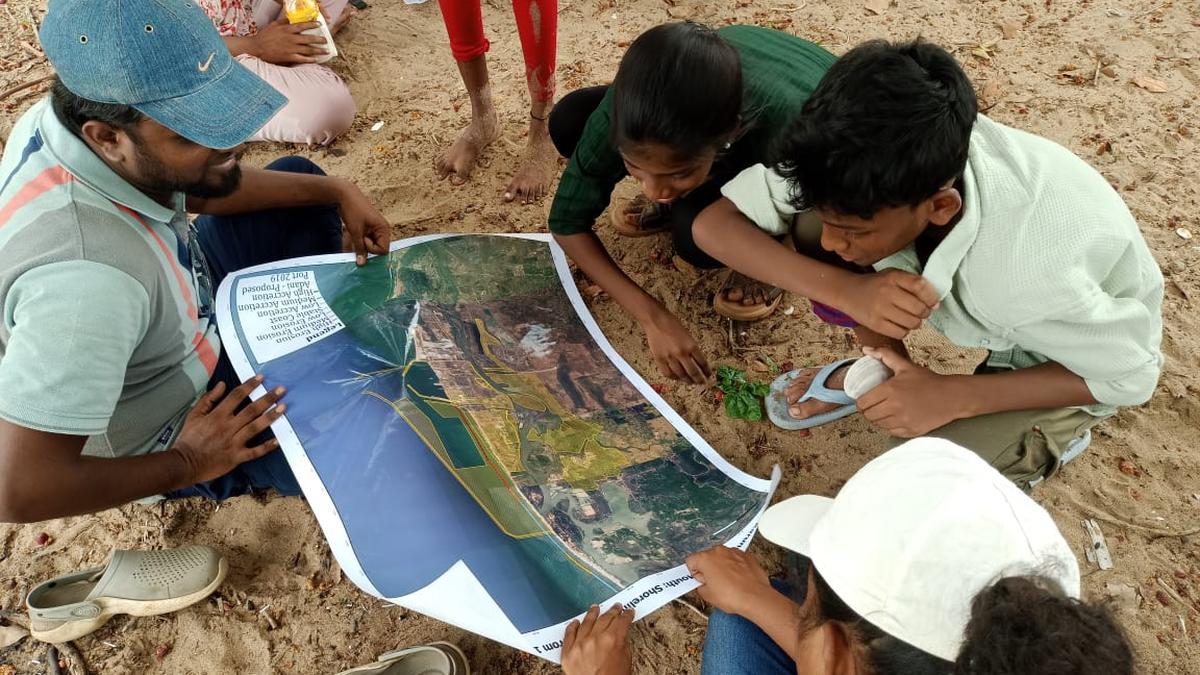
Equipped with lessons in local hydrology, children from J.J.R. Nagar are mapping flood-prone areas, spreading awareness about emergency helplines, and coordinating with zonal officials to tackle waterlogging before it turns severe
| Photo Credit: Special Arrangement
In Vyasarpadi, a working-class neighbourhood in north Chennai that often bears the brunt of monsoon flooding, a group of schoolchildren from J.J.R. Nagar is taking on a new role this Northeast monsoon asclimate volunteers.
Equipped with lessons in local hydrology, they are mapping flood-prone areas, spreading awareness about emergency helplines, and coordinating with zonal officials to tackle waterlogging before it turns severe.
Every year, when heavy rain or cyclonic storms cause flooding, volunteer groups — largely made up of young people — mobilise across Chennai to rescue stranded residents and distribute food and supplies. But in Vyasarpadi, the approach is shifting from relief to resilience. Instead of waiting for floods, these children are learning how their area drains, why water stagnates, and whom to contact when help is needed.

The six-member ‘Youth Climate Resilience Movement’ — K. Kavya (15), D. Tharani (15), V. Dinesh (16), S. Rishitha (15), S. Harish (12) and D. Vigneshwari (18) — was trained by the Chennai Climate Action Group (CCAG) and Palluyir Trust, with support from Vyasai Thozhargal, a local non-governmental organisation.
According to Sakthi, a professional photographer and member of Vyasai Thozhargal, the initiative grew out of a small tuition centre for children from marginalised families. “We encouraged them to ask questions — why water stagnates for days after rain, where the relief camps are, and whom to call during emergencies,” he says.
Training programme
The training introduced the children to how urban flooding works and how Chennai’s drainage systems connect. They were taken to key sites across the city — from Ennore and Pulicat in the north to the Buckingham Canal, Pallikaranai marsh, and the coastal stretches of Kovalam and Muttukadu — to understand the city’s hydrology.
“Earlier, I didn’t even know what ‘climate change’ meant. I learnt everything from the beginning. We also learnt that our area [J.J.R. Nagar] is not marked as a flood risk zone in the city disaster management plan for Zone IV,” says Dinesh.

The team identified encroachments along stretches of the Buckingham Canal, including at Captain Cotton Canal and near the CPCL Manali bridge, which are said to be blocking stormwater flow and worsened flooding in Vyasar Paadi, M.K.B. Nagar, Kodungaiyur, and Manali.
As part of their project, the team surveyed about 80 families in Vyasarpadi to gauge awareness of emergency contacts and flood preparedness. “Barely a few knew the contact numbers of officials beyond the police or electricity office. Some didn’t even know those,” says Kavya. Tharani adds that they also recorded residents’ lived experiences, from food shortages to days-long power cuts, to highlight the everyday impact of flooding.
On October 22, the group visited the zonal office and submitted a letter requesting recognition of J.J.R. Nagar as a flood-prone area and access to details of local relief camps, medical officers, and public health officials.
Need for climate education
Prasanth from CCAG says the effort shows how climate education can build community preparedness. “A volunteer from outside can only go so far. But when children who live here understand how the system works and whom to contact, they can take that knowledge back to their own streets,” he says.
Next, the team plans to send a letter to the Mayor and Corporation Commissioner along with their survey findings, urging action to clear encroachments and improve stormwater drainage.
Published – November 03, 2025 05:41 pm IST