


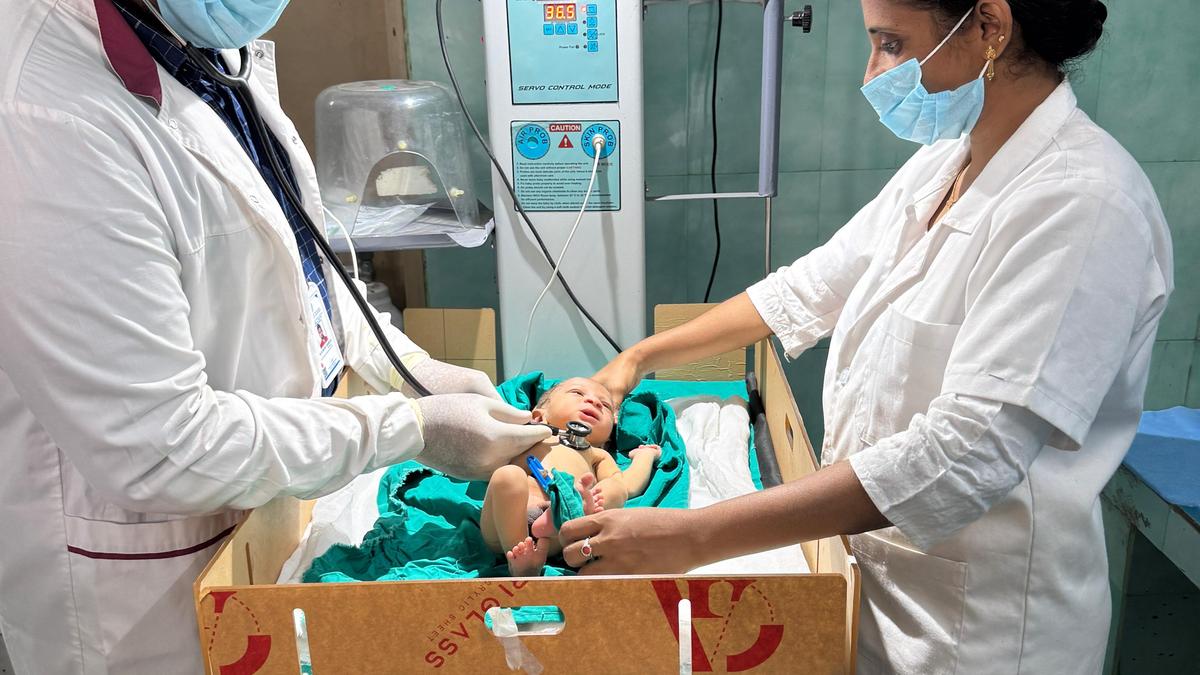

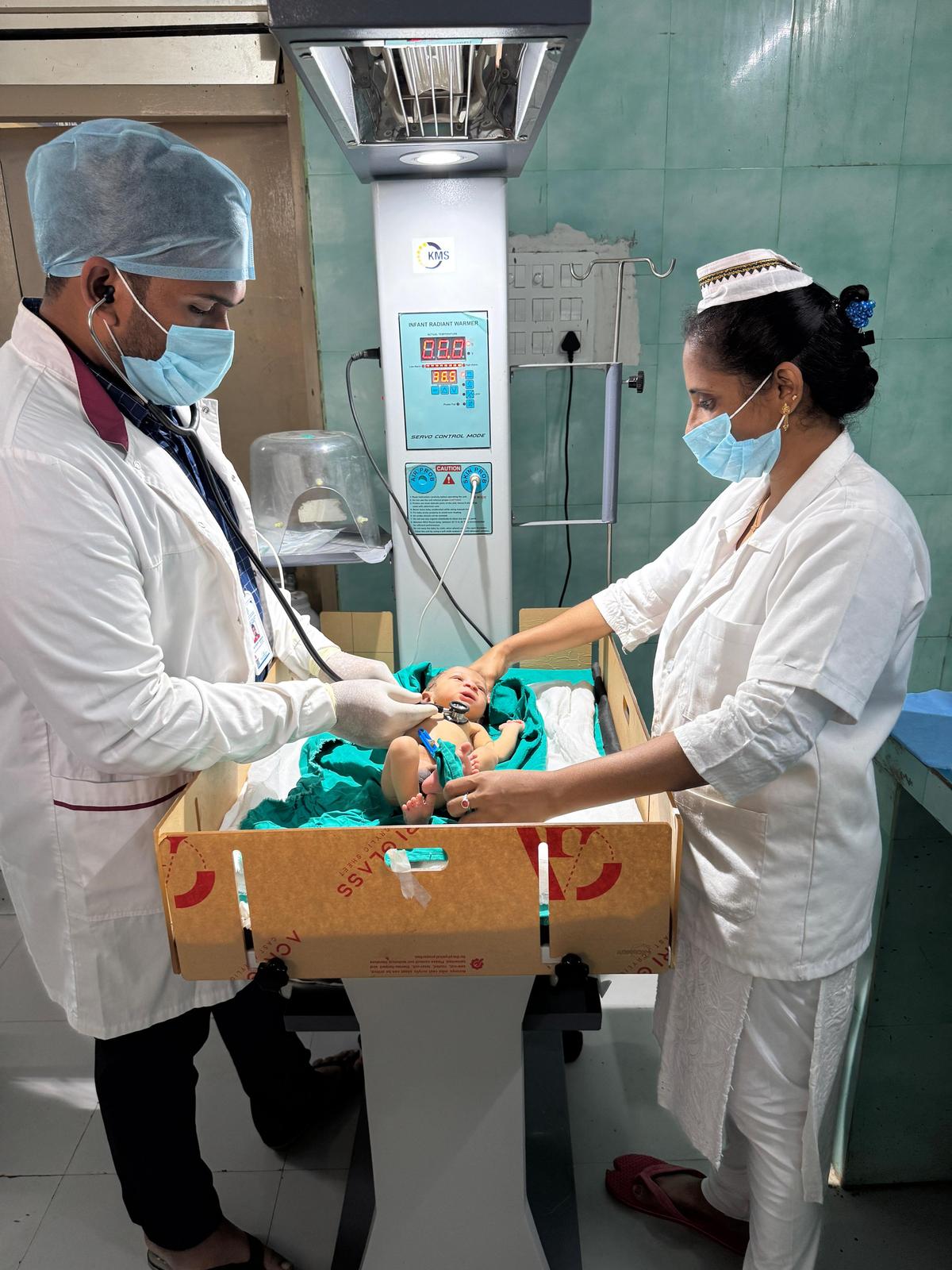
A newborn being attended to at the Community Health Centre (CHC) in Cherla of Bhadradri Kothagudem district, which handled a rare preterm twin delivery in the remote tribal belt.
| Photo Credit: Special Arrangement
In a district where residents often travel more than 50 kilometres to reach a referral hospital, doctors in Bhadradri Kothagudem say the recent handling of two life-threatening emergencies at the Community Health Centre (CHC) Cherla shows why strengthening these centres is as important as establishing new medical colleges. The government facility, located in a remote tribal and Naxal-affected belt, managed a preterm twin delivery and a severe multi-organ failure case within hours, both of which would typically require specialist intervention at a higher centre.
The first incident involved a 22-year-old woman in her first pregnancy who reported to the CHC in active labour at 30 weeks of gestation. District Coordinator of Hospital Services (DCHS) Ravi Babu said the woman had arrived with heavy bleeding and full-body labour pains. On examination, the staff found full dilation and ruptured membranes. “The case highlighted the courage and competence of the team, particularly Sister Dayamani, who realised that shifting the patient at that stage would put both mother and babies at risk,” he said.
The nurse proceeded with the delivery after counselling the family. The twins were born with a birth weight of 1.1 kg each. The first baby cried immediately, while the second required resuscitation before stabilising. Paediatrician S. Ravi Kumar reached the CHC soon after and both infants were stabilised before being referred to the Area Hospital in Bhadrachalam for preterm care and respiratory support.
In the second case, the CHC admitted a 70-year-old man, Rangarao, in a near-death condition. His family, unable to afford private treatment, had brought him home before making a last attempt at seeking care at the government facility. He arrived with altered sensorium, respiratory distress and severe derangements in renal and liver parameters. His creatinine was 8 mg per decilitre (normal 0.7–1.3) and his platelet count was 40,000 (normal 1.5–4 lakh), indicating multi-organ failure.
Doctors Ram Prasad and Sai Vardhan immediately began treatment, which included oxygen support, acidosis correction, renal-adjusted antibiotics and diuretics. Over the next few days the patient recovered significantly. His creatinine dropped to 2.5 mg per decilitre and his platelet count rose to 1.2 lakh. “The residents were astonished to see him discharged in stable condition, as many believed he would not survive,” Mr. Ravi Babu added.
These cases demonstrate how well-equipped CHCs can reduce referrals, prevent catastrophic expenditure for families and improve outcomes in remote populations. The district administration has been attempting to bring more young doctors to tribal belts through incentive programmes. District Collector Jitesh V. Patil has introduced additional incentives for paediatricians and gynaecologists, which officials say has helped increase institutional deliveries and specialist availability at CHC Cherla.
Published – November 26, 2025 06:54 pm IST