



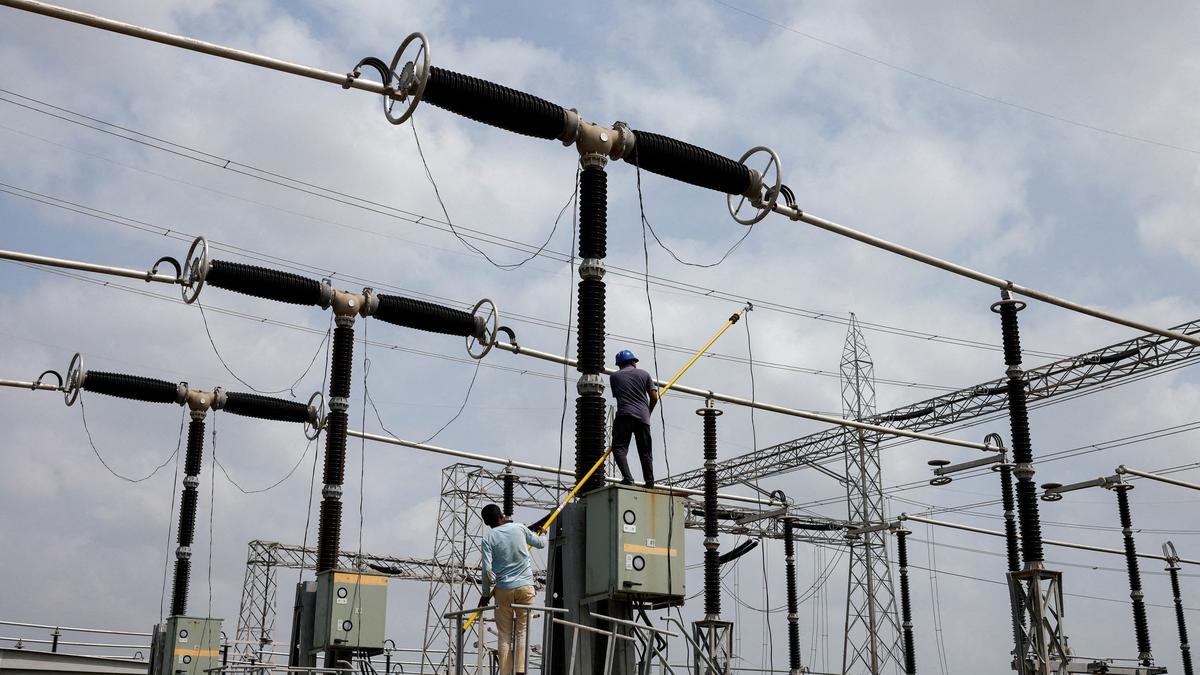

India could face a potential GDP loss of up to 24.7% by 2070 due to climate change. File
| Photo Credit: Reuters
India could face a potential GDP loss of up to 24.7% by 2070 due to climate change, highlighting the need for immediate and collective action, said Dr Ewa Suwara, Deputy Head of Delegation, European Union to India, while speaking at Renewable Energy India (REI) Expo & The Battery Show India (TBSI) 2025.

“In this context, green energy and clean industries are not merely options but imperatives for a sustainable future. The European Union deeply values its partnership with India, especially as both regions stand committed to advancing climate resilience, fostering innovation, and ensuring that ambition is matched by action,” she said.
“Together, through strategic collaboration and shared vision, we can bridge the gap between policy and progress,” she added.
Also Read | Fossil fuel-driven air pollution claimed 1.72 million lives in India in 2022: The Lancet report
Speaking at the event Dr. Philipp Ackermann, Ambassador of Germany to India, said, “Under the Green and Sustainable Development Partnership signed in 2022 between the Indian Prime Minister and the German Chancellor, Germany remains a steadfast partner in advancing renewable energy in India.”
“Our private sector brings cutting-edge technologies and expertise in solar, wind, bioenergy, storage, and green hydrogen, while Indian enterprises contribute scale and dynamism,” he said.
“Together, through initiatives such as the newly established India-German Solar and Wind Energy Working Groups, we aim to build joint manufacturing capacities, mobilise green capital, and create a globally skilled workforce that drives sustainable growth and energy security,” he added.
Yogesh Mudras, Managing Director, Informa Markets in India, the organisers of the event, said, “India’s clean energy transition is accelerating faster than ever, with renewable capacity surpassing 250 GW in 2025 and a strong pipeline targeting 500 GW by 2030.”
“The Ministry of Power has approved a ₹5,400 crore Viability Gap Funding (VGF) scheme for 30 GWh of Battery Energy Storage Systems (BESS), in addition to 13.2 GWh already underway, which is expected to attract ₹33,000 crore in investments by 2028,” he said.
Stating that India has already achieved 127 GW of installed solar capacity and is progressing steadily toward the 500 GW non-fossil energy target by 2030 Dr. Vibha Dhawan, Director General, The Energy and Resources Institute (TERI), said the government is fostering a strong domestic value chain through initiatives such as the National Green Hydrogen Mission, PLI scheme for solar and battery manufacturing, and National Manufacturing Mission.
“At TERI, decades of research, capacity building, and partnerships have been directed toward unlocking India’s estimated 10,800 GW solar potential and advancing agri-photovoltaic models that drive rural growth. The focus now must shift toward viewing sustainability as a strategic enabler of industrial competitiveness and inclusive development,” she said.
Published – October 31, 2025 08:31 am IST