



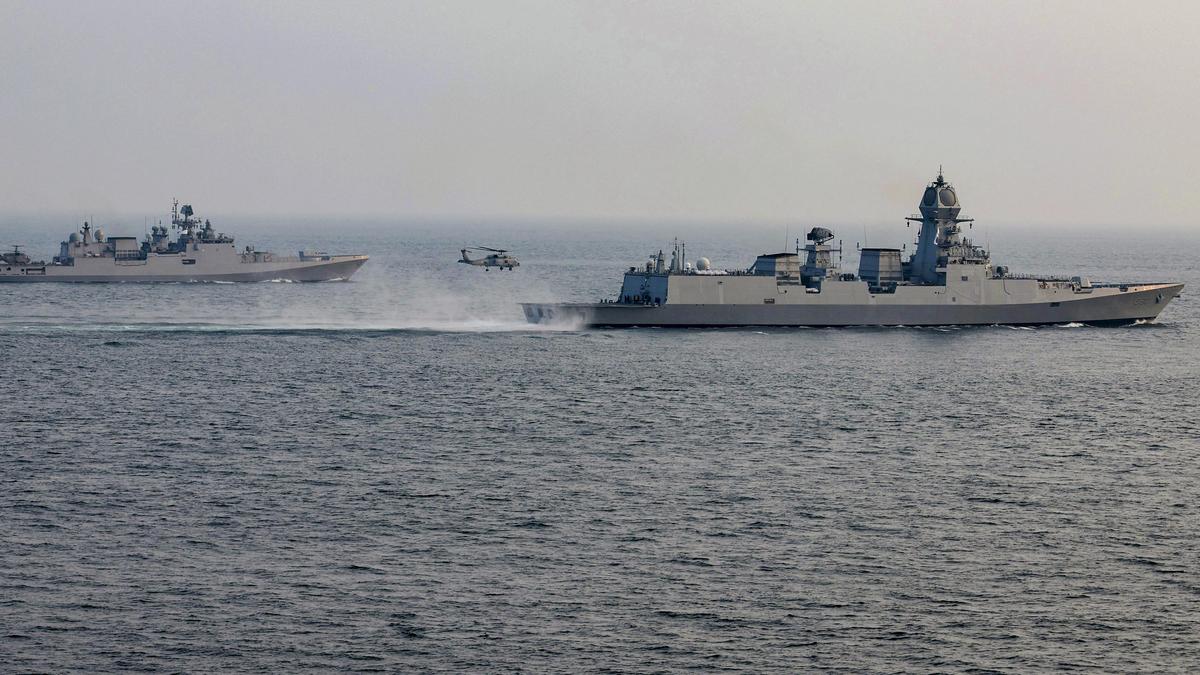

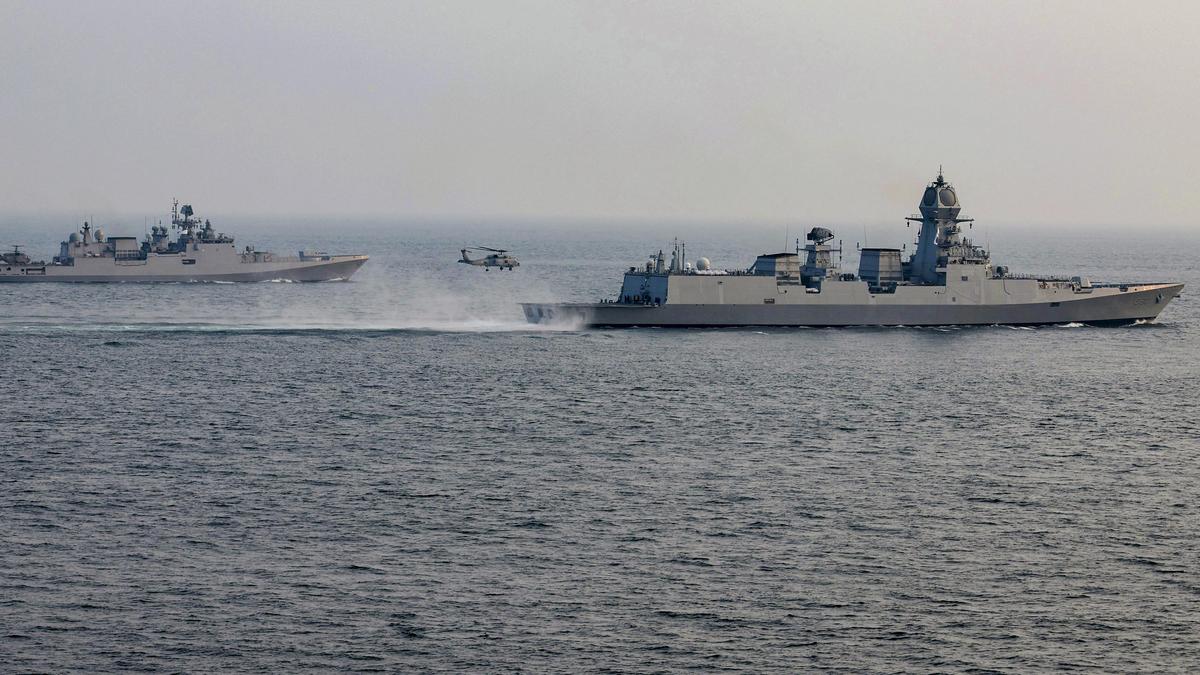
Image used for representative purpose only.
| Photo Credit: PTI
The Indian Navy will organise the International Fleet Review (IFR) in February 2026 in Visakhapatnam. The exercise seeks to reinforce the themes of being ‘United through Oceans’ and strengthening ‘Bridges of Friendship’.
Commander Sreehari S, posted at INS Agrani in Coimbatore, said India last conducted an IFR in 2001 to mark 50 years of the Republic. The 2026 edition coincides with the 75th anniversary. He said the maritime domain has become central to India’s foreign policy and strategic outreach. With threats such as piracy, climate change, illegal fishing, and economic inequality growing, multilateralism has emerged as indispensable to collective security and sustainable growth. Maritime challenges transcend borders, making collaboration essential. Hence, India has positioned the Navy as a key architect of multilateral engagement, he said.
New Delhi’s efforts to strengthen regional maritime capacities include gifting platforms such as a corvette to Vietnam, fast interceptor craft to Mozambique, and commissioning a Maritime Rescue Coordination Centre in Sri Lanka. India’s reputation as a dependable partner is shaped by its Humanitarian Assistance and Disaster Relief responses across the Indo-Pacific.
In October, while addressing senior military leaders of UN Troop Contributing Countries in New Delhi, Defence Minister Rajnath Singh reiterated India’s commitment to a rules-based international order and called for reforming outdated multilateral structures. Naval diplomacy, he said, remains a vital component of India’s strategic toolkit. The India-China dynamic in the Indian Ocean Region (IOR), marked by intense competition without naval confrontation, reflects the importance of calibrated maritime engagement.
Today, the Indian Navy participates in nearly 20 bilateral exercises, including SIMBEX, Varuna and CORPAT, and several multilateral engagements such as QUAD, MILAN, Malabar and Konkan. Institutions such as the Indian Ocean Naval Symposium, launched by India in 2008, have evolved into platforms for dialogue, coordination and cooperative security planning.
India’s maritime vision has expanded from SAGAR (Security and Growth for All in the Region) to the broader MAHASAGAR (Mutual and Holistic Advancement for Security Across the Region), which aims to deepen engagement not only within the IOR but also with Africa, ASEAN, Latin America and Pacific Island nations. The INS Sunayna multilateral deployment and the Africa–India AIKEYME exercise exemplify this forward-leaning approach.
The transition from being viewed as a ‘Net Security Provider’ to a ‘Preferred Security Partner’ underscores India’s evolving maritime identity. Security cooperation, capacity building, blue economy integration, climate resilience and support for a rules-based maritime order form the core pillars of this multilateral framework.
As India strives to emerge as a global maritime leader by 2047, upcoming events such as IFR 2026 in Visakhapatnam, the MILAN exercise, the IONS Chiefs Conclave, MAITRI workshops under the QUAD, and the ASEAN–India Year of Maritime Cooperation in 2026 represent significant milestones in shaping a secure, cooperative and interconnected Indo-Pacific.
Published – November 28, 2025 07:49 pm IST