



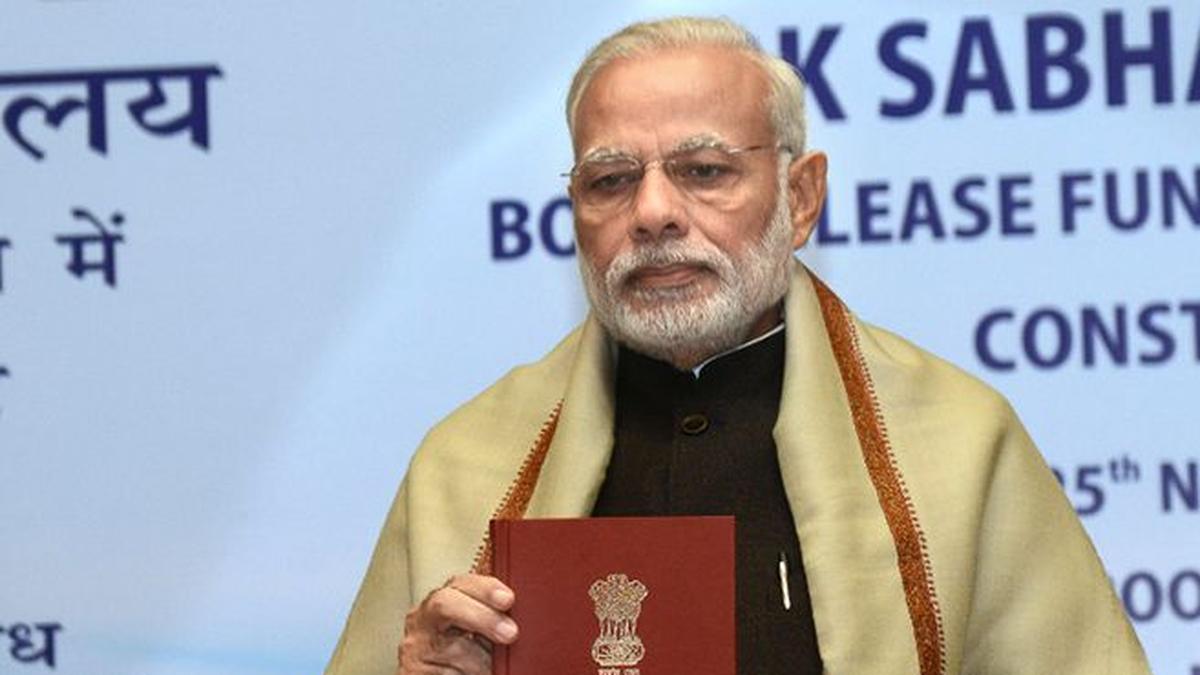

The year 2025 marks 75 years of the adoption of India’s Constitution. It is well known that the final draft of the Constitution was presented to the Constituent Assembly and approved on November 26, 1949. It was officially promulgated on January 26, 1950.
The Constitution has served our country effectively for the last 75 years. But the proof of the pudding is in its eating. While allegations and counter-allegations about who was the protector and who the detractor of the Constitution abound in a politically charged atmosphere, the country in general, and vulnerable sections of our national society, such as social and religious minorities and marginalised sections, view the Constitution as the guarantor of their rights and freedoms. Over the last seven decades, the Constitution has been successful in building the spirit of “One Nation – One People” in the country.
Some significant milestones in the 75-year journey of our Constitution stand as proof of its maturity and the great pragmatism built into it by the framers.
Hindu Code Bill
The determination to restructure Hinduism based on equality prompted B.R. Ambedkar to embark on framing the Hindu Code Bill. In 1948, Jawaharlal Nehru appointed him as the head of the sub-committee entrusted with the responsibility of drafting such a Bill. The Hindu Code Bill sought to codify the diverse systems and property practices affecting Hindu men and women. However, Ambedkar’s proposals faced stiff resistance in the Constituent Assembly from members of the Congress, the Hindu Mahasabha and others. Even Rajendra Prasad, the Constituent Assembly Chairman, argued that his wife would never support the divorce clause, and it was only the “over-educated women” who favoured the Bill. Most of the uproar was caused by clauses referring to the abolition of caste restrictions in marriage, the promotion of monogamy, the right to divorce, and the equal sharing of property for women. The proposal fell through.
Later, as the Law Minister in the first Union government in 1950, Ambedkar again set out to frame the Bill. Before drafting it, he appointed many Sanskrit scholars to translate important texts and shlokas. “The Hindu Code Bill was being sculpted with Saheb [Ambedkar] sitting in the conference with Hindu religious pundits, resolving doubts, and finding ways out”, wrote Ambedkar’s Saraswat Brahmin wife, Savita Ambedkar. He published a 39-page booklet clarifying various aspects of his proposed Bill and distributed it among MPs.
Prime Minister Nehru was initially enthusiastic and told Ambedkar, “I will swim or sink with the Hindu Code Bill.” However, a strong resistance soon surfaced within the Congress, as well as among sections of the Opposition, including Karpatri Maharaj’s Ram Rajya Parishad. Nehru developed cold feet and wrote to Ambedkar in August 1951 that “you should take things easy as there is opposition inside and outside to the Hindu Code Bill, the Cabinet has decided that it should be taken up at the beginning of September 1951”. When the discussion finally began in Parliament, Congress allowed its members to vote according to their conscience. No whip was issued, leading to lengthy and meaningless speeches by members. Ultimately, due to a time constraint, Ambedkar’s Hindu Code Bill was shelved. “If you want to maintain the Hindu system, Hindu culture, the Hindu society, do not hesitate to repair where repair is necessary. The Bill asks for nothing more than repairing parts of the Hindu system which almost became dilapidated,” Ambedkar fervently appealed, but to no avail.
In the end, Ambedkar resigned from the Cabinet in protest. But, starting in 1952, the exact content was adopted as four separate Bills championed by Nehru himself — the Hindu Marriage Act, Hindu Succession Act, Hindu Minority and Guardianship Act, and Hindu Adoptions and Maintenance Act — and the Hindu Code Bill became a reality in 1955-56.
Fundamental Duties
Another issue pertained to the Fundamental Duties. As World War II was raging, English author and statesman H.G. Wells solicited Gandhi’s support for his proposed Bill of Rights defining war aims. Gandhi responded through a cable to Wells with the recommendation that he should write a “cosmopolitan charter of duties instead”.
“You will permit me to say you are on the wrong track. I feel sure that I can draw up a better charter of rights than you have drawn up. But what good will it be? Who will become its guardian? I suggest the right way. Begin with a charter of Duties of Man and I promise the rights will follow as spring follows winter,” Gandhi wrote.
Gandhi was not alive when the Universal Declaration of Human Rights was adopted on December 10, 1948. Nor was he alive when the Indian Constitution was adopted on January 26, 1950. Despite Gandhi’s insistence, the Indian Constitution didn’t enumerate the duties of citizens at the time of its adoption. Primacy was given to the Fundamental Rights, as seen in the American Constitution, which begins with the Bill of Rights. After much deliberation, a set of Directive Principles was included as “State Policy”. Interestingly, this anomaly was finally rectified by Prime Minister Indira Gandhi in a most incongruous way. During the Emergency years of 1975-77, while all the leaders of the opposition parties were languishing in jails, she introduced the 42ndAmendment to the Constitution, which, among other things, incorporated Fundamental Duties under Article 51-A. Although a good step, it remained a half-hearted one because the said article became a part of the Directive Principles of the State Policy, which are suggestive in nature and hence non-enforceable and non-justiciable.
Secularism and socialism
The Preamble of the Indian Constitution today begins with the statement: “We, the people of India, having solemnly resolved to constitute India into a Sovereign, Socialist, Secular, Democratic Republic…”. However, in the Preamble drafted by the Constituent Assembly, words like “Socialist” and “Secular” did not exist. It simply read: “We, the people of India, having solemnly resolved to constitute India into a Sovereign Democratic Republic …”.
Issues of religion consumed a lot of time in the Constituent Assembly. But there was consensus that the Constitution should be secular in character.
However, when it came to explicitly mentioning words like “secular” and “socialist” in the text, most members, including Ambedkar, expressed reservations. Members like K.T. Shah, H.V. Kamath and Brajeswar Prasad insisted on those words. Ambedkar told them that all such issues pertaining to the priorities of the country were better left for future generations.
“What should be the policy of the State, how the Society should be organised in its social and economic sides, are matters which must be decided by the people themselves according to time and circumstances. It cannot be laid down in the Constitution itself, because that is destroying democracy altogether. I do not see therefore why the Constitution should tie down the people to live in a particular form and not leave it to the people themselves to decide it for themselves,” he argued.
The general view of the Assembly was that the western conception of secularism, by which the state was expected to be aloof from religion, couldn’t be applied to the Indian situation, where the two intersect frequently. Hence, while the state should practice an Indian version of secularism, stating the same explicitly could lead to a lot of confusion and hence be avoided. Although himself an avowed secularist, Nehru too expressed similar hesitation in inserting the word “secular”.
Indira Gandhi’s decision to insert the two words through the infamous 42ndAmendment in 1976 continues to raise hackles in the country to this day. When an appeal for their deletion went to the Supreme Court, it chose to defend the insertion observing in November 2024 that “while it is true that the Constituent Assembly had not agreed to include the words ‘socialist’ and ‘secular’ in the Preamble, the Constitution is a living document, as noticed above with power given to the Parliament to amend it in terms of and in accord with Article 368”.
On why “secular” was not added in the original draft, the court said, “In 1949, the term ‘secular’ was considered imprecise, as some scholars and jurists had interpreted it as being opposed to religion. Over time, India has developed its own interpretation of secularism, wherein the State neither supports any religion nor penalises the profession and practice of any faith.”
On the question of the word “socialist”, the court said, “Neither the Constitution nor the Preamble mandates a specific economic policy or structure, whether left or right. Rather, ‘socialist’ denotes the State’s commitment to be a welfare State and its commitment to ensuring equality of opportunity.”
Not all may agree with the court’s views.
Decentralisation and Panchayati Raj
Gandhi was an ardent advocate of village self-reliance. India lives in villages, he would insist, adding that this nation would die the day its villages become lifeless. “Gram Swaraj” – village self-rule was an article of faith for him.
In the Constituent Assembly, a detailed discussion took place over the Gandhian view of decentralisation and devolving major powers to the village panchayats. Many members insisted that a strong centre and an empowered village panchayat system should be the way forward for India.
But Ambedkar took an uncharacteristically strident line. He ridiculed that “the love of the intellectual Indians for the village community is of course infinite if not pathetic”. Although the village panchayats have been the long-surviving political institutions in India, their contribution to the affairs and destiny of the country was very little, he opined. Then came his harshest observation, which was strongly criticised by the members later for its stridency: “I hold that these village republics have been the ruination of India. What is the village but a sink of localism, a den of ignorance, narrow-mindedness and communalism? I am glad that the Draft Constitution has discarded the village.”
Naturally, the Gandhians in the Assembly were not impressed. When a proposal was mooted by Kamath that the Preamble should have Gandhi’s name, Brajeswar Prasad intervened to oppose the suggestion, arguing that the foundations of the Constitution were rooted in decisions of the American Supreme Court.“If we had a Gandhian Constitution, I would have been the first to offer my support. I do not want that the name of Mahatma Gandhi should be dragged in this rotten Constitution,” he commented a bit harshly.
India was to adopt Gandhi’s rural empowerment programme after four decades under the 73rdand 74thAmendments to the Indian Constitution. The 73rd Amendment, popularly known as thePanchayati RajAmendment, was promulgated in 1992 and came into effect in 1993. Through this amendment, a three-tier elected local government structure was established at the village, block, and district levels. However, the system faces criticism that it has only provided financial powers but failed to devolve real decision-making powers to the village-elected bodies, and in that sense, lacks the vision of Gandhi’sGram Swaraj.
Abrogation of Article 370
The story of Article 370 was another example of how an inconclusive chapter of our Constitution reached its logical conclusion during its journey of seven decades. While the draft Constitution was being prepared, Sheikh Abdullah approached the architect of the Constitution, Ambedkar, with a request to draft a special law for Kashmir. Ambedkar flatly refused. “Making limited application of laws made by Parliament for the State of Jammu and Kashmir would create lots of problems rather than solving them,” he bluntly told Abdullah. Nehru stepped in and entrusted the responsibility of drafting a special law for J&K to his trusted colleague from the Madras province and former Prime Minister of Kashmir, N. Gopalaswami Ayyangar.
Gopalaswami was a seasoned politician and an ardent Congressman. But even he found dealing with Abdullah difficult. The draft article, originally titled 306A, ran into trouble with Abdullah. Annoyed, Gopalaswami threatened to resign, saying, “Our discussion this morning, as I indicated to you, left me even more distressed than I have been since I received your last letter from Srinagar… I feel weighted with the responsibility of finding a solution for the difficulties that, after Panditji left for America and within the last few days, have been created, from my point of view, without adequate excuse.”
Article 306A (which became Article 370 in the final draft) was hastily brought before the Constituent Assembly in October 1949, just a month before the final approval of the Constitution. When the discussion began, several members raised serious objections. The first to object was Communist Party member from Lucknow and renowned Urdu poet, Hasrat Mohani. “Why this discrimination, please?” he remarked, to which Gopalaswami’s reply was: “The discrimination is due to the special conditions of Kashmir.”
“If you grant these concessions to the Maharaja of Kashmir, you should also withdraw your decision about the merger of Baroda into Bombay and allow all these concessions and many more concessions to the Baroda ruler also,” retorted Mohani. Gopalaswami went on to provide a long explanation for the special treatment accorded to J&K. Finally, the article found a place in the Constitution under “Temporary, Transitional and Special Provisions”.
It was to be a temporary provision. There were several occasions during Nehru’s tenure when the demand for its repeal had arisen in Parliament. Even Bakshi Ghulam Mohammad, the Prime Minister of J&K, had once urged Nehru to repeal the Article. When a group of leaders called on Nehru and demanded the repeal of Article 370, Nehru did concede that the Article was not serving any purpose. India’s first spy chief, B.N. Mullik, claimed that in a private conversation, Nehru made an extraordinary admission that India “agreed with the Jana Sangh’s views that Jammu & Kashmir should be fully integrated with India and was taking steps in that direction”. In Parliament, in an oral reply, he said that Article 370 had been “eroded and Kashmir stands fully integrated”.
Prakash Vir Shastri, a Bharatiya Jana Sangh member of Parliament from Bijnour in Uttar Pradesh, had moved a Private Member’s Bill in Parliament in 1964 on Article 370. That Bill received wide support from members cutting across party lines. Even the Congress and National Conference members were seen supporting it. Of particular interest were the speeches made by the associates of Abdullah.
Abdul Ghani Goni from J&K, who was earlier a staunch supporter of a separate Muslim identity for Kashmir, was surprisingly aggressive in demanding the repeal of Article 370. “The people of Kashmir had decided once and for all that Kashmir is an integral part of India, whether there is Article 370 or no Article 370. It is only a provisional provision and a temporary provision in the Constitution, which can be removed at any time. But as far as the complete accession is concerned, that is final and nobody can challenge it,” he declared during the debate.
Goni also made a dispassionate appeal that “we may also be treated as equal citizens, as good citizens of India as any other citizen. Don’t treat us as second-class citizens, and don’t treat us as a colony of India. We are as much a part of India as other states.”
Another member of Parliament from the State, Syed Nasir Husain Samnani, also rose to question the relevance of Article 370, saying, “We, the people of Kashmir, never demanded that we should be treated differently. We do not want Article 370. I want to end this curse in my lifetime, for my safety, for my children’s safety, for the safety of our future generations. We should have the same laws as Maharashtra, Madras, Kerala, Bengal. We did not believe in two-nation theory of [Muhammad Ali] Jinnah and hence we did not allow any branch of Muslim League to be formed in J&K.”
The anomaly thus created at the time of the framing of our Constitution was corrected through a recourse provided by that very Constitution in August 2019 by the Narendra Modi government by way of abrogating Article 370.
Uniform Civil Code
During his Independence Day address in August 2023, Prime Minister Narendra Modi referred to the unfinished agenda of the Constitution, calling for the promulgation of a Uniform Civil Code. “Laws that divide the country on religious lines must be done away with. They have no place in a modern society. The times demand a secular civil code. And then we will be free of religious discrimination,” he said.
Modi’s pitch for a secular civil code for all Indians is perfectly in line with the arguments made by Ambedkar in the Constituent Assembly.
On November 23, 1948, when Article 35 of the draft Constitution, which called for a Uniform Civil Code, came up for discussion before the Assembly, Ambedkar took the firm stand that it shouldn’t get mired in communal discourse. Rejecting amendments proposed by members like Pocker Sahib, Hussain Imam and Muhammad Ismail Sahib, Ambedkar reiterated that there was no merit in their argument that the “Sharia law was immutable and uniform throughout India”. He reminded them that many other laws like the Criminal Procedure Code, the Law of Transfer of Property and the Negotiable Instruments Act, were applicable to all Indians, covering every aspect of their lives. He argued that until the Sharia Act was passed by the British colonial government in 1937, most Muslims in provinces of British India followed Hindu law.
Many women members of the Assembly, led by Rajkumari Amrit Kaur, strongly pitched for a Uniform Civil Code. In her letter to the Sub-Committee, Amrit Kaur, along with Hansa Mehta and M. R. Masani, wrote that “one of the factors that has kept India back from advancing to nationhood has been the existence of personal laws based on religion which keep the nation divided into watertight compartments in many aspects of life”.
The Uniform Civil Code should have been implemented after the formation of the first government in 1952. M.C. Chagla, who rose to become the Education Minister in the Jawaharlal Nehru government, insisted that “Article 44 is a mandatory provision binding the Government, and it is incumbent upon it to give effect to this provision”. However, Nehru couldn’t muster the courage when the best opportunity came during the Hindu law reforms in 1955-56. He evaded the issue, arguing that “I do not think that time is ripe in India for me to try to push it through”.
The issue lingered on since then. The courts repeatedly told the government that civil law reform is not just a matter concerning any one religion and hence a uniform code is essential. InSarla Mudgal v. Union of India (1995), the Supreme Court had held that “when more than 80 per cent of the citizens have already been brought under the codified personal law, there is no justification whatsoever to keep in abeyance, anymore, the introduction of Uniform Civil Code for all citizens”. In the John Vallamattom v. Union of India (2003), the apex court again said that “it is a matter of regret that Article 44 of the Constitution has not been given effect to”. Highlighting the prevailing confusion due to various personal laws, the court asked the Central government in October 2015 if they were willing to implement a Uniform Civil Code. “What happened to it? Why don’t you frame and implement it?” the court said.
Noorjehan Safia Niaz and Zakia Soman, co-founders of the Bharatiya Muslim Mahila Andolan (BMMA), wrote a letter to Prime Minister Modi in November 2015, stating that “certain orthodox and patriarchal males have stonewalled any attempt towards reform in Muslim personal law. In the process, Muslim women have been denied their Quranic rights as well as their rights as equal Indian citizens. Almost all Muslim countries the world over, such as Morocco, Tunisia, Turkey, Egypt, Jordan and even Bangladesh and Pakistan in our neighbourhood, have codified personal laws governing marriage and family matters… Indian Muslims are denied this opportunity”.
As the BMMA leaders argued, codification of personal laws had nothing to do with religion. It is a step towards gender justice and is a secular necessity, as pointed out by Mr. Modi. This remains one of the unfinished agendas of Ambedkar and the Constituent Assembly.
Conclusion
For democracies to succeed, Gandhi and Ambedkar believed that parliamentary majorities needed to be restrained through constitutional ethics and public morality. Enlightened public opinion is critical to democracy’s success.
It is nobody’s claim that democracies are perfect political systems. Winston Churchill used to quip that democracy was the worst form of government “except for all the others”. Nehru held the same opinion and said, “Democracy is good. I say this because other systems are worse. So, we are forced to accept democracy. But merely saying that democracy will solve all the problems is utterly wrong. Problems are solved by intelligence and hard work.”
Ultimately, the Constitution is only a statement of intent. Constitutionalism — acting in its spirit — is critical for those who manage it. We must always remember the American Supreme Court Justice Joseph Story’s caution: “Republics are created by the virtue, public spirit, and intelligence of the citizens. They fall, when the wise are banished from the public councils, because they dare to be honest, and the profligate are rewarded.” Ambedkar, as the Chairman of the Drafting Committee, delivered his final address on November 25, 1949. It remains one of his best orations in history. His closing comments must continue to ring in our ears always: “Our Constitution has provisions in it which appear to some to be objectionable from one point or another. If the people who are elected are capable and men of character and integrity, they would be able to make the best even of a defective Constitution. If they are lacking in these, the Constitution cannot help the country.”
It is all about respecting constitutional morality, conventions and public institutions by the leaders of the republics. The United States has a written Constitution; the United Kingdom does not. Yet both developed healthy conventions that safeguard their democracies. There is a well-regarded convention in the U.S. where the outgoing President leaves behind a handwritten letter for the incoming one, which the incumbent gets to see on their first day in the Oval Office. “We are just temporary occupants of this office. That makes us guardians of those democratic institutions and traditions — like rule of law, separation of powers, equal protection, and civil liberties. Regardless of the push and pull of daily politics, it’s up to us to leave those instruments of our democracy at least as strong as we found them,” Barack Obama wrote in his letter to Donald Trump in January 2017.
As India marks 75 years as a republic, Ambedkar’s warning — that “constitutional morality is not a natural sentiment; it needs to be cultivated” — should always be remembered. The nation must dedicate itself to the task of cultivating that morality.
Ram Madhav is a senior BJP leader and author. He is currently the President of the India Foundation, a New Delhi-based think tank.