



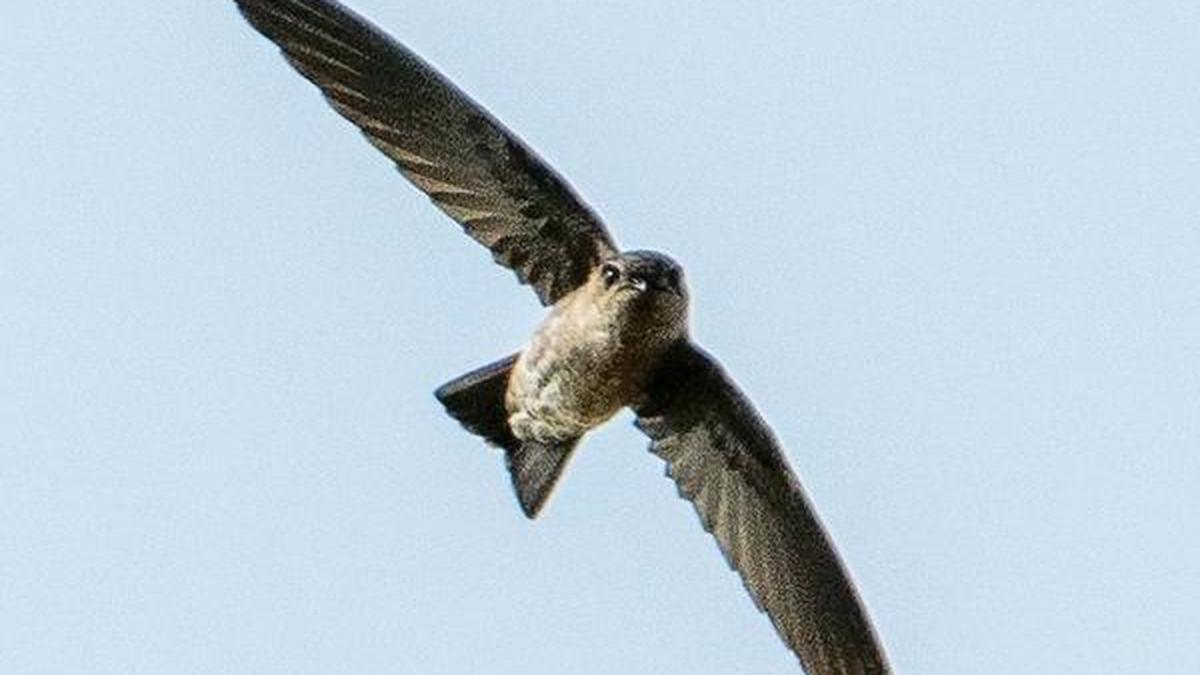


An Indian swiftlet photographed by birder Saravana Manian at Adyar Estuary on October 26, 2025. The identification of the species was done recently.
| Photo Credit: Saravana Manian
The second look always uncovers more than what the opening gaze did. On rare occasions, the second look totally upends conclusions made from the initial glance. That is how a bird record from Adyar Estuary on October 26 underwent a revision.
The bird was first believed to be a Dusky Crag Martin, and the photos were squatting in the memory card largely unseen, even less examined. Around a month later, a study of the photos by an eBird reviewer demanded a re-identification of the bird. And as it turned out, what had been seen on the last Sunday of October in 2025 was an altogether different feather, one spiralling into Chennai for the first time.
The visitor to the Adyar Estuary, that day, that was mistaken for a Dusky Crag Martin was actually an Indian edible-nest swiftlet (Aerodramus unicolor), also known as the Indian swiftlet. The bird was photographed by Saravana Manian, the sighting taking place in the company of a clutch of other birders.
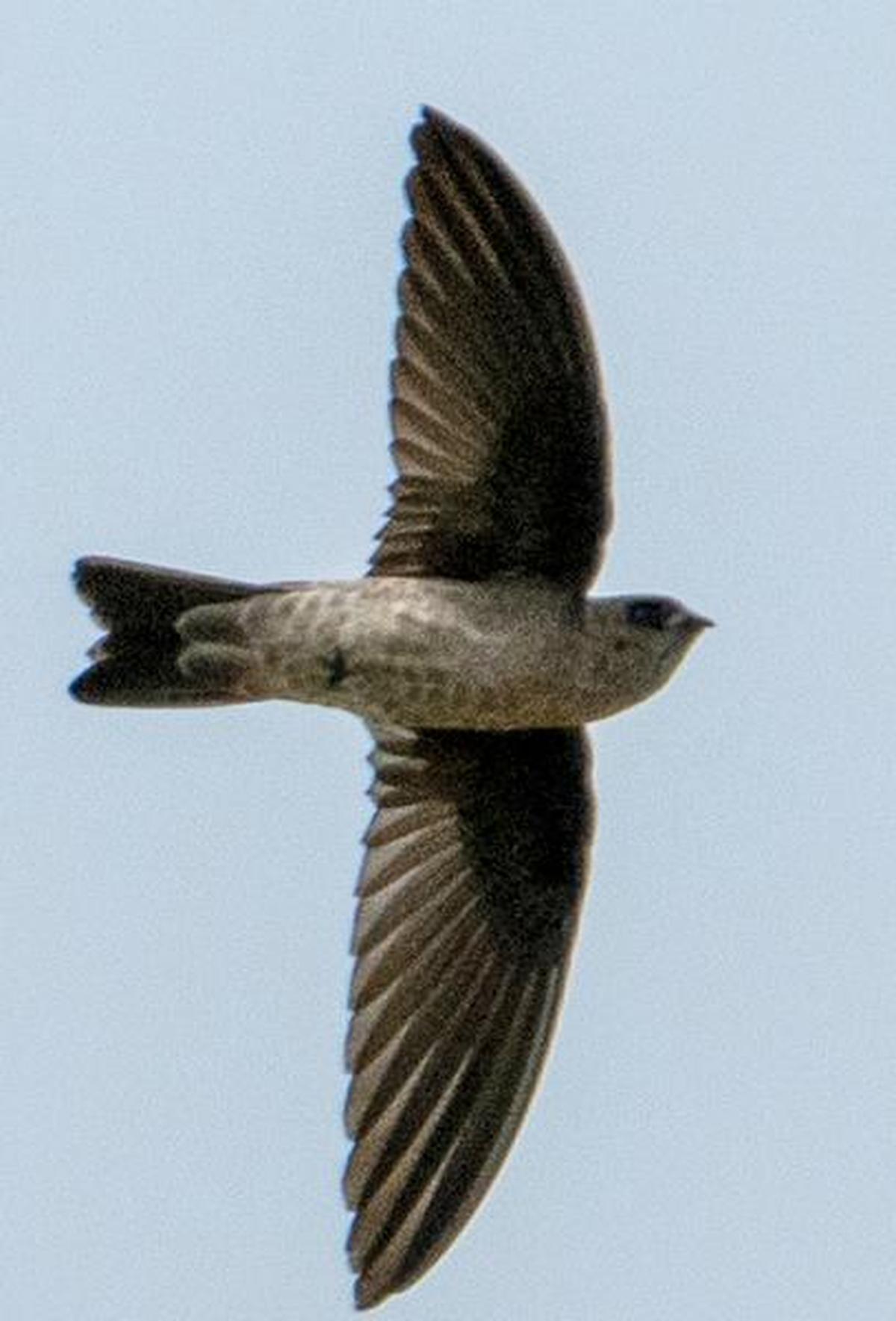
The Indian swiftlet photographed by birder Saravana Manian at Adyar Estuary on October 26, 2025
| Photo Credit:
Saravana Manian
Saravana Manian points out that Adyar Estuary is an unlikely terrain for the Indian swiftlet. He elaborates: “Previous records of the Indian swiftlet from Tamil Nadu have been from hilly or mountainous patches — Palani Hills, Kodaikanal, Sirumalai and the Coimbatore and Kanyakumari ranges of the Western Ghats. The bird is also found in Sri Lanka.”
Besides hills and mountains, the species is also known to “patronise” buildings abandoned for a long time. Habitats fitting these descriptions are a far cry from what exists in and around the Adyar Estuary, which makes this sighting decidedly baffling.
From the viewpoint of probability, the unlikelihood of an Indian swiftlet “vacationing” around the broken bridge in the Adyar Estuary might be of astronomical proportions. In life, all sorts of unexpected events happen and might come across as mysterious at first glance. With diligent study, the mystery behind such events could collapse, and be seen for what they are — the less-known extension of the natural. As in life, so in birding.
In this species, the male is the nest builder. And the nest is in the form of a cup, and it is licked into shape by the male bird using its saliva. In certain parts, these cups go into the making of gastronomic delicacies, earning the bird its name, Indian edible-nest swiftlet.
Published – November 30, 2025 12:14 pm IST