



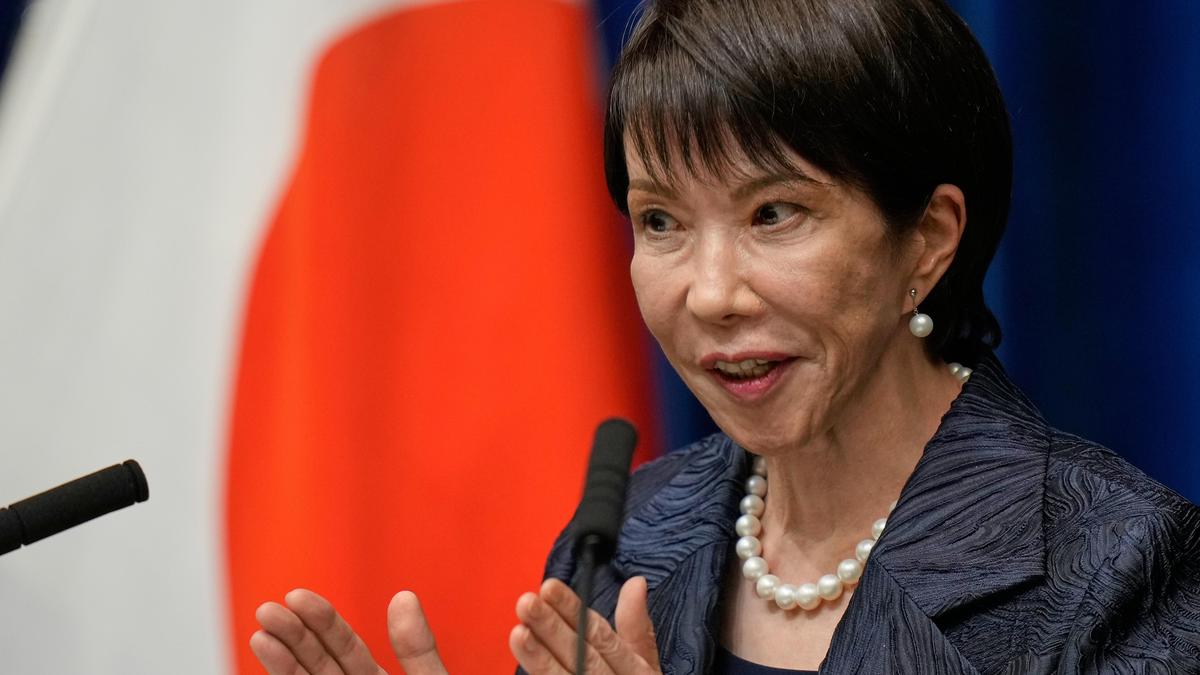


“As for funding, we will utilise higher-than-expected tax revenues and non-tax income, but any remaining shortfall will be covered by issuing additional government bonds,” Japan Prime Minister Sanae Takaichi said. File
| Photo Credit: AP
Japanese Prime Minister Sanae Takaichi’s cabinet approved a ¥21.3 trillion ($135.40 billion) economic stimulus package on Friday (November 21, 2025), marking the first major policy initiative under the new leader, who has pledged to pursue expansionary fiscal measures.
The package includes general account outlays of ¥17.7 trillion, far exceeding the previous year’s ¥13.9 trillion and representing the largest stimulus since the COVID pandemic. It will also include ¥2.7 trillion in tax cuts.
Growing concerns about the nation’s worsening fiscal position brought about by Ms. Takaichi’s lavish stimulus package have sent the Japanese currency to 10-month lows and super-long government bond yields to record highs.
Speaking to reporters, Ms. Takaichi stressed that the package fully takes into account fiscal sustainability.
“As for funding, we will utilise higher-than-expected tax revenues and non-tax income, but any remaining shortfall will be covered by issuing additional government bonds,” she said.
“But the total amount of government bond issuance after the supplementary budget, combined with the initial budget, for this financial year is expected to be lower than last year’s post-supplementary total of ¥42.1 trillion,” Ms. Takaichi said.
The size of additional government bond issuance to fund the stimulus package has still to be finalised, but is expected to be larger than the ¥6.69 trillion issued for last year’s stimulus, sources familiar with the matter said.
The cabinet plans to approve a supplementary budget to fund the package as early as November 28, aiming to secure parliamentary approval by the end of the year.
($1 = ¥157.3100)
Published – November 21, 2025 01:42 pm IST