


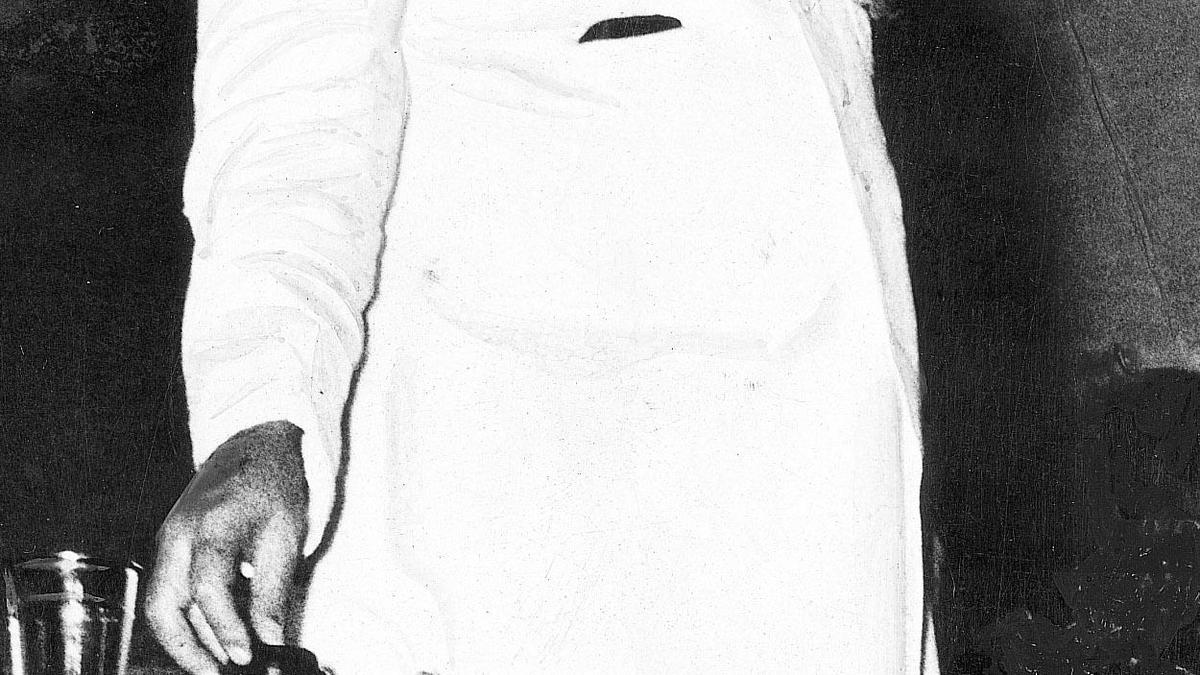

Conscious of the fact that language was a politically sensitive issue in Tamil Nadu, Prime Minister Jawaharlal Nehru, in his speech in June 1963 at the Ripon Buildings, the Madras Municipal Corporation headquarters, assured the people of the State that “any idea that any one language can dominate over others or, what is called linguistic imperialism, is totally unrealistic”.
Nehru made his speech after unveiling the statue of veteran Congress leader and former Madras Mayor S. Satyamurti on the lawns of the building. Among those present were Governor Bishnuram Medhi, Chief Minister K. Kamaraj, and Ministers R. Venkataraman and P. Kakkan, besides Mayor G. Kuchelar of the DMK. “There was an unscheduled but delightful departure from the programme when Srimathi M.S. Subbulakshmi, who was seated in the front row of invitees, was requested to sing the prayer,” reported The Hindu on June 15, 1963.
‘Frightened of learning languages’
On the need for Indian languages to come closer to each other, Nehru referred to the relationship of Sanskrit with the North Indian languages and said this “does not apply to the southern languages”, though they had absorbed “a very large number of Sanskrit words”. Wondering why “people are frightened of learning languages”, the Prime Minister acknowledged that in South India, people knew more than one language. “Sometimes people take pride in the ignorance of not knowing something, which is rather absurd.”
Dismissing the notion that “one language is going to come in the way of the growth of the other language”, Nehru said all the languages would grow in “their regional spheres”. He expressed the hope that “by their influence, they will help in the growth of other languages too”. Describing as “a great mistake” the position of some persons that the “purity of language consists in keeping it cut off from other languages”, he observed that such an approach “may result in some kind of purity but it also results in a lack of growth, in the decadence of a language which shuts itself out from other influences”. English had freely borrowed words and phrases from other languages, benefiting richly in the process, he pointed out.
The text of his speech is among the 35,000 documents and about 3,000 illustrations available on https://nehruarchive.in/. The documents and illustrations form part of the Selected Works of Jawaharlal Nehru, a set of 100 volumes.
In fact, by the time Nehru visited Madras, his government got a law enacted: The Official Languages Act, 1963. It came into force on May 10, 1963. It covered aspects such as the authorised Hindi translation of Central laws, Ordinances, and other statutory instruments and Bills or amendments to be introduced or moved in Parliament; publication of the Hindi translation of State laws and Ordinances; and the use of Hindi and other official languages of States, if required, for purposes of judgments, decrees and orders of High Courts with the previous consent of the President.
Exactly three years earlier, the President’s order was issued on April 27, 1960, as a sequel to the findings of a joint parliamentary committee that examined the recommendations of the first Official Languages Commission. The order talks of the panel’s general approach towards a variety of matters such as the use of English as the subsidiary Official Language after 1965 and no restriction on the use of English for the present or even after 1965 for purposes to be specified by Parliament. One of the valuable documents available on the Nehru Archive is the former Prime Minister’s letter to E.V.K. Sampath, the DMK MP representing Namakkal and the party chairman of the Anti-Hindi Action Committee. Written in response to the MP’s letter when the DMK had planned a protest during President Rajendra Prasad’s visit to the State, the letter of August 3, 1960 came a day after Union Minister for Home Affairs G.B. Pant’s “categorical declaration,” as The Hindu put, that it was not the government’s desire to depart from the Prime Minister’s assurance given in August 1959.
At that time, Nehru said, “There must be no imposition [of Hindi on non-Hindi speaking people]. Secondly, for an indefinite period — I do not know how long — I should have, I would have, English as an associate additional language which can be used…but because I do not wish the people of the non-Hindi areas to feel that certain doors of advance are closed to them, because they are forced to correspond — the Government, I mean — in the Hindi language. They can correspond in English”.
‘Disrespect to our President’
Terming the DMK’s proposed protest a “matter of deep regret” and “disrespect to our President”, Nehru made it clear to Sampath, “There has been no occasion at any time for our Government to go back in any way on the assurances I gave in the Lok Sabha in regard to the language question.” He referred to Pant’s statement in the Lok Sabha and State Finance Minister C. Subramaniam’s clarification in support of his position.
A year before his long-standing colleague in the Congress, C. Rajagopalachari (CR or Rajaji), left the party to form the Swatantra Party, Nehru told the Lok Sabha on March 18, 1958, that CR was “carrying on a cold war on the language issue in the South”. Alluding to one interpretation of Article 343 (2) of the Constitution that Hindi would become the sole official language on January 26, 1965, he wrote to Rajaji on March 26, 1958, “Whatever the dates might be fixed, the fact remains that practical considerations will prove more important than dates. Therefore, I imagine that English will inevitably continue to be used as an additional language even when we are using Hindi for Union purposes. If this is so, then it can be no burden to any non-Hindi-speaking area.”
Published – December 05, 2025 05:30 am IST