







A still from ‘Jay Kelly’
| Photo Credit: Netfix
Joachim Trier’s Sentimental Value has already rerouted the entire bad-showbiz-dad genre, tracing a filmmaker whose parental failures bleed into every crevice of his daughters’ lives. Measured against that, Noah Baumbach’s Jay Kelly takes the same anxieties of artistic guilt, paternal fallout and the ache of a life spent performing, and runs them through a luxury-grade softener of self-reproach delivered with perfect lighting. Watching it on the very day Netflix completed its swallow-whole acquisition of Warner Bros made the juxtaposition take on an accidental, almost ghoulish poetry. It was hard to shake the feeling that I was witnessing a live demo of Trier’s moving work get processed into a glossy “Because you watched Sentimental Value” recommendation.

Celebrity navel-gazing rarely arrives with this much polish, or this much inadvertent comedy, but Jay Kelly is a crowd-pleaser built to reassure its audience that a charming man’s midlife angst counts as universal experience. George Clooney plays a version of George Clooney playing a version of a Hollywood legend, and the movie keeps nudging you to notice. The thing is undeniably entertaining, intermittently moving, and efficient at leaving us feeling like we have seen something “about” fame. It’s just that Baumbach seems a little too convinced that the self-pity of the protected and adored is inherently profound. You can feel him reaching for the melancholy charge of a public figure at war with his own reflection, but he only ends up with an exasperating lament for a man cushioned by everything except self-knowledge.
Jay Kelly (English)
Director: Noah Baumbach
Cast: George Clooney, Adam Sandler, Laura Dern, Billy Crudup, Charlie Rowe, Louis Partridge, Grace Edwards, Riley Keough
Runtime: 132 minutes
Storyline: Famous movie star Jay Kelly and his devoted manager, Ron, embark on an unexpectedly profound journey through Europe
Clooney’s Jay is a composite fantasy of the American movie star. He is effortlessly charming, self-deprecating, and permanently flanked by staff and strangers who want a piece of him. Baumbach opens on a virtuoso studio shot that winds through grips, extras and assistants, before finally landing on Jay dying in a final take, already blurring life and performance. From there, the story lays out its recipe for midlife crisis. His younger daughter is heading to Europe before college, politely but firmly shutting him out. His older daughter whose tolerance has already run out drags him into therapy just long enough for the word “abandonment” to register. His mentor who made him a star has just died, and is remembered as a man Jay did not bother to help when it stopped being convenient. And his acting school friend whose career was derailed when Jay took the role that changed everything, has resurfaced. The ingredients are all in place for a brutal accounting.
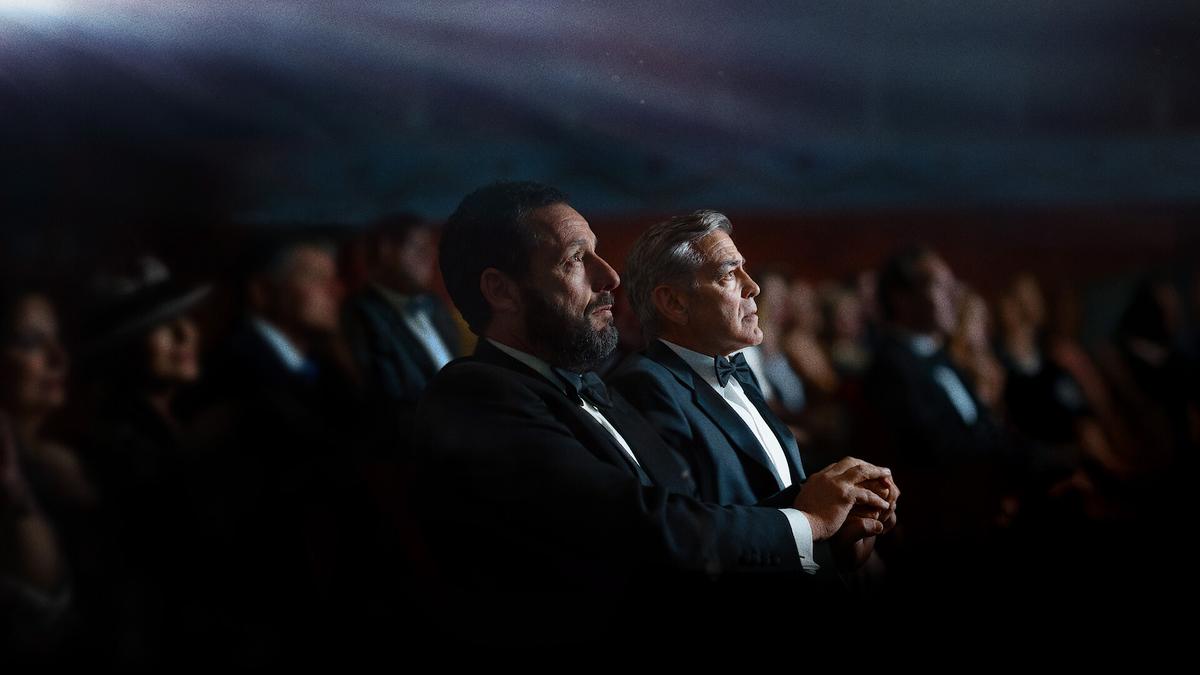
A still from ‘Jay Kelly’
| Photo Credit:
Netfix
The film is clear about Jay’s offences against his daughters, his friend, his mentor, and the people whose lives he treats as an extension of his schedule; yet the framing is weirdly indulgent. His epiphany boils down to how he has been so busy being adored that he hasn’t learned how to be a person. The film assumes, with a strangely earnest confidence, that the misery of the famous can carry the same dramatic weight as ordinary loss. I could see the intention behind the hollowing force of celebrity and the estrangement that success quietly imposes, but most of those ruminations sit barely beneath the surface. The script keeps circling this man’s remorse without ever fully naming the structural comfort that allowed him to ignore everyone else for decades, and for a filmmaker whose best work once sliced through family mythologies with surgical anger, that feels frustratingly thin.

The people who really carry the film’s emotional weight are the ones orbiting the star. Adam Sandler’s Ron, the manager who has built his life around Jay’s needs, moves with the worn-out patience of someone who has missed every family emergency because a client called. The phone is always in his hand, usually with his wife or children on the other end, stuck in traffic or crisis while he smoothens out yet another man-child tantrum. When he finally admits that his own identity has blurred into the “Jay Kelly” brand, the film brushes close to something devastating. A fantastic Billy Crudup, as the old friend whose big chance evaporated when Jay walked into the room, gets one extended confrontation and makes it count. His anger is layered with thwarted ambition and a lifetime of watching another man live the version of his life he once imagined was possible. Crudup distills years of resentment into a single scene-stealing encounter that feels sharper than anything in the main narrative.
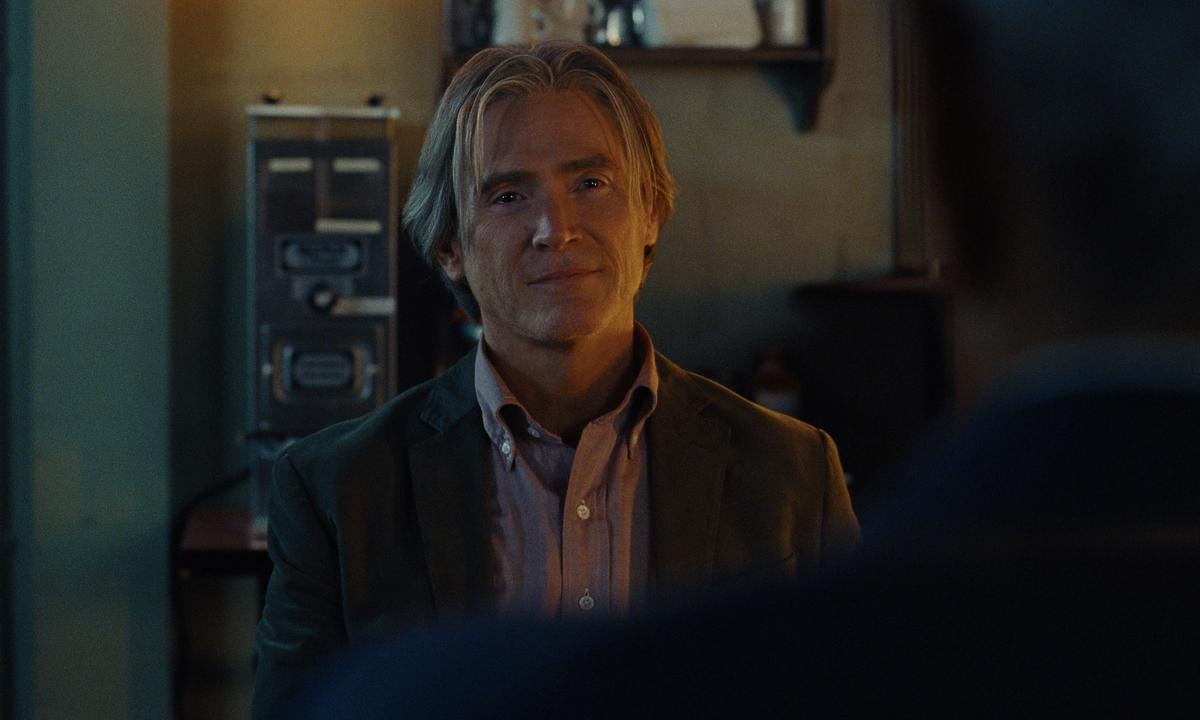
A still from ‘Jay Kelly’
| Photo Credit:
Netfix
Baumbach’s fourth outing for Netflix softens his trademark acidity. The barbed wit that once cut through bourgeois delusion gets smothered here by sentimentality. Even when the film gestures toward its European lineage of reflective train rides and a Felliniesque parade of eccentrics, all those images feel syrupy. Attempts at screwball chaos feel like curated whimsy, almost as if Baumbach is terrified at the prospects of messier textures disrupting the film’s self-mythologising glow.

Jay Kelly stirs the occasional laugh, and offers enough actorly finesse to keep you invested, but its emotional ambitions remain well out of reach. The comparison to Joachim Trier’s Sentimental Value comes quickly to mind because Trier understood the limits of self-awareness. Baumbach gestures at similar terrain, but Clooney’s intoxicating charisma becomes an armour that the film can’t pierce, or seems unwilling to try.
Jay Kelly is currently streaming on Netflix
Published – December 08, 2025 03:56 pm IST