



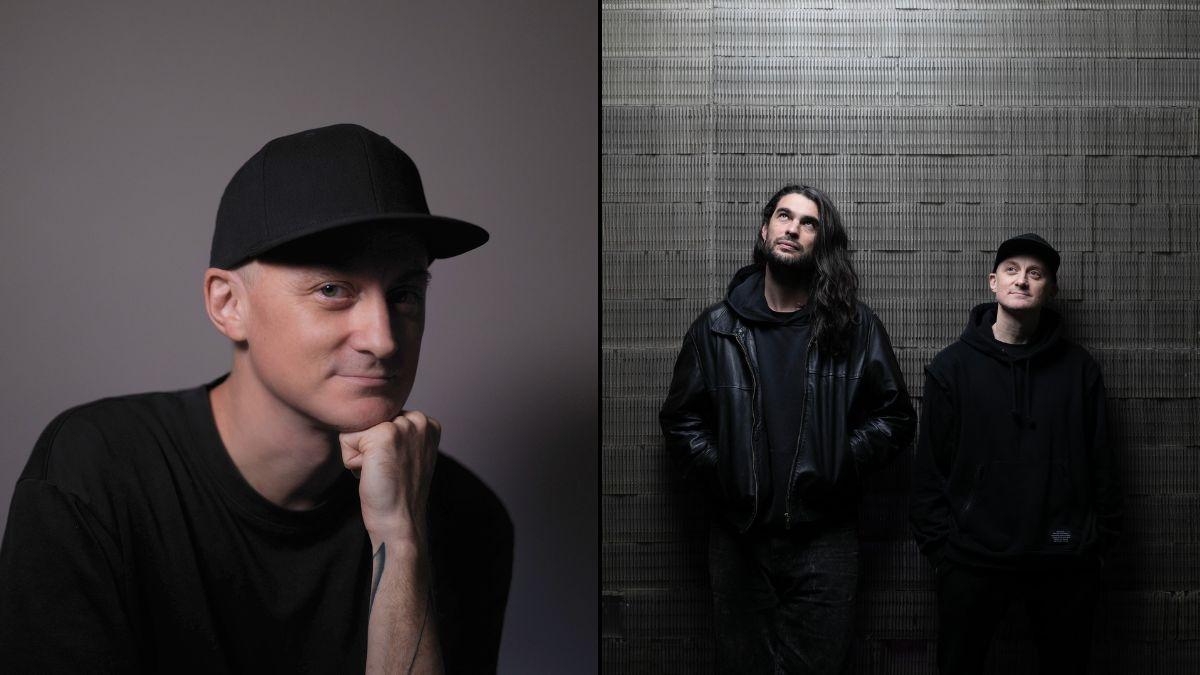

Kangding Ray’s sound lives in a liminal, charged space between machine and spirit. His music feels designed yet organic, like circuitry learning to breathe.
Born David Letellier, the Berlin-based electronic musician composed the original score for Oliver Laxe’s Sirāt. The film premiered in competition at the 78th Cannes Film Festival this year, and follows a father and son in search of their missing daughter/sister in the deserts of southern Morocco. It opens with a pounding rave in the dunes, before their search turns into a hallucinatory road trip through Morocco’s arid south, where they cross paths with an eccentric band of ravers journeying across the desert, still chasing the remnants of that same beat.
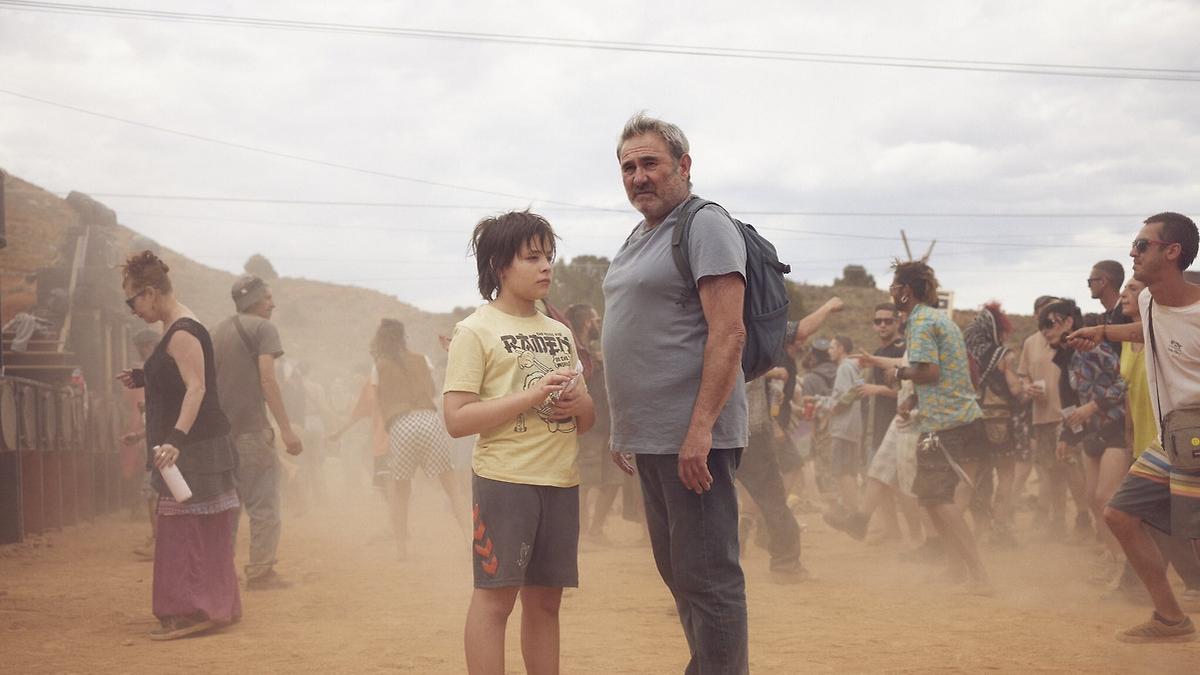
A still from Oliver Laxe’s ‘Sirāt’
| Photo Credit:
Neon

Sirāt shared the Cannes Jury Prize along with Mascha Schilinski’s Sound of Falling, and David’s score was also honoured with the Cannes Soundtrack Award. His music moves from raw techno toward ethereal ambient textures; a sonic arc that critics and festival programmers singled out for how it anchors the film’s shift from desert rave to spiritual road trip. The film later went on to be selected as Spain’s official submission at the Oscars 2026.
When Oliver approached David for Sirāt, the filmmaker was searching for a musician who could navigate sound like a metaphysical terrain. The resulting collaboration between the two turned techno into something luminous and dissolving. “Oliver had a few different musicians in mind, and I think I was the one who resonated a lot more directly with it. He sent me the script, and I realised the ambition of the project and his vision. I had a few doubts, but I trusted him, because I saw his film and discovered his world. It really resonated with me”, he says. Their early meeting briefs quickly turned into steady rituals of mutual attunement. “He would come to Berlin and we were listening to music… just listening. The idea was to find a common ground and a common vocabulary, like a way to talk together.”
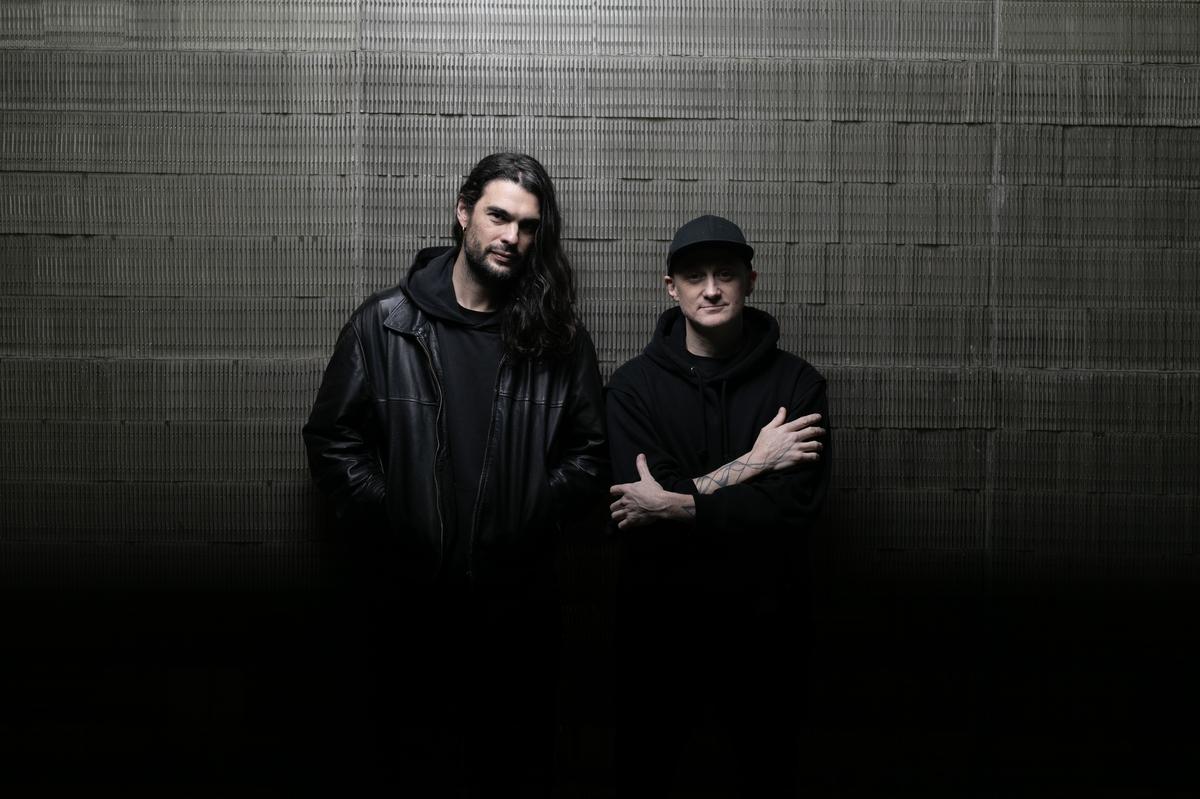
Oliver Laxe and Kangding Ray (David Letellier)
| Photo Credit:
Special Arrangement

When he began shaping the soundscape of Sirāt, David imagined the process as “a slow dematerialisation of techno.” The film’s opening half pulses with a familiar four-on-the-floor rhythm, but, by its close, those same frequencies have dissolved into vapour. “Oliver had Amber Decay and Blank Empire on his reference playlist,” he says. “They were kind of the foundation, but these are techno tracks, and the score isn’t only techno. As the film advances, the techno becomes a lot more ambient, a lot more psychedelic and spiritual.”
He wanted the continuity of the same raw material transmuted over time. “I wanted to keep the same sound to have something homogeneous,” he says. “If I put so much time and effort into something like that, I want to do it fully. I want to create a coherent work. I don’t want the music to be wallpaper. The coherence needed to be there between these techno parts and the ambient part. So I started to degrade the techno — take out the beats and explode them into particles.”
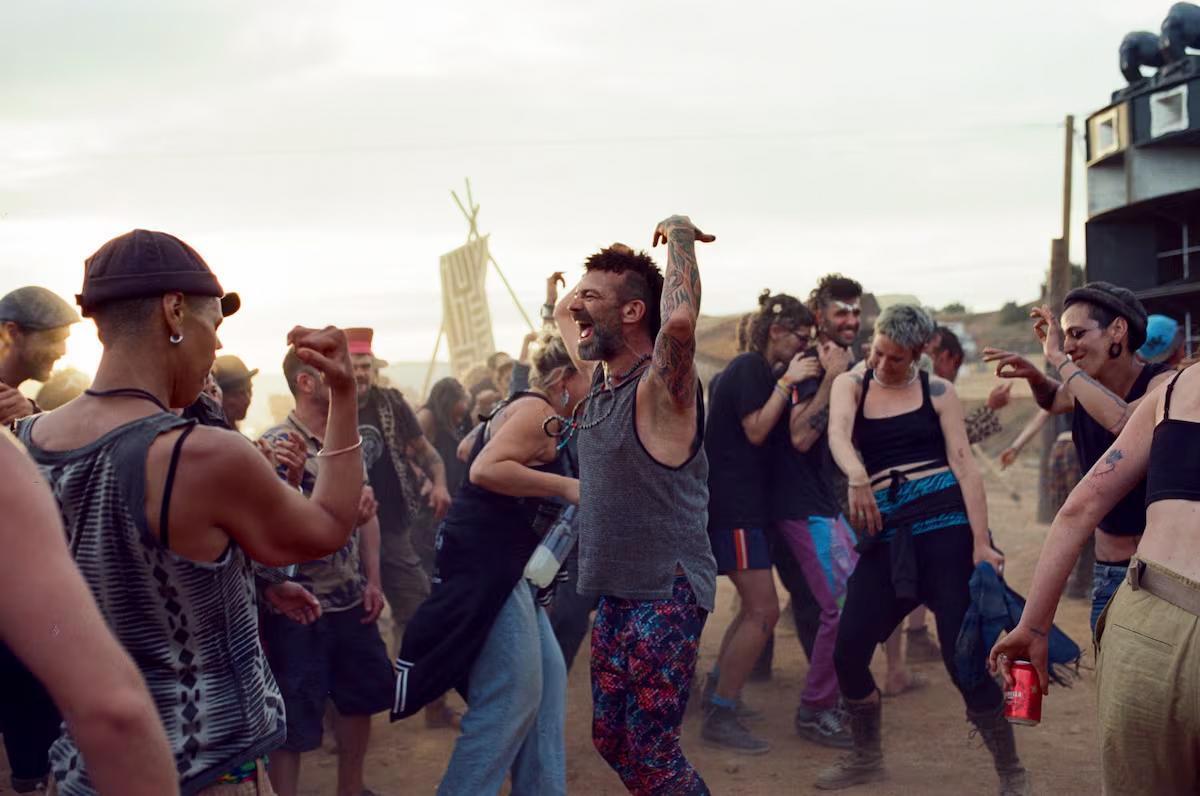
During the film’s opening rave sequence, which was staged over three days, David worked with multiple collectives to animate what became a living organism. “The wildest moments at raves are the ones we can’t really talk about,” he laughs. “That’s the spirit of the rave. Usually, in a rave, there are no cameras allowed. So filming one is already very blasphemous.”
A still from Oliver Laxe’s ‘Sirāt’
| Photo Credit:
Neon

He remembers the last day vividly. “I was playing a long set, and the ravers and the filming crew started to dance together. It was pretty wild. At some point, Oliver asked the filming crew to stop because he felt it was too invasive. He wanted it to proceed without people being filmed. It was beautiful — to have the decency to stop and give them some distance, leave them alone.”
David’s own first trysts with rave culture came later in life, through Berlin’s club scene rather than the illegal fields of early British raves. “My first experiences were more urban,” he says. “I became integrated in it later on in my career. It started with playing at clubs like Berghain in Berlin, which is very intense. It introduced me to the idea of fully immersive dance.”
He also recalls a transformative experience far from Europe: “The Labyrinth Festival in Japan, 2011. It was a massive sound system placed in a forest, in the rain, and it kept going no matter what. In a way, this is what the film is about. You keep dancing, no matter what happens. You overcome death and pain through dance. You exalt a celebration of life.”
The political roots of rave were not lost on him. “When I was a teenager in the ’90s, all the most interesting musical movements were anti-capitalist and anti-fascist,” he says. “It wasn’t even only rave — literally all youth culture was around that idea. That’s been lost a lot over the years.”
Back then, he said, the energy of resistance bled into every genre. “You had bands like Rage Against the Machine pointing at police brutality and American imperialism. In rave culture, communities were trying to create spaces of freedom because society wouldn’t allow it. It was a youth that wanted more freedom and an older generation that wanted to stop it. It was a beautiful thing; melting political consciousness with the energy of youth that just wanted to party.”
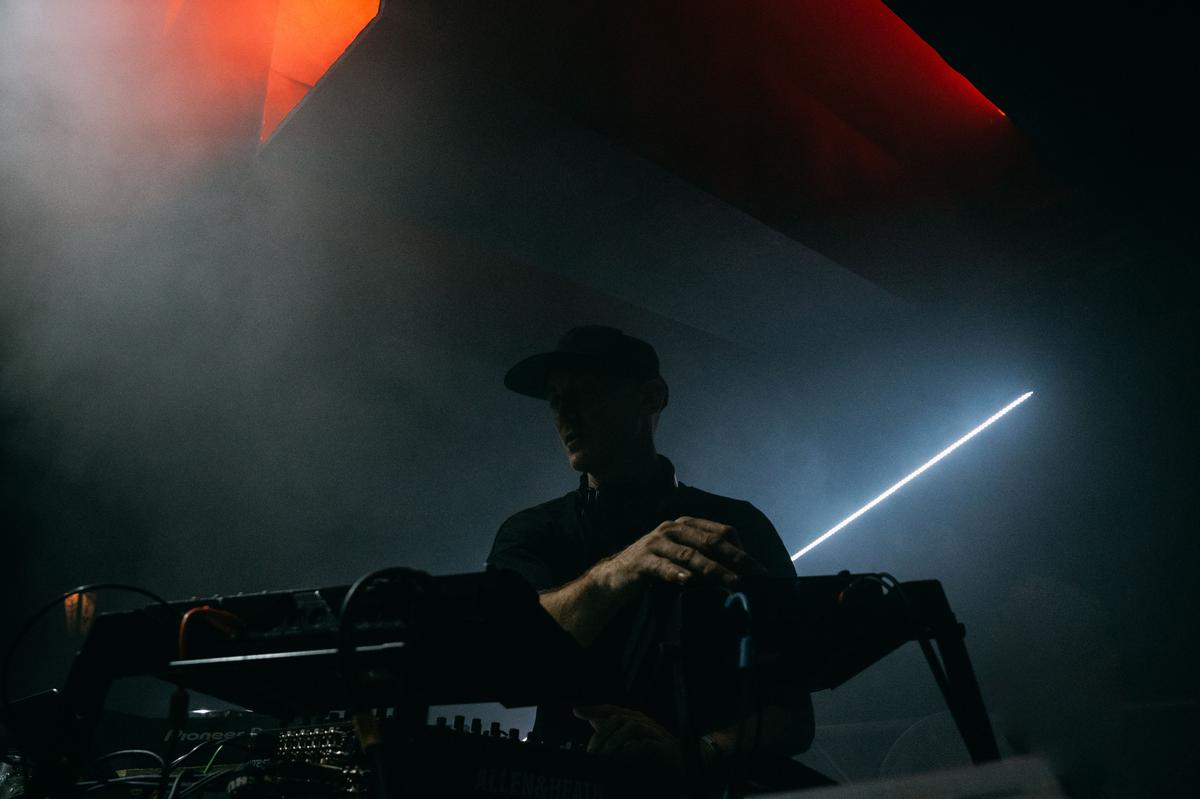
Kangding Ray performs a set
| Photo Credit:
Special Arrangement

His reverence for sound predates electronics. “I don’t come from an electronic background,” he says. “I was in a rock band, and more into noise and industrial music, like Nine Inch Nails. But I didn’t plan to become a musician. I was an architect.” He also speaks directly of NIN’s Trent Reznor: “I’m a massive Nine Inch Nails fan, and have been following what Trent Reznor does.” As an aside, he mentioned listening to their latest Tron: Ares soundtrack while cooking the previous day (the image of those intense, grungy sounds seeping into the mundane quite fittingly captures the raver’s natural state).
Architecture, as it turns out, never really left him. “When I moved to Berlin, I met a lot of artists doing everything in between. I worked with Carsten Nicolai (German musician Alva Noto), who became a bit of a mentor. He showed me the many ways to connect architecture, art, and music. Everything became one continuum, and the same concept applied to a building, a sculpture, a film score, or a techno album.” His first record, released almost by accident, altered the trajectory of his life. “Life decided otherwise,” he says. “I had to stop architecture and do music. But I didn’t really choose this life.”
Over two decades, the Kangding Ray sound has shifted from microscopic minimalism to something more emotional. “My first three albums were very ambient and filigree,” he says. “Then gradually I became more interested in the pure energy of techno, because that’s where I felt there was more possibility for emotional connection. Around 2011, I wanted to move from a purely experimental approach to a more holistic one, from the club to the museum and everything in between”. Today, he’s rarely spotted without his iconic black snapback, and together they’ve evolved into a single, inseparable act.
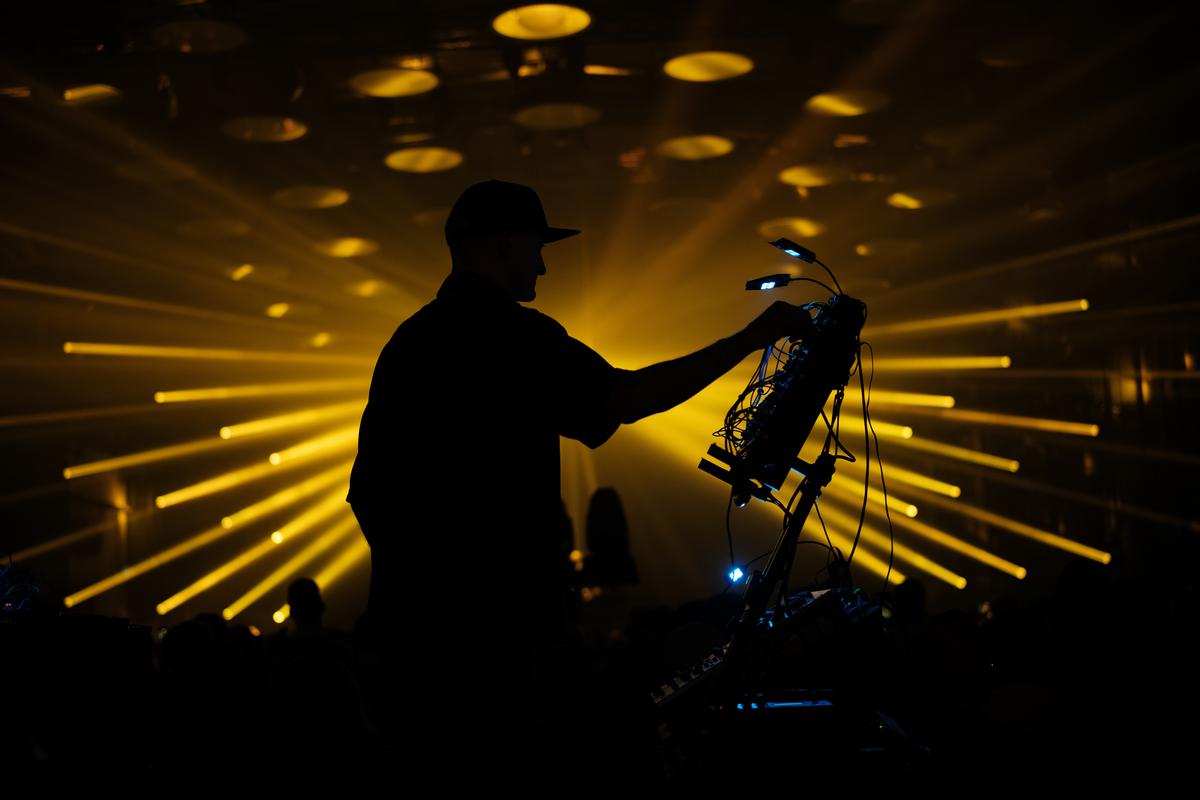
Kangding Ray performs a set
| Photo Credit:
Special Arrangement

David also sees a kinship with a few of my personal favourite electronic musicians who first led me to discover his music. “I know both Jon Hopkins and Nils Frahm,” he says. “We’ve played together, hung out, and I definitely see them as contemporaries. We each have our own sound, but there are definitely conceptual bridges. Even if we do different things, we approach the emotional connection to music in a similar way.”
When he won the Cannes Soundtrack Award for Sirāt, he became the first composer recognised there for a score built so deeply on techno and rave. “I was very surprised,” he says. “I was in an airport when they called. I didn’t think they would give it such a score. But it opens possibilities. It’s a good sign that this kind of music can be accepted in such a context. Being at the start of something is a very good feeling.”
Among the composers who shaped his sensibilities, David cited a lineage of electronic visionaries: “Eduard Artemiev, who composed for Andrei Tarkovsky, was one of the first real pioneers in integrating electronic music into arthouse cinema. Vangelis’ Yamaha CS-80 synth pads for Blade Runner still touch me each time. More recently, Oliver Coates for Aftersun, Ben Frost, and Geoff Barrow for Ex Machina; they’re all strong references.”
As for the future, he’s already manifesting. “I would love to work with Coralie Fargeat (of The Substance fame),” he says, smiling. “I met her in Cannes, she’s amazing. And maybe the Safdie Brothers or Andrea Arnold — they have such strong emotional films. I’d love to work more on radical independent projects.”