




As Kerala heads for the local body elections, the rising tide of human-wildlife conflicts has emerged as one of the most emotionally charged and politically sensitive issues across the State.
In the forest-fringe regions, from Wayanad’s elephant corridors to the high ranges of Idukki and the plains of Palakkad, the increasing interface between humans and wildlife is shaping public mood and campaign rhetoric.
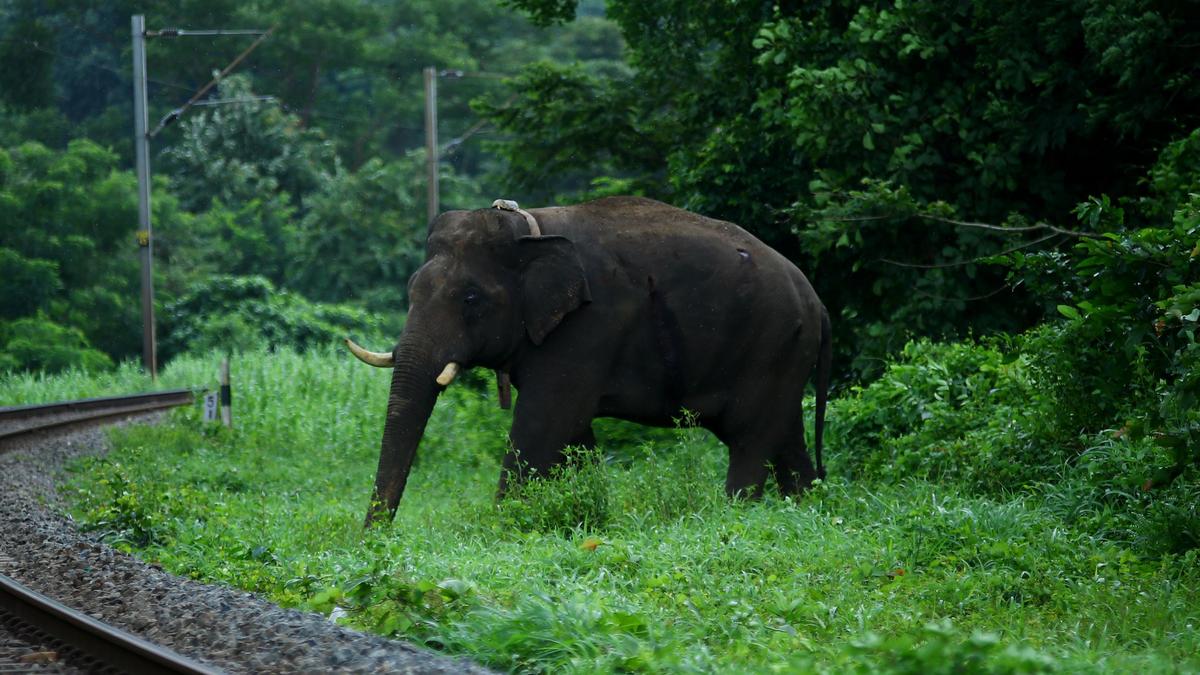
What once appeared as isolated incidents has now grown into a widespread crisis touching 273 grama panchayats, with 30 of these local bodies classified as severe conflict zones, according to a study by the Forest department. Seven of these lie in Wayanad alone, a district that has long been the epicentre of human-elephant conflicts. The trend has accentuated with herds migrating from neighbouring Karnataka during summer months in search of water and fodder.
Notably, the nature of wildlife conflict has been non-uniform across the State, with each region demanding unique solutions. In the high ranges of Idukki, Kottayam, Pathanamthitta and Ernakulam, farmers complain less about elephants and more about bonnet macaques, Malabar giant squirrels and wild pigs that routinely raid cardamom, rubber and fruit plantations. In Palakkad, however, the situation is grave as wild elephants and gaurs have been involved in multiple fatal encounters. Peacocks too have been silently expanding across Palakkad, Thrissur and Kasaragod. Once a rarity in Kerala, they now routinely descend on paddy and vegetable fields, and destroy seedlings and grains to such an extent that some farmers have begun abandoning cultivation altogether.
Such everyday hardships of forest-fringe communities have become central to the election debate.
‘State proactive’
Nenmara MLA K. Babu of the Communist Party of India (Marxist) was emphatic that the Left Democratic Front (LDF) has taken more steps than any previous governments to address the crisis. Pointing out that his constituency has 51-km border with the forest, including the ecologically sensitive Nelliyampathy hills and the Parambikulam Tiger Reserve, he recalled how residents had demanded a dedicated Rapid Response Team to deal with emergencies. “The government soon approved the proposal, sanctioned adequate staff and allocated ₹2.5 crore to operationalise the team,” he said.
Electric fencing has also been installed along the entire forest boundary. Despite these efforts, he admitted, elephants still stray into agricultural land, though “there have been no casualties recently and such incursions are now rare.”
Mr. Babu accused the Union government of ignoring Kerala’s predicament. “The Centre has done nothing to address the persistent issues. Their positions have only worsened the crisis. They have refused to declare wild boar as vermin, and often pin the responsibility (of the unfolding crisis) on the State despite doing nothing on their part,” he alleged.
‘State, Centre to blame’
Sulthan Bathery MLA I.C. Balakrishnan of the Congress, however, said both the LDF government and the Bharatiya Janata Party (BJP)-led Union government had failed farmers living on the edge of the forests. “The United Democratic Front (UDF) stands for the farming community in forest-fringe areas. They already face climatic vagaries, floods, marketing difficulties and price crashes. Wildlife conflicts have worsened their woes,” he said.
The fundamental issue, he claimed, is the lack of proper land demarcation. “A proper survey should be held to clearly mark forest boundaries using new-age technologies and effectively block wildlife incursions,” he said.
He accused the LDF of delaying critical infrastructure projects for years. “Projects tendered in 2018 in Wayanad for installing hanging and solar fencing and crash guards have not been executed yet,” Mr. Balakrishnan said.
BJP Idukki south district president T.C. Varghese said the rising injuries and deaths over the past years reflected the State government’s failure. “Several lives were lost during the LDF rule, yet no permanent solutions have been implemented,” he said.
According to him, unscientific forest management is forcing wildlife to leave their natural habitats. “Planting invasive species such as eucalyptus and acacia has driven animals out of forests in search of food and water,” he said.
‘Central funds misused’
He also accused the State government for misusing Central funds. The Centre has been providing ₹70 lakh every year to prevent human-wild animal conflicts and protect the ecosystem, Mr. Varghese claimed.
Both the UDF and the BJP-led National Democratic Alliance viewed the Wild Life Protection (Kerala Amendment) Bill, 2025, which was recently passed by the Assembly, as no more than an electoral ploy. The proposed legislation, which awaited the Governor’s assent, is meant to expedite immediate action, including killing “problematic” animals, and declaring species as vermin without the Centre’s concurrence.
Several environmentalists have raised objections to the legislation.
Published – November 24, 2025 08:14 am IST