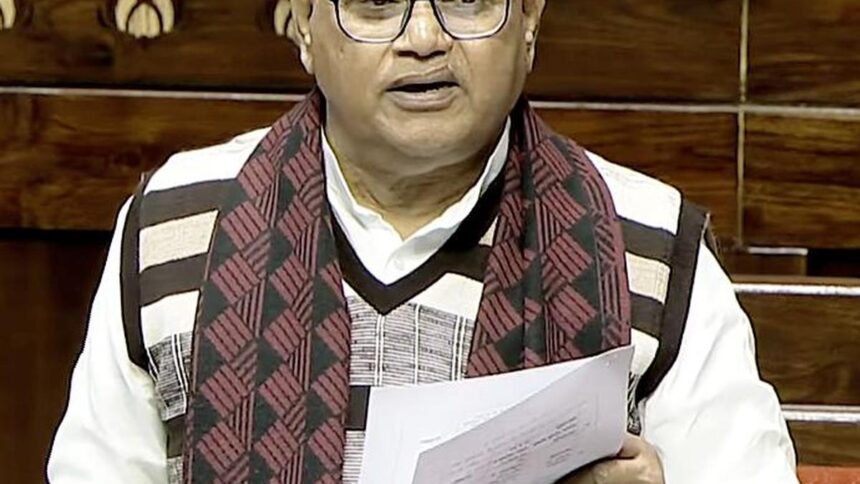




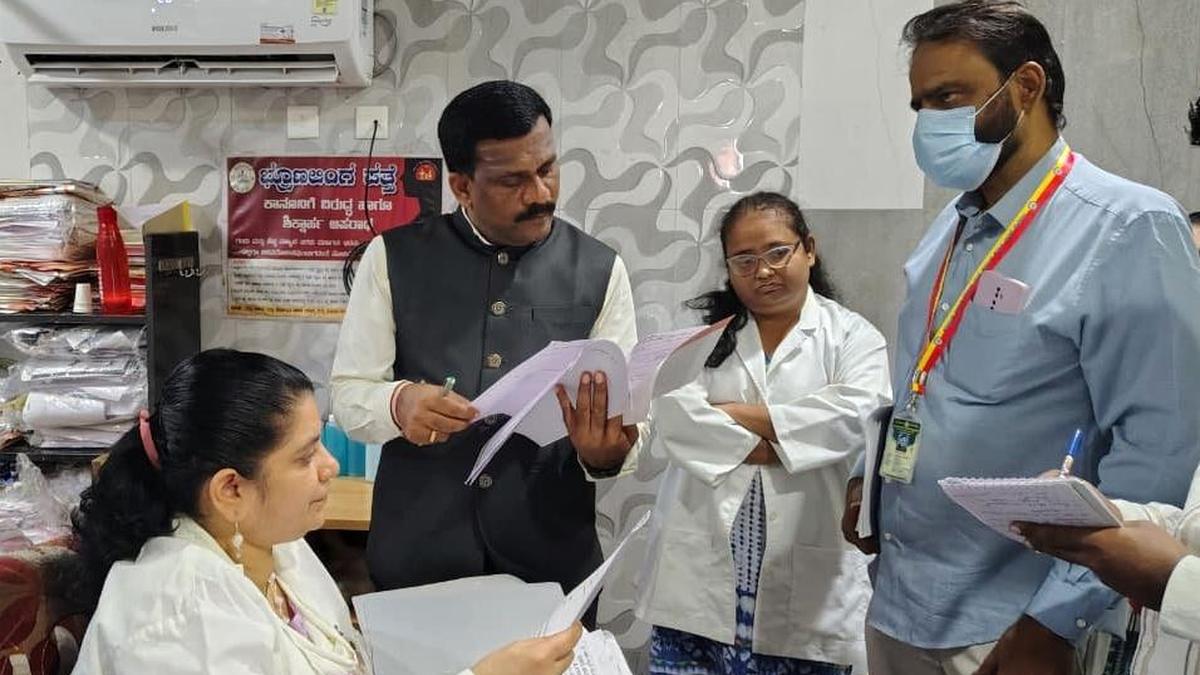


Shashidhar Kosambe, chairperson of the Karnataka State Commission for Protection of Child Rights (KSCPCR), at a scanning centre in Hosapete during a surprise inspection on Friday.
| Photo Credit: SPECIAL ARRANGEMENT
Shashidhar Kosambe, chairperson of the Karnataka State Commission for Protection of Child Rights (KSCPCR), on Friday directed district authorities to strictly enforce all norms under the Pre-Conception & Pre-Natal Diagnostic Techniques (PC&PNDT) Act, 1994, at government and private scanning centres, warning that criminal cases would be filed and centres shut down if violations were detected.
Presiding over a review meeting with district and taluk level officers of the Education Department on the implementation of the Right to Education (RTE) Act at the Deputy Commissioner’s office, Mr. Kosambe said Vijayanagar district had five government and 75 private scanning centres, all of which must comply with the mandated procedures. He added that the Commission was receiving a growing number of complaints on the Child Helpline from various districts, with Vijayanagar reporting a larger share of cases relating to health and education. The district has one of the highest numbers of children suffering from malnutrition in the State, he noted.
During a surprise inspection of the Sahaya and Raghav scanning centres in Hosapete city earlier in the day, KSCPCR officials found CCTV cameras inside scan rooms, a clear violation of the IT Act and PC&PNDT norms, which require that only the radiologist be present during scanning. Mr. Kosambe instructed officials to issue showcause notices to both centres and warned that any further violations would invite criminal proceedings. He directed the formation of three district-level teams comprising officers from Health and Family Welfare, RCH and nodal agencies to inspect all scanning centres within a week and submit a detailed report.
Expressing concern over gaps in the implementation of health schemes, Mr. Kosambe said 580 children in the district are suffering from malnutrition, but no child had been admitted to the Malnutrition Rehabilitation Centre of the 100-bed hospital in the past six months. He instructed the National Child Health Programme teams and the Women and Child Development Department to jointly conduct a survey and ensure that eligible children are admitted without delay.
Turning to the Education Department, Mr. Kosambe described as “alarming” the discrepancy of nearly 4,000 students between the number of children who passed Class 9 and those who registered for the Class 10 examination last year. “The department has no information about these children, which is a matter of grave concern,” he said.
During a visit to the Government Girls’ High School at Amaravati, he observed that students were bringing plates from home for mid-day meals, despite the requirement that plates be provided at school. He directed officials to ensure the supply of new plates by Monday and to submit a report with GPS-tagged photographs, failing which a suo motu case would be registered. He also sought a report on the number of Class 9 students who had been re-enrolled in Class 9 despite passing the previous year.
At Hosapete Rural and Badavane police stations, Mr. Kosambe found that separate records of child-related cases were not being maintained. He observed that weekly open-house sessions at schools and colleges, mandated for interaction between police and students, were not being conducted. He instructed the police to install signage related to child helplines and district-level officers at all stations and to streamline their child-protection responsibilities.
Earlier in the day, the KSCPCR chairperson created a stir by making surprise visits to the government hostel near the APMC, the Mother and Child Hospital, the 100-bed hospital, scanning centres, the district prison, rural and urban police stations, an anganwadi centre near the DDPI office, and the Government Girls’ High School at Amaravati. He also joined the students for a mid-day meal at the school.
Published – December 05, 2025 08:54 pm IST