


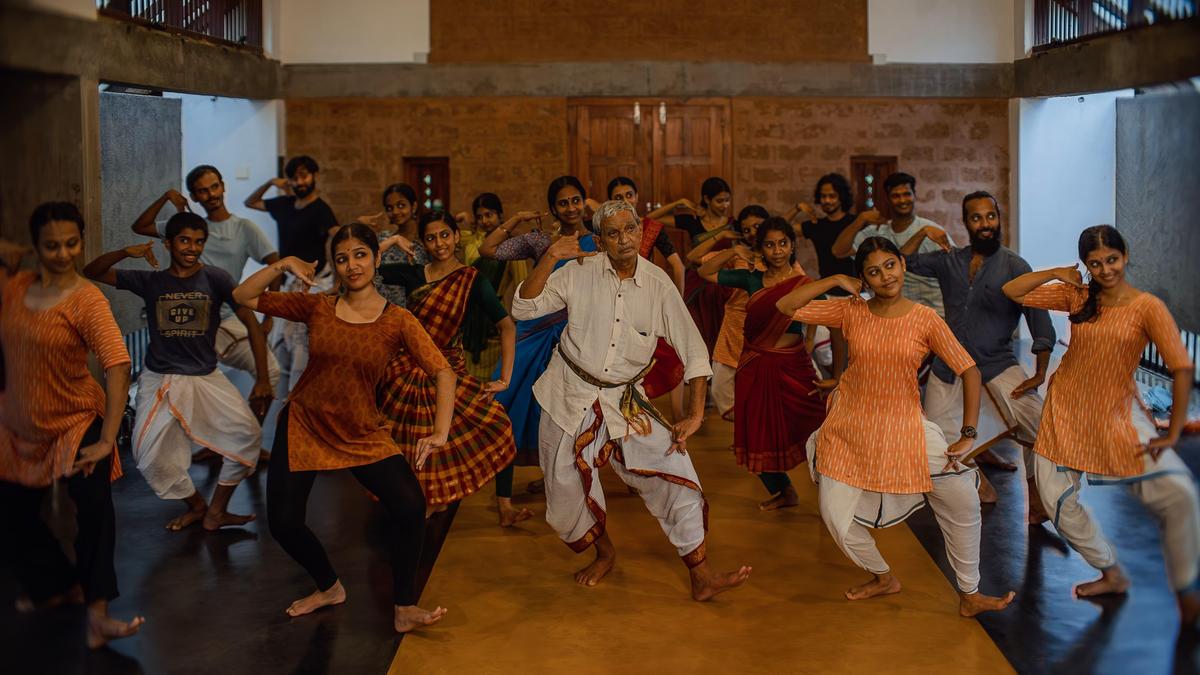

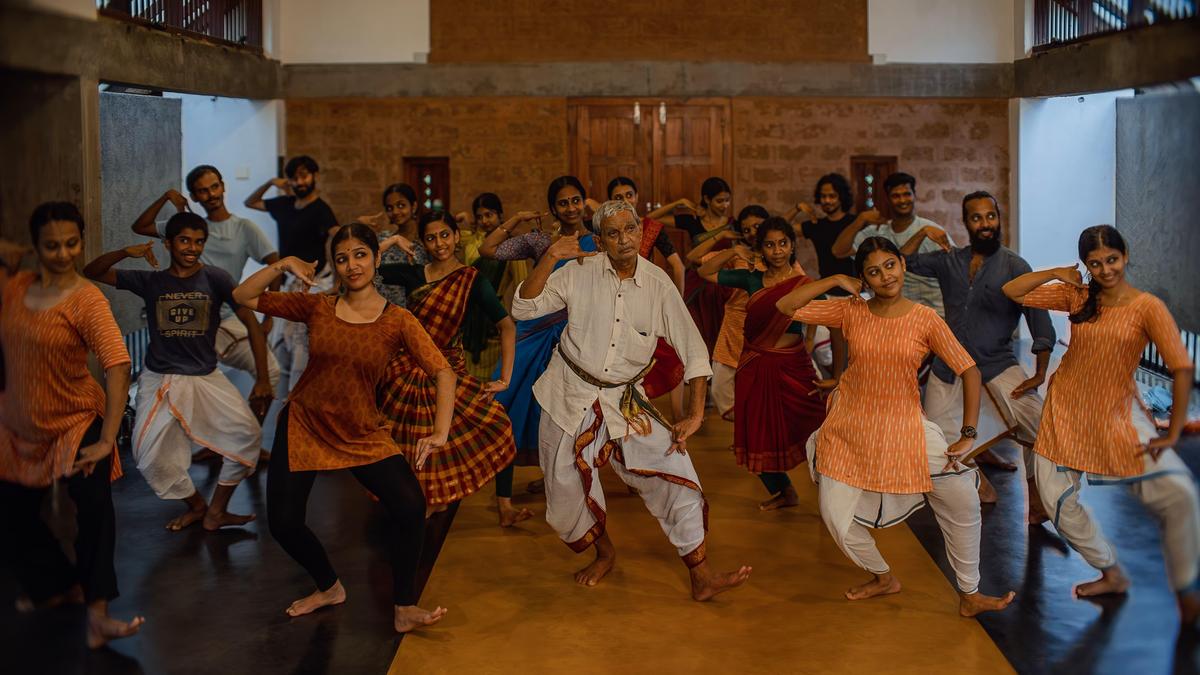
Pasumarti Rattaiah Sarma leading a training session
| Photo Credit: Sabu Aadithyan
The opening shot of Curtain Call takes you to Kuchipudi, a village in Andhra Pradesh at dawn. Young women, clad in practice saris, are walking by a field in a neat row. They then stop by for a warm-up and practice before moving toward the lane leading to the house of their guru, Pasumarti Rattaiah Sarma, a name synonymous with Kuchipudi Yakshagana, the dance drama from which Kuchipudi evolved.
The documentary has been conceptualised by Sreelakshmy Govardhanan, a disciple of Rattaiah Sarma, who has made it her mission to carry forward the legacy of her guru through the students of her dance school, Avantika Space for Dance, in Thrissur. “Even though there are a few practitioners of the art form, there is perhaps no one like him at present who was born into the tradition and is still at it. He is 85 and the tradition is on the verge of extinction. So I felt that it is the need of the hour to document what he has done and is still doing,” says Sreelakshmy who became his disciple in 2008.
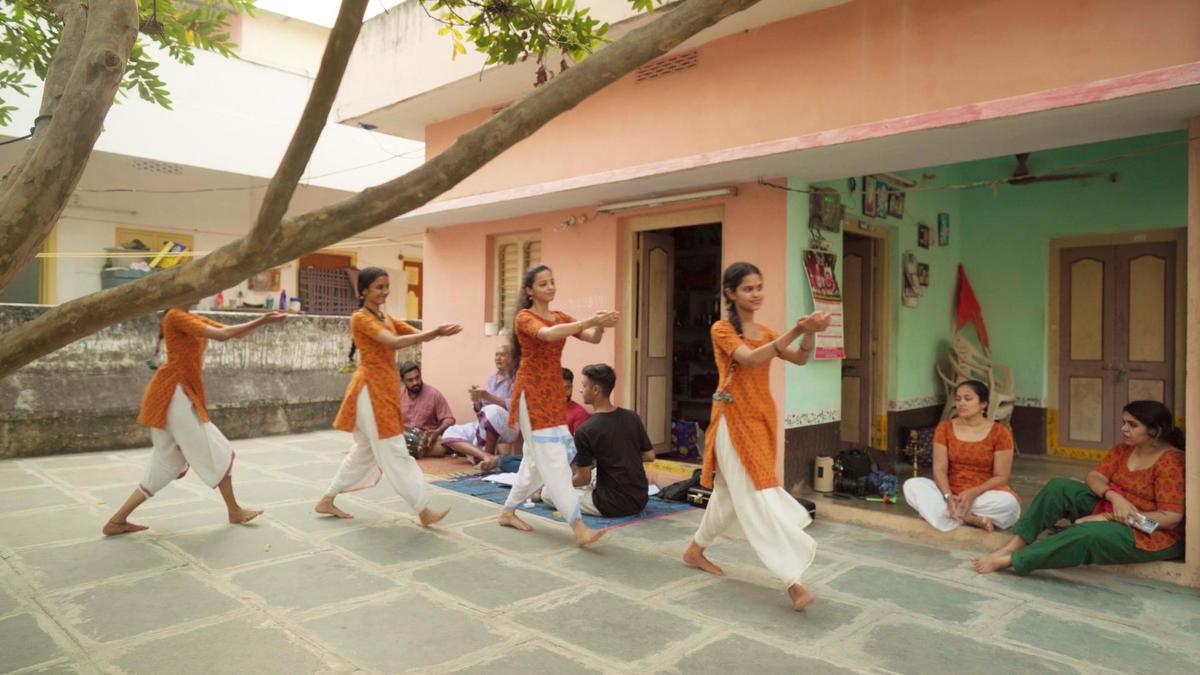
Still from the documentary Curtain Call
| Photo Credit:
SPECIAL ARRANGEMENT
Curtain Call covers the practice sessions prior to the first staging of the Kuchipudi Yakshagana production Usha Parinayam in the village in March 2023. After that the production was presented in Thrissur, a month later. And that has been the only two performances of this production.

“Staging a Yakshagana production is expensive. We raised the amount through crowdfunding for both shows. Our next production is ready – Prahlada Natakam. But we need funds to stage it.”

It took them five years to learn Usha Parinayam. “Learning it calls for months of practice and hard work. It is not just about dance. We have to speak the dialogues as we perform, that too in Telugu. Blending dance and dialogue delivery is no easy task.”
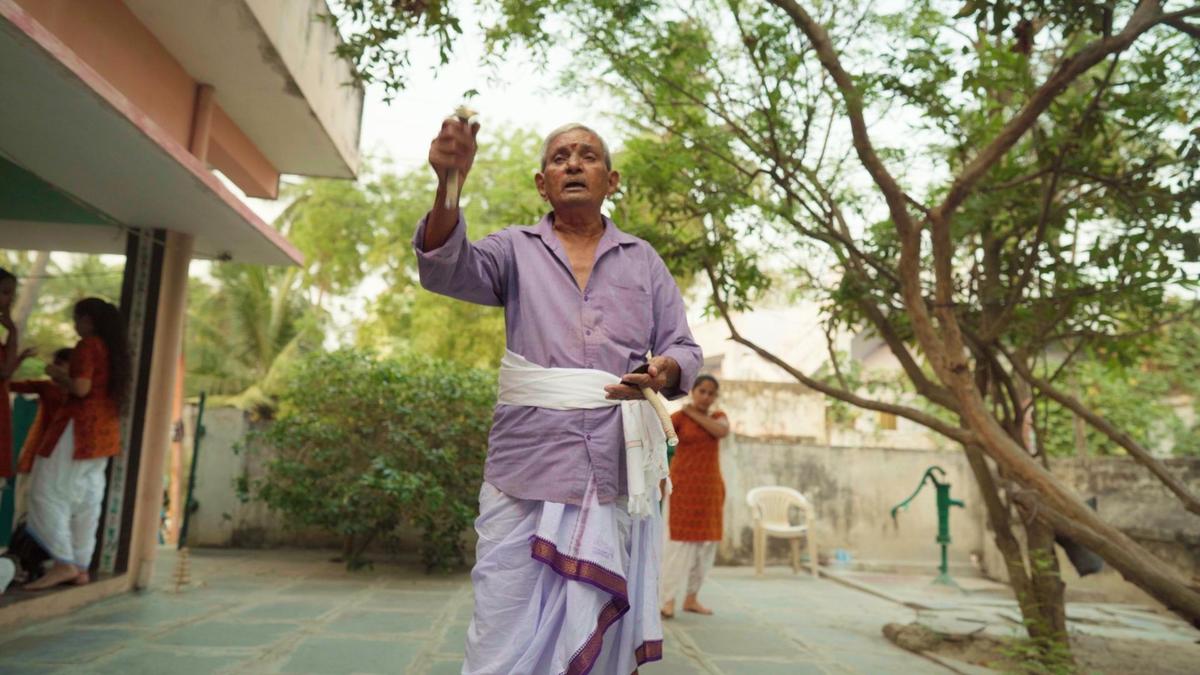
Still from the documentary Curtain Call
| Photo Credit:
SPECIAL ARRANGEMENT
Over a dozen of her students learn from the master. They go to Kuchipudi in batches for the classes, while balancing their academics and jobs.
There is a world of difference between Kuchipudi Yakshagana and the Kuchipudi we see today. Earlier, male Brahmins played female characters. While the Yakshagana was performed as teams and encompassed dance, music, live dialogues, acting etc, it went for a makeover thus becoming a solo dance form.
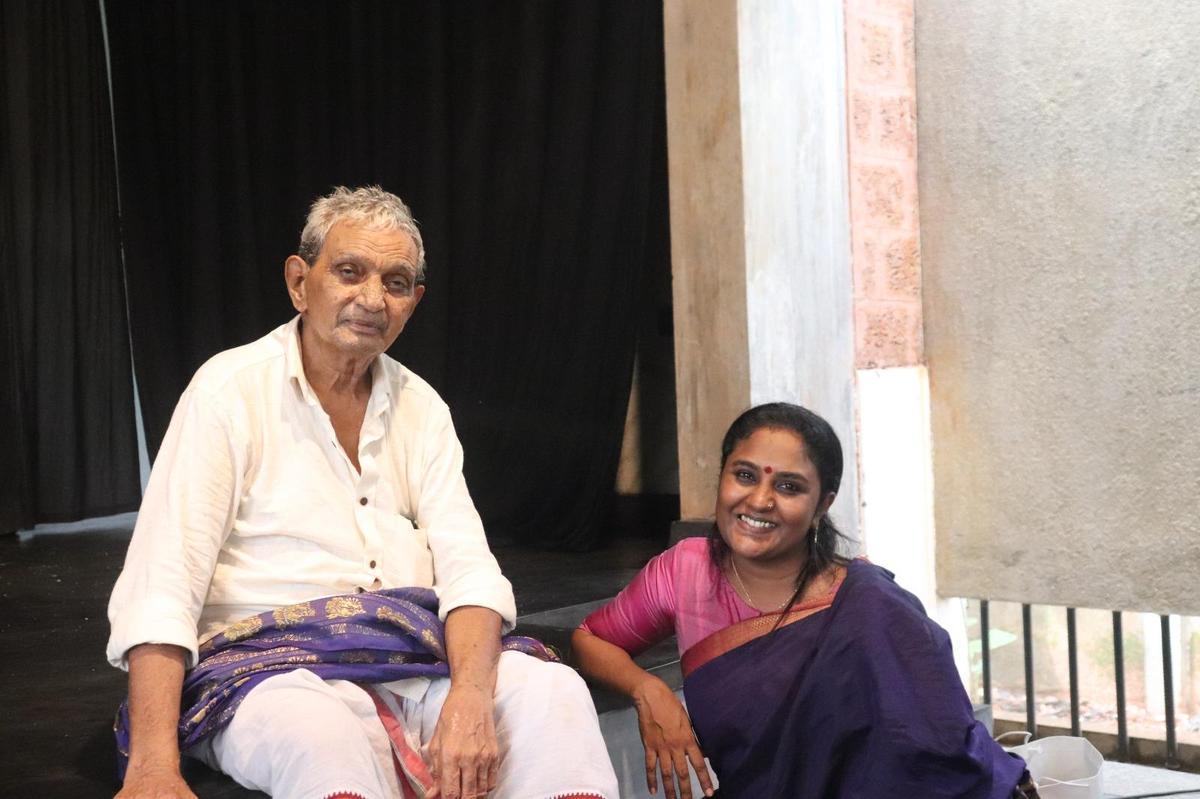
Sreelakhmy Govardhanan with her guru Pasumarti Rattaiah Sarma
| Photo Credit:
Linta TA
Sreelakshmy says that the rigours of performing Kuchipudi Yakshagana might have led to the development of a standarised format thus becoming one of the eight classical dance forms of India. “You can learn a Kuchipudi item in three days if you know the basics, but not Yakshagana. The focus is on the characters; how they speak, sing, walk etc and dance is secondary. You have to be proficient in Telugu as well.”
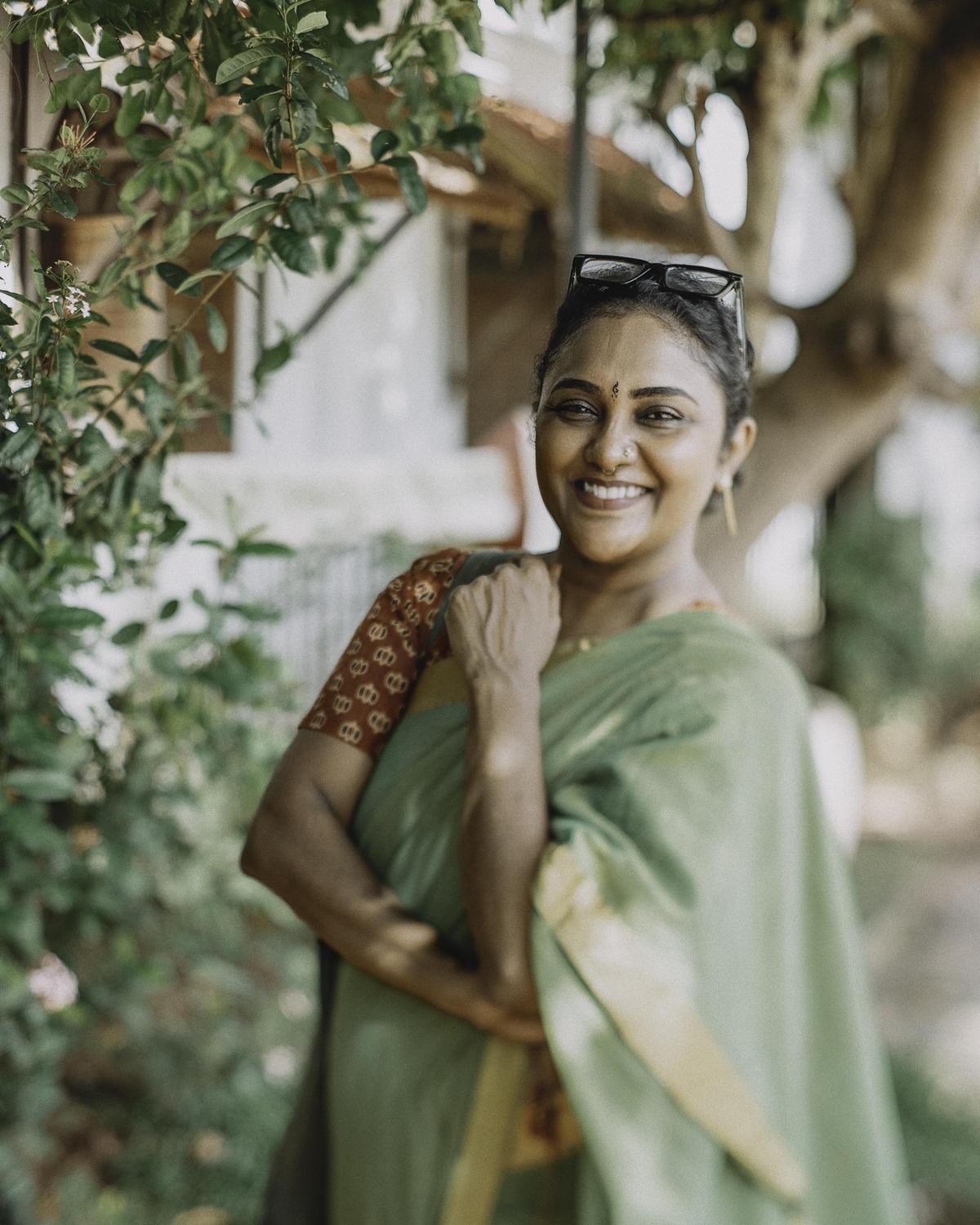
Sreelakshmy Govardhanan
| Photo Credit:
Sabu Aadithyan
Sreelakshmy recalls that when she started learning, she was not aware of the magnanimity of the dance form. “This is a knowledge system and it can be transferred from generation to generation only by a guru. So once I began my classes, I started preparing my students as well.” She adds that learning Telugu became a necessity not just for the dance but because Rattaiah Sarma speaks only Telugu.
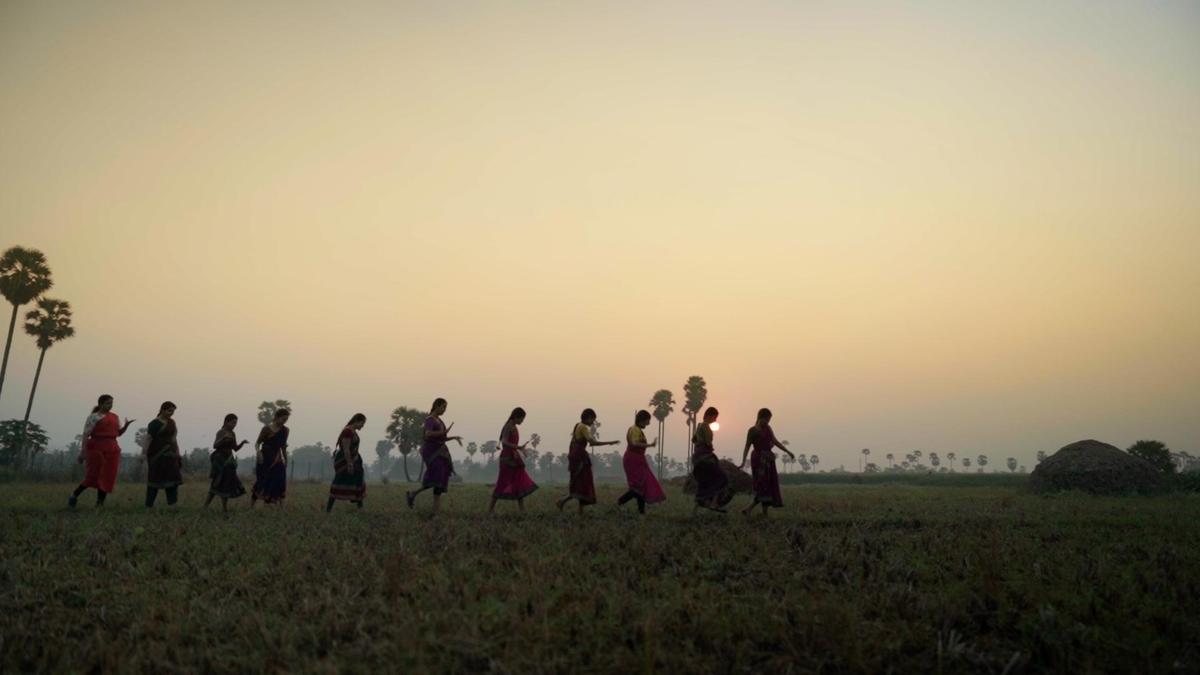
Still from the documentary Curtain Call
| Photo Credit:
SPECIAL ARRANGEMENT
“Kuchipudi Yakshagana used to take up current issues as well. Now the artistes make it a point to incorporate facts of the region where they are staging it. When master came to Kerala, he included aspects about the State like the weather, culture, literature etc.”
Sahal Hameed is the director and cinematographer of the documentary, which was first shown at a workshop Sreelakshmy held in the US two years ago. An edited version was screened in Thrissur recently.
Curtain Call will release on the streaming platform, Viewcy, on November 16.
Published – November 14, 2025 11:10 am IST