





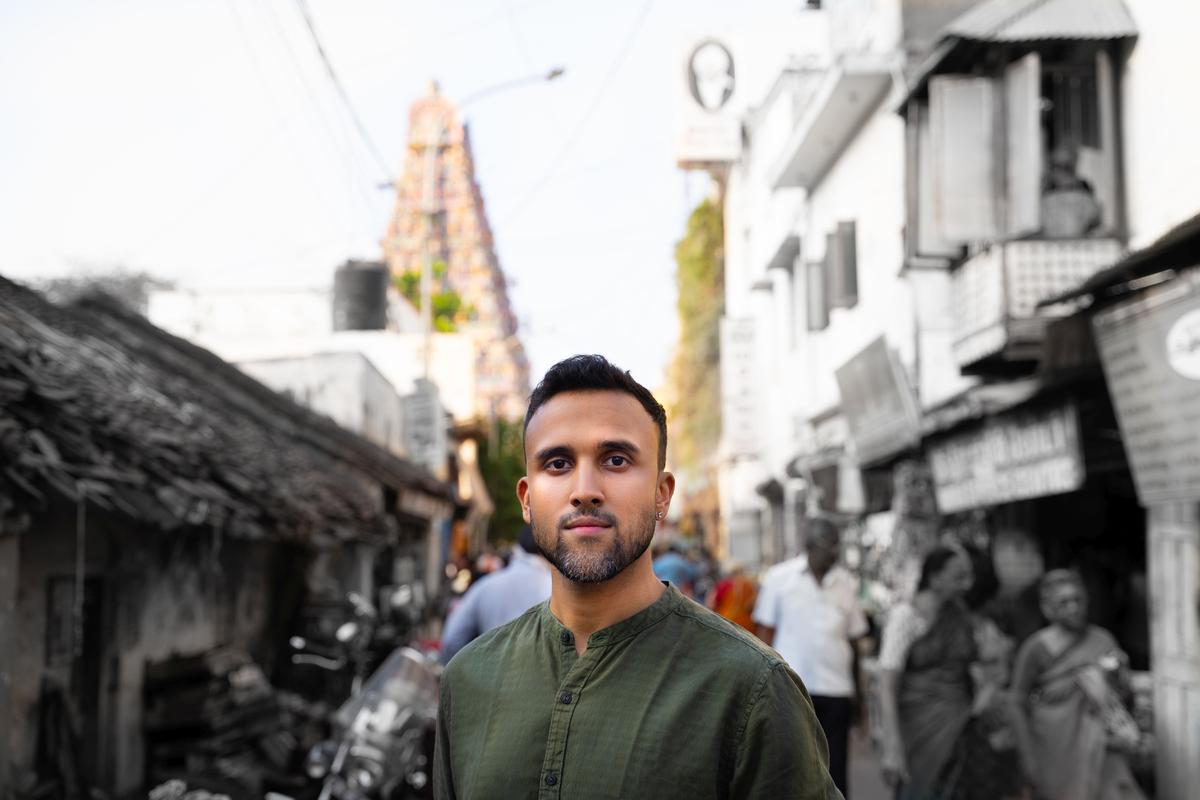
For most of his growing years in Los Angeles, Aditya Prakash was the ‘Indian kid’ who sang classical Carnatic music when his peers were discovering pop and hip-hop. When he visited Chennai, every year to study under stalwarts, he was the ‘American boy’ with an accent and appearance that didn’t quite match the expected mould of a traditional musician.
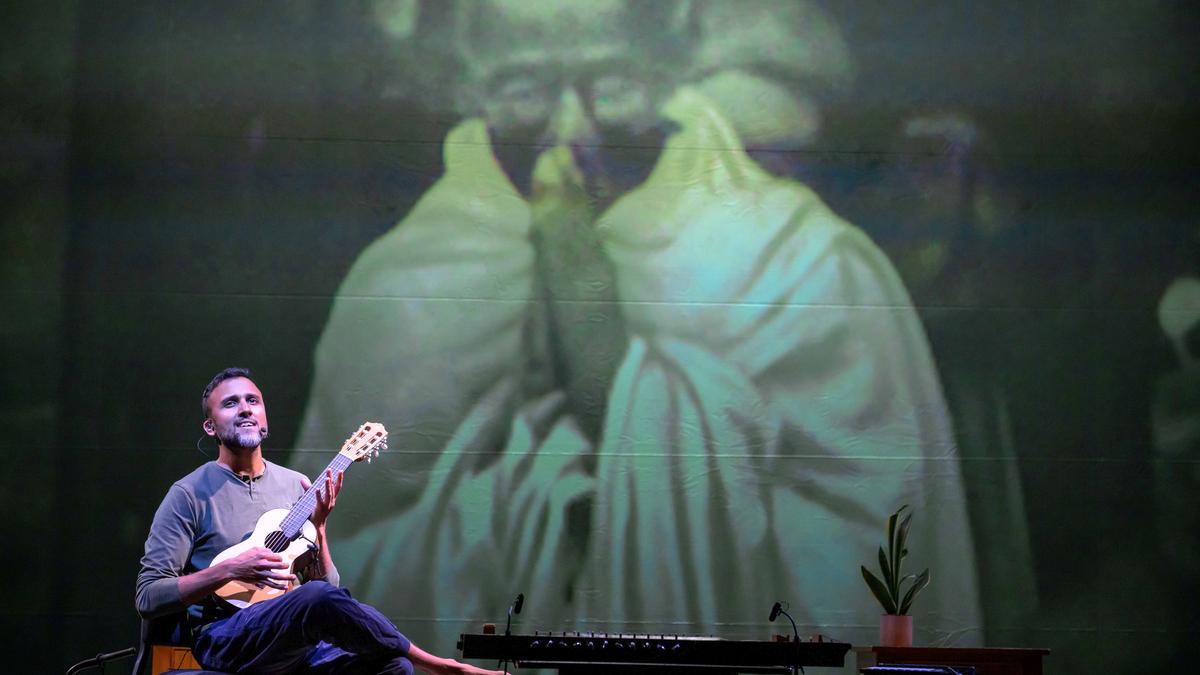
“I never felt like I belonged anywhere. That sense of not fitting in became frustrating, and I think that’s where the search for identity began.” That ‘search’ is the emotional core of ROOM-i-Nation, the immersive gig-theatre work he is bringing to India this season. It merges music, personal stories, movement, and minimal stage design to recreate the feeling of being inside his ‘room’.
Aditya, currently on a musical venture in Singapore, speaks over the phone to lay bare the need for diaspora artistes to tell their own stories. “You feel like an outsider everywhere. . But when you find your own space that is out-of-the-box, it can give someone else a voice too,” he explains.
Storytelling influences
Aditya’s narrative-driven music started early and at home. His mother (Viji Prakash), one of California’s earliest Bharatanatyam teachers in the 1970s, created full-length dance dramas. His sister Mythili Prakash, also a Bharatanatyam dancer, continued the tradition. “I grew up around dancers interrogating music differently; why your voice sounds tender here, why an instrument enters there… that shaped how I think about intention in music,” he says.
Although storytelling had always been part of his art, he had never explored it as a primary language until much later, first in his 2023 album ISOLASHUN and then in its live, evolved form, ROOM-i-Nation.
The turning point arrived in January 2021, with the insurrection at the US Capitol. The violence shook his sense of security and belonging, admits Aditya. “It disturbed me. I created a piece where I embodied a dictator, completely outside myself, to understand the violence through storytelling,” he recalls. Working with artistes — Mythili and choreographer Akram Khan — strengthened this feeling. “ Dance taught me how powerful it is to sing through a character’s voice,” he says.
Aditya wanted ROOM-i-Nation to feel intimate, not performative. “If an audience walks into a theatre with stage lights and space, they automatically think ‘concert’. I wanted to disarm them and make them feel like they’ve walked into my room.”
Aesthetic experience matters more than literal meaning, says Aditya.
| Photo Credit:
Special Arrangement
Myth of the authentic
As someone steeped in Carnatic tradition, but raised in the West, Aditya has often been questioned about purity, gamakas, and the fear of ‘dilution’. He challenges the premise itself. “Tradition and purity aren’t inherent to Carnatic music; they’re human constructs. Even the greats broke the rules of what came before them. What they created later became the new pure,” he emphasises.
A mentor, T.M. Krishna, once asked him to strip Carnatic music of all its paraphernalia — dress, speech, gatekeeping — and define what raga meant to him. “That was transformative. Earlier, I used to adjust the gamakas for fusion contexts. Now I don’t. The gamaka is intrinsic to the music. The emotion it carries is inseparable.”
On whether his American upbringing makes pronunciation challenging, Aditya says, “We learn Carnatic music by copying. Whether it is a musical phrase or a language, we imitate our teachers. So, yes, some sounds are harder, but the aesthetic experience matters more than literal meaning. For me, it wasn’t about Thyagaraja’s meaning; it was the raga Mukhari, the way he set words to melody. That’s what moved me.”
Influence & impacts
One of the biggest turning points came when Aditya, joined Pandit Ravi Shankar’s ensemble as a teenager. “Until then, my American friends didn’t understand Carnatic music. But with Panditji, we performed to mostly non-Indian audiences, and there was no disconnect at all. He became the model I followed when I later formed my ensemble.”
The UCLA (University of California, Los Angeles) years and the birth of the Aditya Prakash Ensemble were the brighter spots in his musical journey. He lived with jazz musicians who practised rigorously and listened deeply. “We didn’t form a band because it was cool. It was born from genuine curiosity. We’d hear each other practise and join in. It was just dialogue and exploration.”
This became the foundation of the Aditya Prakash Ensemble and eventually led to the 2020 album Diaspora Kid.
ROOM-9-Nation by Aditya Prakash will be presented on December 21, at Mahindra Kabira Festival (Varanasi) and on January 16 at Hubba at The Sabha (Bengaluru).
Published – December 12, 2025 09:58 pm IST