




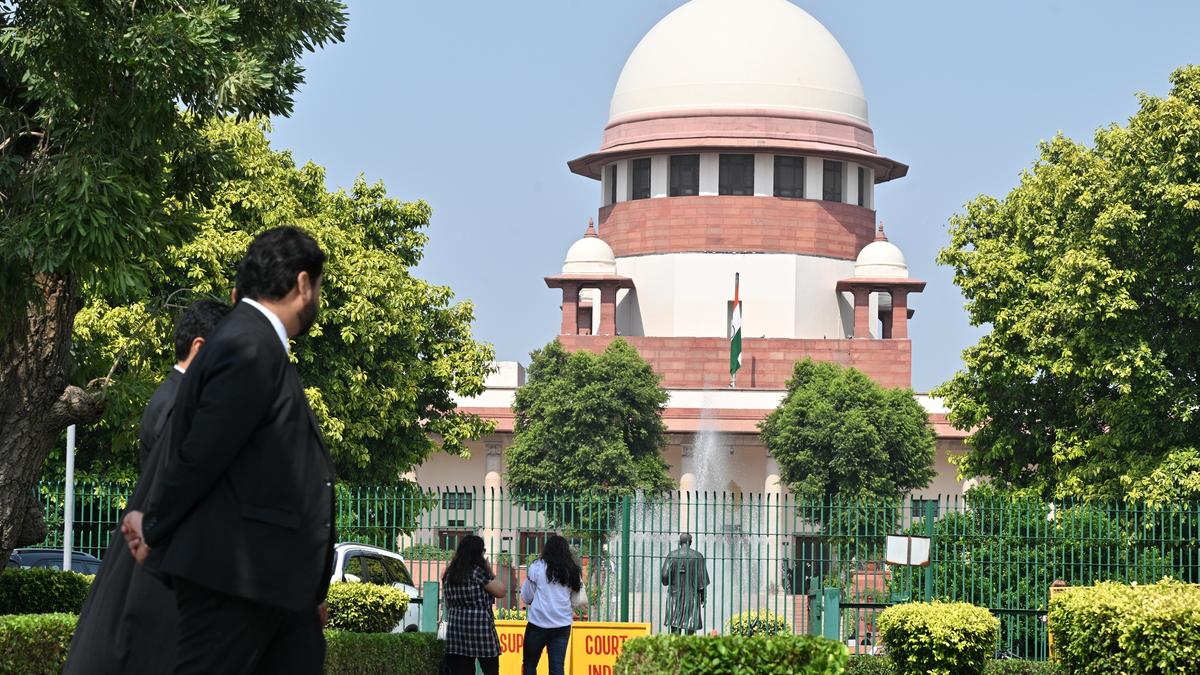

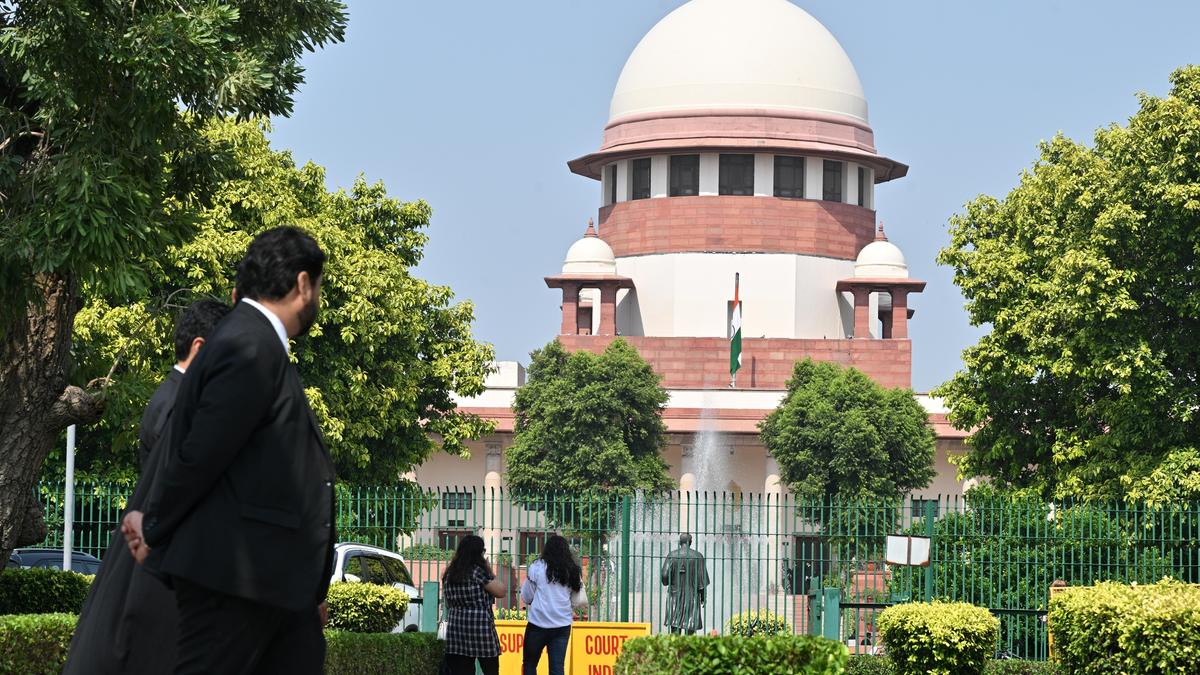
The court made it clear that summons issued to lawyers under Section 132 must explicitly give the exemptions and should be vetted by a superior officer not below the rank of the Superintendent of Police.
| Photo Credit: SHASHI SHEKHAR KASHYAP
The Supreme Court on Friday (October 31, 2025) in a judgment held that lawyers cannot be summoned for questioning by law enforcement agencies, like the Directorate of Enforcement (ED), for professional advice given to their clients on legal issues.
A Bench of Chief Justice of India B.R. Gavai and K. Vinod Chandran said advocates could be summoned by the agencies only in exceptional situations enumerated in Section 132 of the Bharatiya Sakshya Adhiniyam, 2023 (BSA).
Section 132 of the BSA mandates that a lawyer cannot be compelled to reveal confidential and professional communication, advice or documents shared with clients without the express consent of the latter. However, Justice Chandran, who pronounced the judgment for the Bench, noted the privilege was not absolute, and would not extend to communication to further an illegality or that which show the commission of a crime or fraud.
The court made it clear that summons issued to lawyers under Section 132 must explicitly give the exemptions and should be vetted by a superior officer not below the rank of the Superintendent of Police
Digital devices seized from lawyers must be produced before the jurisdictional trial court to be opened only in the presence of the advocate and parties concerned in the case.
The summons issued by probe agencies must not violate the fundamental rights of the accused and the trust they have placed on their lawyers’ confidentiality.
The judgment came in a suo motu case registered by the apex court after Bar bodies, including Supreme Court Bar Association (SCBA) and the Supreme Court Advocates-on Record Association (SCAoRA), represented by senior advocate Vikas Singh and advocate Vipin Nair, objected to senior advocates being summoned by investigating agencies, including the Directorate of Enforcement (ED), for offering legal advice to clients.
The Bench had reserved judgment in August after alarm bells rang with the summons issued by the ED to two senior advocates merely for giving professional advice to their clients.SCBA president and senior advocate Vikas Singh had voiced concern during the hearing about the “chilling effect” that “arbitrary summoning” could have on the legal profession.

Solicitor General Tushar Mehta had argued that if a lawyer had participated in any act beyond his professional duty, amounting to an offence, the “same law which applies to others would apply to lawyers also”.
However, Mr. Mehta had noted that a lawyer’s privilege to not disclose his communication with his client was a recognised statutory right under Sections 126 – 129 of the repealed Indian Evidence Act, 1872 and continued to be enshrined in Sections 132 – 134 of the BSA.
Published – October 31, 2025 12:06 pm IST