



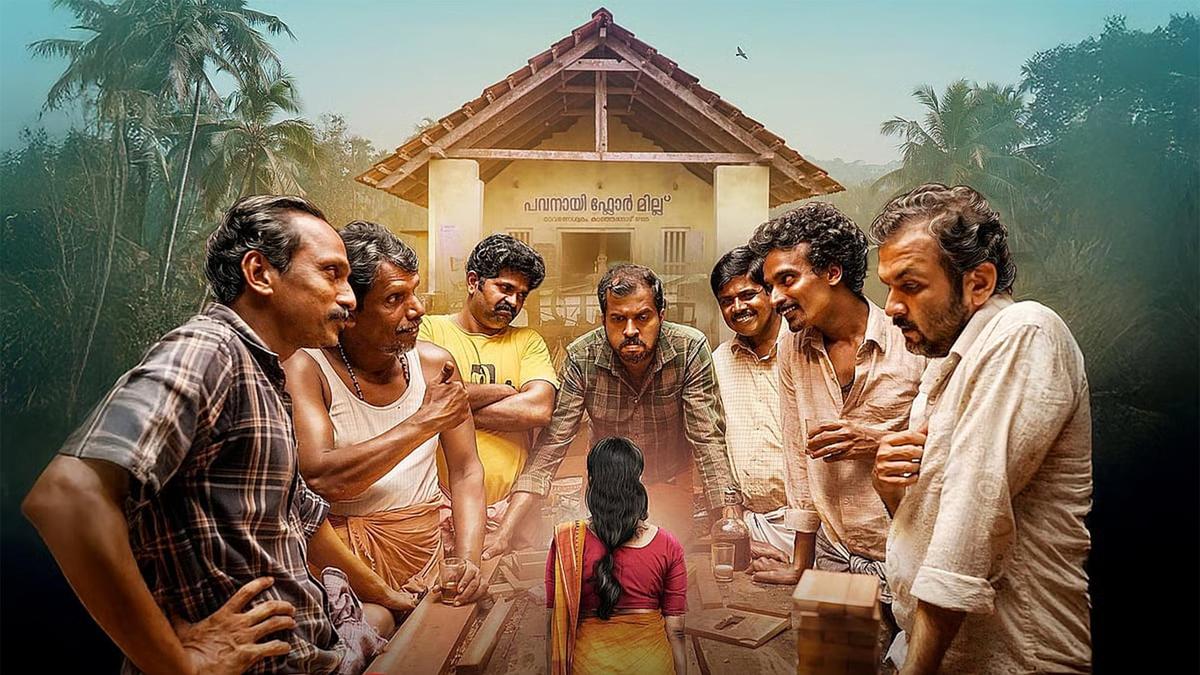

Expectations were high when Senna Hegde was back with another ‘Made In Kanhangad’ project, Avihitham. The reason is the success of his two previous movies, Thinkalazhcha Nishchayamand 1744 White Alto, set in his hometown, Kanhangad, in Kasaragod district.
Avihitham holds true to the meaning of the title — adultery. Only that Senna’s take is hilarious. Prakashan, an unemployed youngster, while returning home one night after a booze-and-gossip session with his friends, sees a couple getting intimate. But he sees only the man’s face, which he tells his friend, Venu, a tailor. Armed with this ‘information’, they set out to establish the woman’s identity and deduce that it is Nirmala, the wife of Mukundan, a carpenter. They inform everyone, including Mukundan and his family, their relatives and village folk, and make it their mission to catch the alleged ‘couple’ red-handed.
Based on a story by Ambareesh Kalathera and co-scripted by him and Senna, the film is a solid take on how people take vicarious pleasure in small-town gossip and moral policing. Senna says that Ambareesh, who is from Neeleswaram in Kasaragod, had approached him with a story through cinematographer Sreeraj Raveendran, a mainstay in Senna’s movies. “But we were not keen about pursuing that story. Later, Ambareesh narrated another story to Sreeraj. He liked it and felt that it might interest me as well. That is Avihitham. I did like it, but part of it. I told Ambareesh that if he could conclude it at a particular point I was ready to do it. He agreed and had no issues with me co-writing the script. I feel comfortable when I write the screenplay, it works better for me.”
The draft was ready within a month. “But like my previous works, I make changes even while shooting. Every time I shoot a scene, I keep thinking if I can enhance it or sprinkle a bit of humour here and there. It happens till the end,” he adds.

Senna says that he is “not a start-to-finish kind of writer. I create a lot of scenes and then link them. That is how I develop the characters.”
The cast comprising a handful of familiar as well as up-and-coming actors is a treat to watch, which include Renji Kankol, Unni Raja, Vineeth Chakyar, Dhanesh Koliyat, Vrinda Menon, and Rakesh Ushar among others. While some are first-timers, the rest have done theatre or small roles in movies. “I have a small pool of talent to work with. My movies are set in my home town and are shot in sync sound. So I take only those actors who can speak the dialect,” he says.
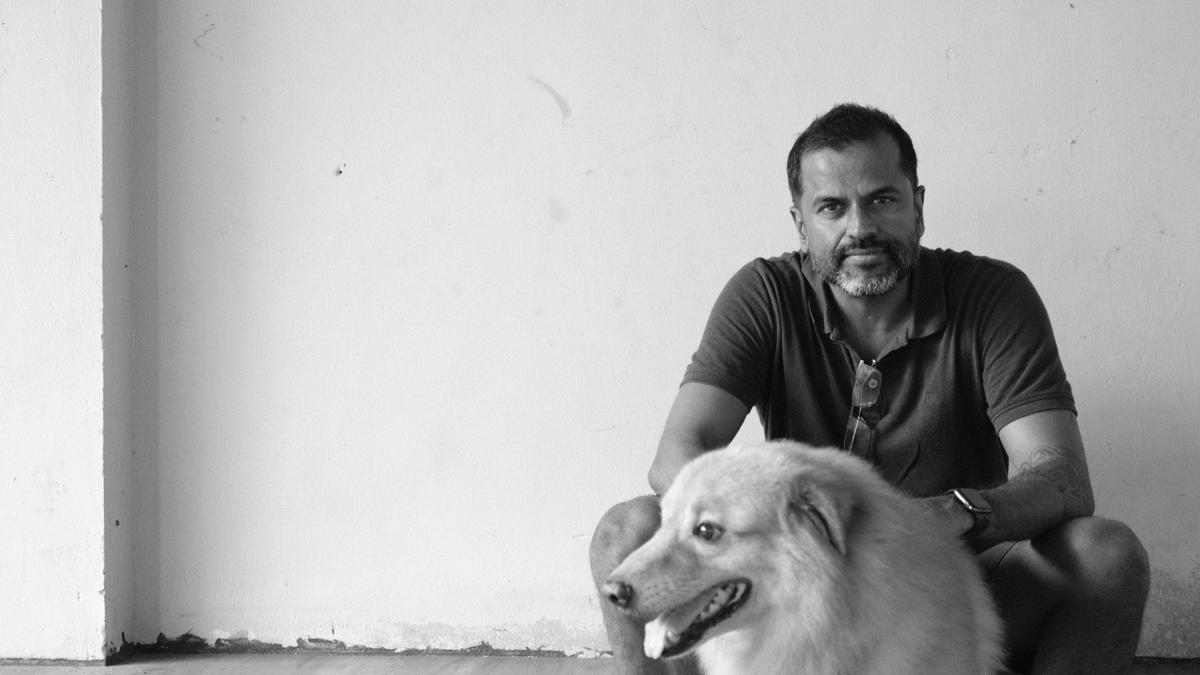
Filmmaker Senna Hegde
| Photo Credit:
SPECIAL ARRANGEMENT
Senna adds that the talent pool has been mostly created through auditions for works made by the filmmakers from the Kannur-Kasaragod region, which include him, Sudheesh Gopinath, director of Madanolsavam and executive producer of Avihitham and Ratheesh Balakrishnan Poduval, director ofAndroid Kunjappan Ver 5.25 and Nna Thaan Case Kodu.
Senna points out that he does not conduct workshops for the actors. “I don’t like that process since I prefer not to prepare my actors. I don’t know if my method is right or wrong. I like the mistakes they make or their innocence as they face the camera. If they practice and act the charm won’t be there. Also, I give them the script only 15 minutes before the shoot,” he explains.
Senna is grateful that he has a crew that understands his style of work. There are a few regulars, like Sreeraj, also the creative director of Avihitham. “He is my partner in crime. This movie is as much his as it is mine. He knows how I work and we just need to look at each other to decide where to place the camera. That makes life and work so much easier.”
Senna is content that Avihitham has found its audience. “We did not make Avihitham thinking it would set the box office on fire. It is an attempt. It had a limited release, in 40-odd centres. The response has been really good, especially in north Malabar and the multiplexes, thanks to word-of-mouth publicity. It is a tedious process to make a movie with a bunch of new or not-so-familiar faces, that too in a dialect most Malayalis are not familiar with,” says Senna.
He understands that theatre business is a different ball game and it is not easy for small films to survive. “Thankfully we got supportive producers. And I got lucky with Thinkalazhcha Nishchayam as it went directly to the OTT. Lot of people have told me that it would have earned much more had it been released in theatres. Not at all! Nobody would have watched it. It is always easy to talk in hindsight. When you don’t have known faces it takes a lot of effort to bring the audience to theatres. That was what we did with Avihitham.”
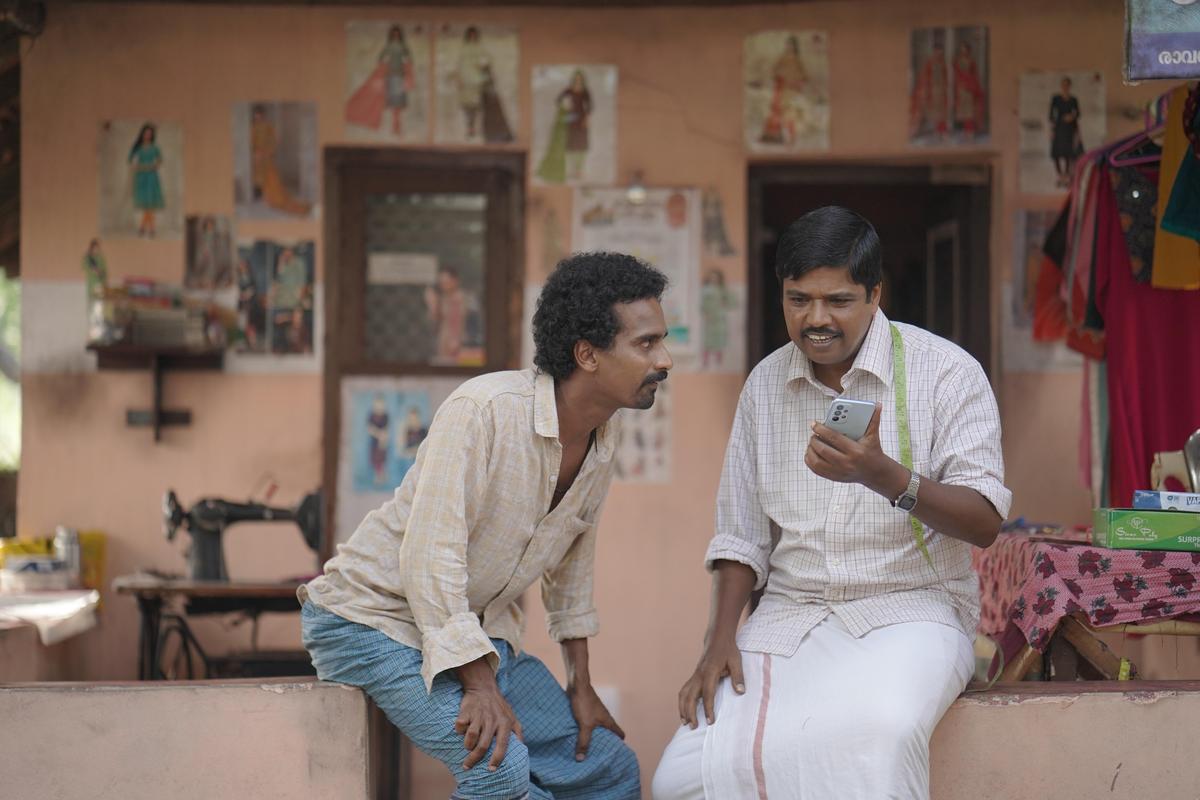
Renji Kankol (left) and Unni Raja in a still from Avihitham
| Photo Credit:
SPECIAL ARRANGEMENT
Senna thinks that the reception for Avihitham gives a hope for small films sans any stars. “On the one hand you have a film likeLokah that has created history at the box office. It is indeed a huge thing for the industry. At the same time there are people like me who enjoy making films like this. It is an ecosystem and we will continue to exist here.”
Meanwhile, what about his acting stint after the debut in Rifle Club? “That was it. Acting is not something I wanted to do. It was hard to let go of the chance to work with a big huge production house and who’s who of the industry!”
Senna has already announced his next project, Blood-y, his first attempt at telling a crime story, also set in Kanhangad. “It was the dream of one of our producers, CV Sarathi, to tell a story in this genre set in Kanhangad,” he says. Work on the script has started and cast is yet to be finalised. It is slated to release next year.
So what is it with Kanhangad and his films? “Nothing can beat the joy of working from home. You can’t put a price on it. Since my movies have universal themes I thought why not set them in Kanhangad. This part of Kerala has not thrived well in films. Not because there is a dearth of talent. Distance is one reason. Our language too poses a difficulty. There are many artistes who have their roots here. Only that they moved to Kochi and have adapted to that city. I am not willing to do that. I am too comfortable in my own space and I am in a position to do what I want to do.”
Published – October 23, 2025 10:51 am IST