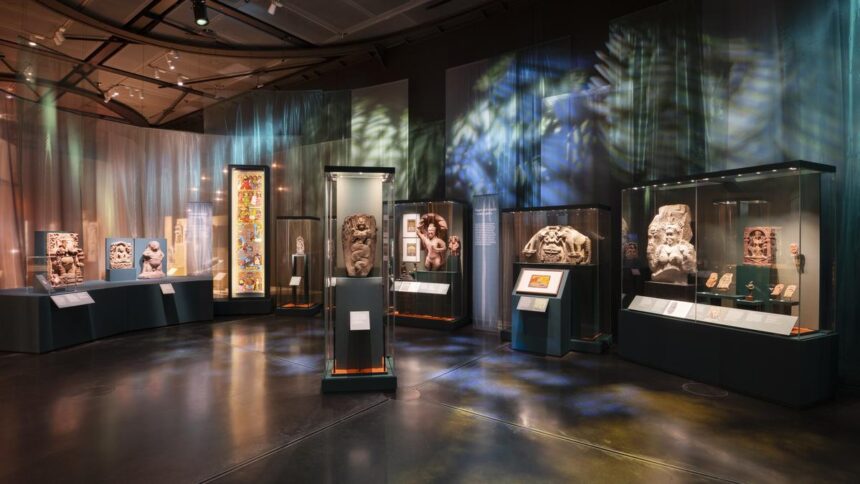






A stunning painting of him holding a piglet and embraced by his mother and father welcomes you into ace filmmaker Mari Selvaraj’s Chennai office. The walls gleam with the many awards he has won since his stellar debut,Pariyerum Perumal (2018). Two curated installations compel you to pause and wonder — one honouring feature films from across the globe that had an impact on him, and the other, for writers, all of whom the director says carried him to distant worlds and showed him the transformative power of art.
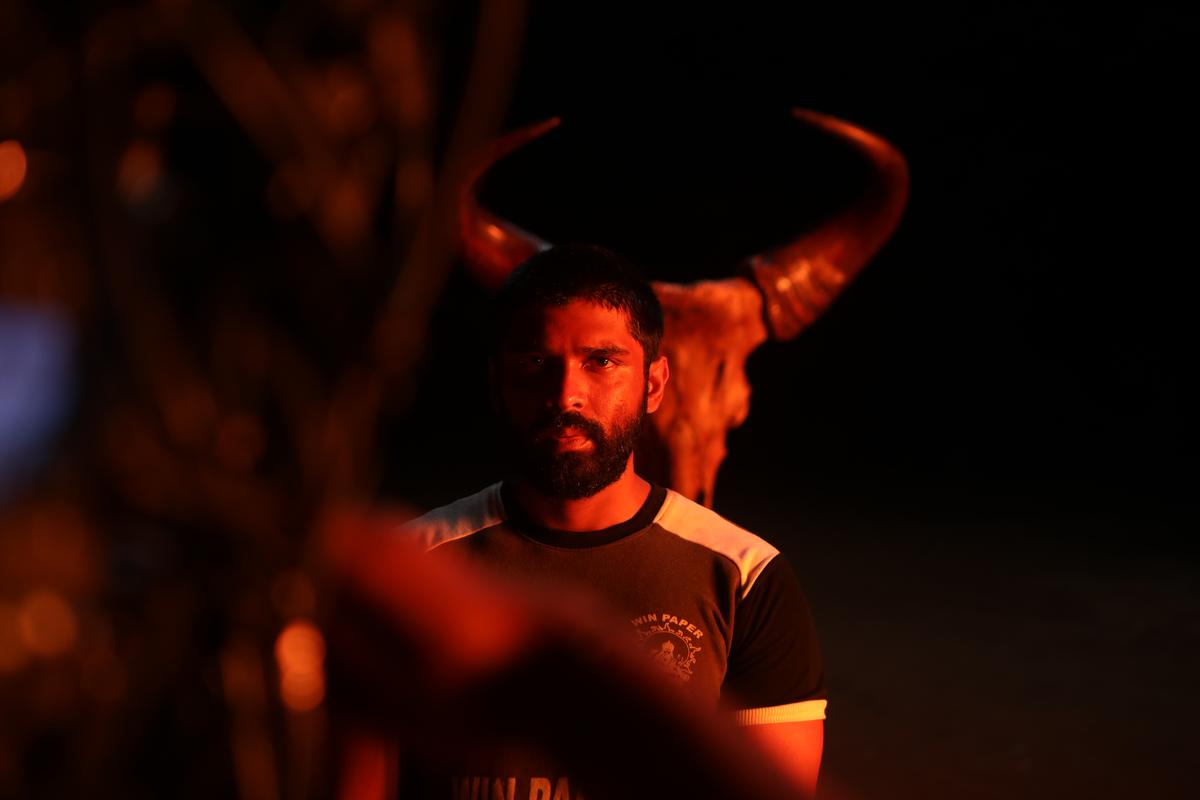
But nothing prepares you for the centrepiece — a bison’s skull, the one that features throughout the filmmaker’s latest socio-political sports drama,Bison Kaalamaadan, a blockbuster that has propelled Mari to national fame. As with all the great artistes who understand this game, all this celebration only makes Mari ponder over his next project. “So many people believe in my work and look keenly into its craft and politics; that adds responsibility. When audiences place such trust in films, regardless of who the hero is, we must do them justice,” says Mari.

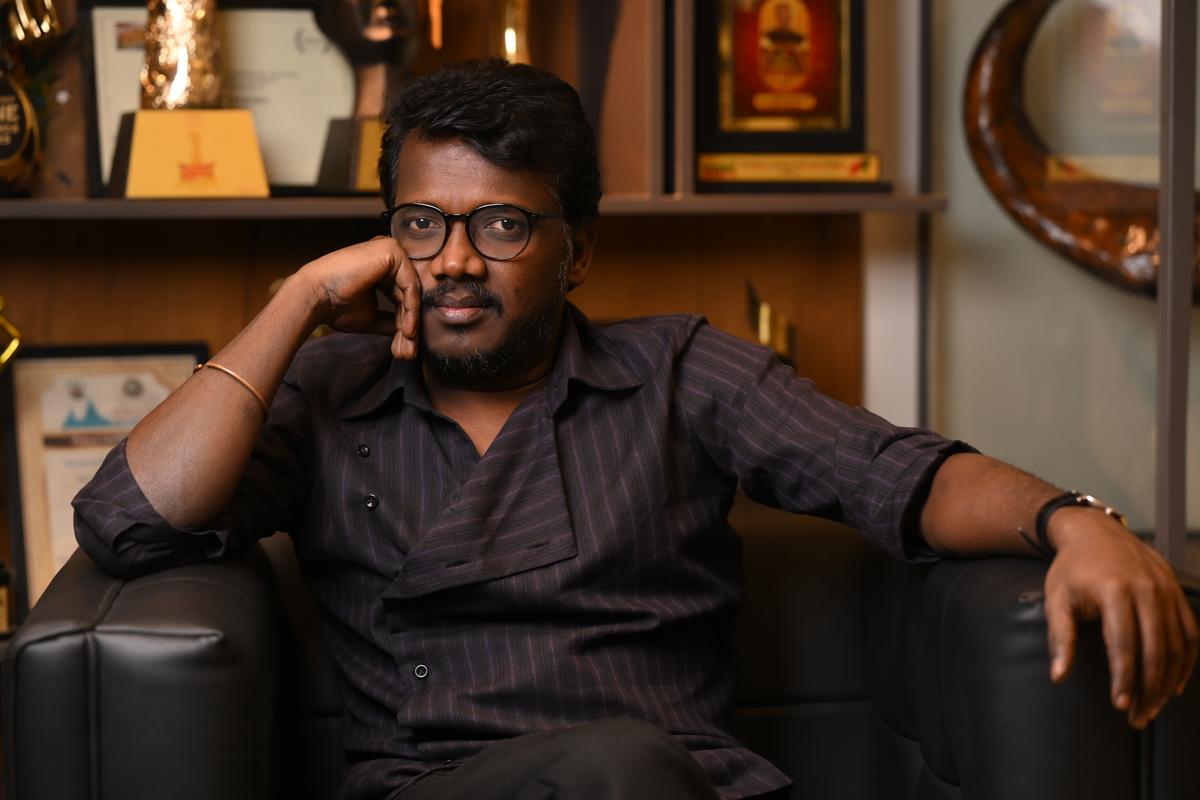
Mari Selvaraj
| Photo Credit:
Thamodharan B/The Hindu
Bison, starring Dhruv Vikram, is an emotionally rich tale based on the life of Indian kabaddi champion and Arjuna-awardee Manathi Ganesan, who shares a close bond with Mari. The kabaddi coach felt overwhelmed with emotion upon seeing how his story had come out, says Mari. “He hugged me, and when I told him what he saw was the rough cut without any orchestration, he was speechless. We both share an emotional bond because we have known each other since our childhood. We celebrated that entire night, talking and talking.”
Bison is a milestone in Mari’s filmography, as both his politics and craft have come together in near-perfect unison. For a filmmaker who had yearned for his audiences to speak about his filmmaking acumen more than his politics, this is validation. “For instance, Simbu (Silambarasan TR) called me and said, ‘After a point, when you keep working, you inadvertently become a person capable of making miracles, and whatever you do turns into a miracle, and I believe that has happened with Bison,’ and I felt very emotional hearing that.”

D
He adds that artistic elements he had blind confidence in getting their due make him even happier. “I can ensure the politics of a film is right, but the craft needs a team, and only when the film as a whole turns successful will the entire team feel that success.”
What astonishes one about Mari’s filmmaking is how close to reality he takes his camera, almost becoming a documentary filmmaker who captures his artistes as subjects living amongst the real native people of that locale. It’s a process that needed everyone in the team — including actors Dhruv Vikram, Anupama Parameswaran, Pasupathy and Rajisha Vijayan — to live in Tirunelveli in southern Tamil Nadu for more than a year as Mari acclimatised them to his world, made them feel a part of it, and captured them enacting out his scenes. The filmmaker says that he fixated on shooting his films through such a process when he decided on the kind of stories he wished to tell.

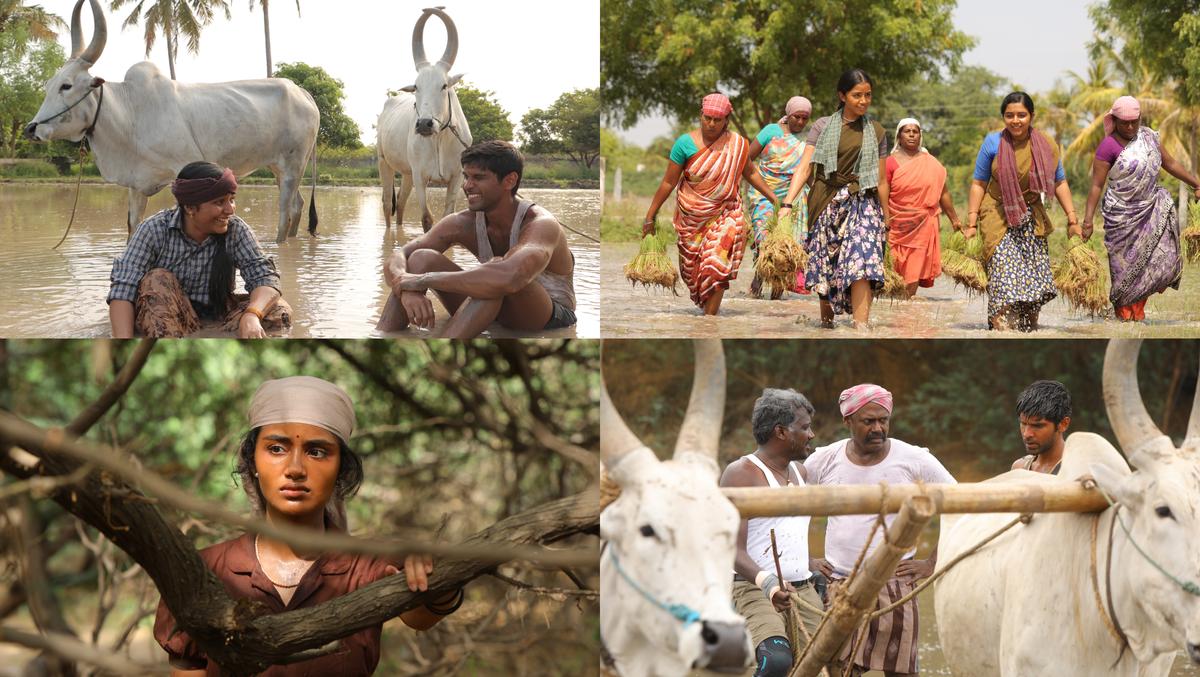
(clockwise from top left) From the sets of ‘Bison Kaalamaadan’: Rajisha Vijayan and Dhruv Vikram; Rajisha and Anupama Parameswaran; Mari Selvaraj, Pasupathy and Dhruv; Anupama
| Photo Credit:
Special Arrangement
“When I knew I was going to tell the stories of these people, I wanted to capture them in their land, with their emotional state, and living their lifestyle. I wanted to capture that in flesh and blood, in the most realistic way possible. It’s not possible to do it 100%, but we can try to the best of our abilities.” Such a process also allows him to capture some of the breath-taking visual metaphors and montages that populate his films. “While writing a script, I would just write whatever I imagine, like a novel. But when it takes the form of a film, I need to go to the landscape, see the visuals there, and then decide how I can imbibe all that and add more life to the script,” he informs.
If Mari is the backbone of Bison, it is Dhruv Vikram’s restrained performance as Kittaan that strongly shoulders the story of a young boy who must face concentric circles of battles to realise his dreams in kabaddi. It is a story that does not offer Dhruv much to flex his acting muscles, and the young actor aces in the many shades he brings to his character. “All I told him was that Kittaan has a playground to prove himself — he is like a hunter in the kabaddi ground. So he must control and save every ounce of his energy everywhere else, to unleash it in kabaddi.” This was also an input from Manathi Ganesan, he adds. “Someone who has to shout throughout the match and wrestle and throw people around in a physical sport needs to be controlled and keep his energies in check outside the playground.”
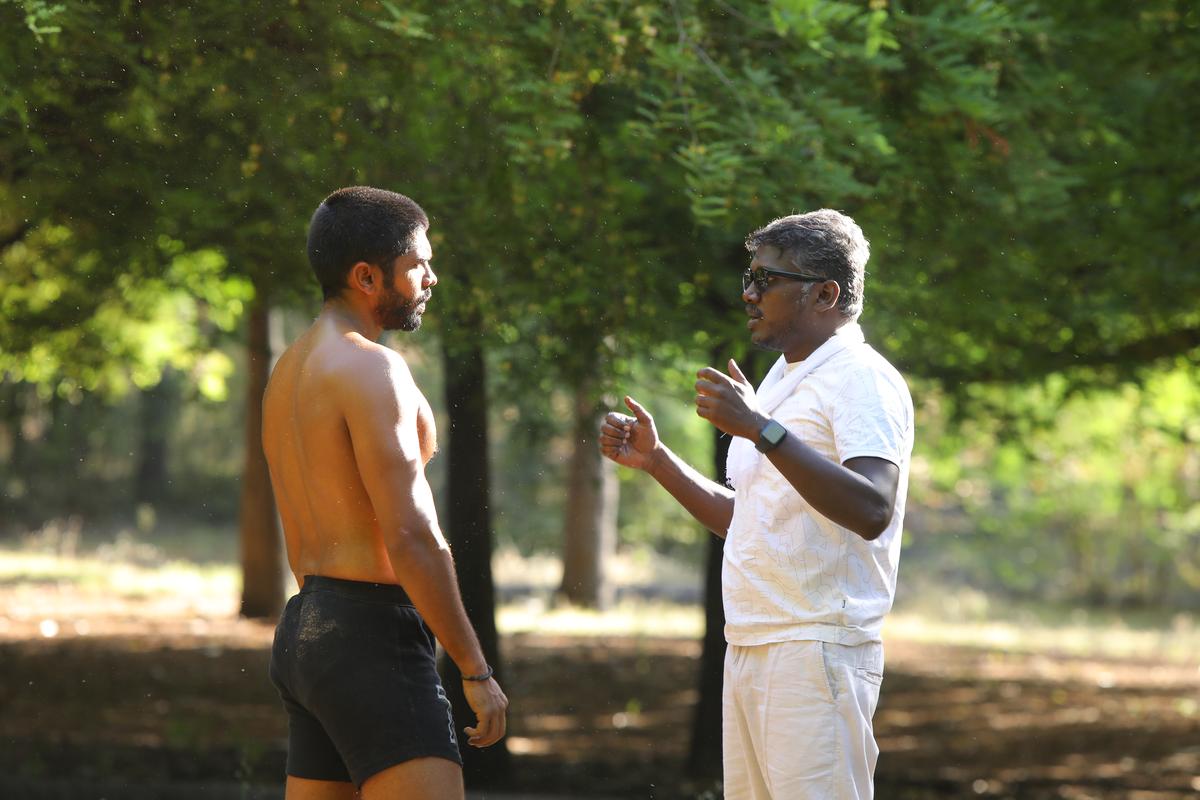
Dhruv Vikram and Mari Selvaraj on the sets of ‘Bison Kaalamaadan’
| Photo Credit:
Special Arrangement
Throughout Bison, Kittaan runs and runs whenever he is faced with the stark reality of his world. This also becomes a synecdoche for how he wishes to flee the land that keeps erecting fences around people and their dreams. “If I am someone who wants to calm my mind, I would go to a desolate forest or swim in the river. Bison is a sports drama where the physicality of the character is at the forefront; Kittaan’s war is one in which he uses his physique as a weapon. So it is that body that can offer him peace.” Hence, when someone humiliates Kittaan’s strength and kabaddi skills, all because he belongs to a certain social identity, he needs to calm his nerves, rage and all that pent-up energy, to recuperate and reform, explains Mari. “Moreover, Manathi Ganesan said how back in the day, he didn’t have many ways other than running to strengthen his body. He mentioned how if he had to play at a nearby village, he would just run to that place. His body had to be ready whenever he was asked to play, and he would have to be able to play even for four hours continuously, so the tool he chose to strengthen his body was running,” he adds.

Mari Selvaraj on the iconic scene set inside a bus: “That scene worked because it was so close to reality… because it has truth, and there’s an innocent being at the centre of it. So it conveyed the intended pain and fear to the audience. When I staged it, I would only be cautious of how close to reality we can take it. It’s like that game we used to play in childhood, where we bury a magnet in the sand and search for it with another; the audience will get pulled into your world at one point. All you need to do is ensure you have set it at the right meter. If I had handled it differently, it would have turned out differently. Here, I wanted them to understand the world, the sultriness of the town and the mindset of those who inhabit it. This one scene was enough to convey it.”
Mari on whether he thought of the risks of shooting graphic violence: “No, because every scene has a purpose. So if you believe in the purpose behind the scene, you wouldn’t worry about that. When I do a scene, I think about why I am doing it and what I am conveying through it. And that vision is what fixes that meter. It’s enough if what I wish to convey is conveyed; I don’t need them to feel overwhelmed with shock or fear.”
One would assume screenwriting to be a meditative process for Mari, given how chaotic — “war-like,” as he puts it — such grounded filmmaking of this scale can be. However, you would be surprised. “Writing is the most horrifying process, one that can make me feel isolated or emotional. I will have to take myself out, put myself in a hot seat as a victim, and become a journal to whatever that person has to say. So he might get angry or shout at me. Now, the director in me is an individual who rose from Chennai after learning a craft in the city. So I get to flex myself a bit when shooting.” The filmmaking process, he adds, is meditative to the point that its pleasure wouldn’t even let him sleep.

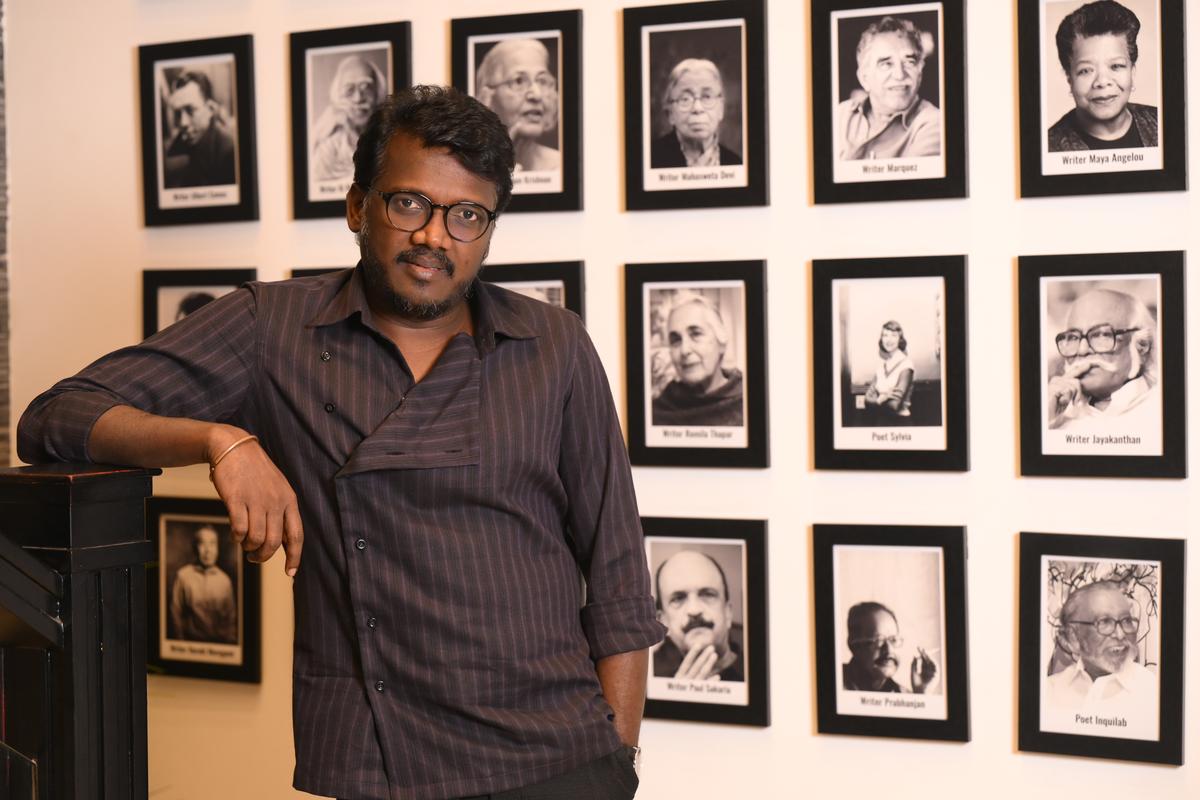
Mari Selvaraj
| Photo Credit:
Thamodharan B/The Hindu
Up next, Mari is reuniting with actor Dhanush after Karnan. Mari says he has a huge responsibility in his hands. “Everyone’s expecting me to tell them a story rich in character. They are observing the life and politics within my films. So the next project needs a large canvas, and I am pondering how we are going to fulfil that.” The director hopes to steer his young and vibrant team through his process once again and ensure his artistic vision remains pure. “I am hoping the audience will come out of that film once again with the satisfaction of watching a definitive Mari Selvaraj film.”
Bison is currently running in theatres
Published – November 06, 2025 02:02 pm IST