



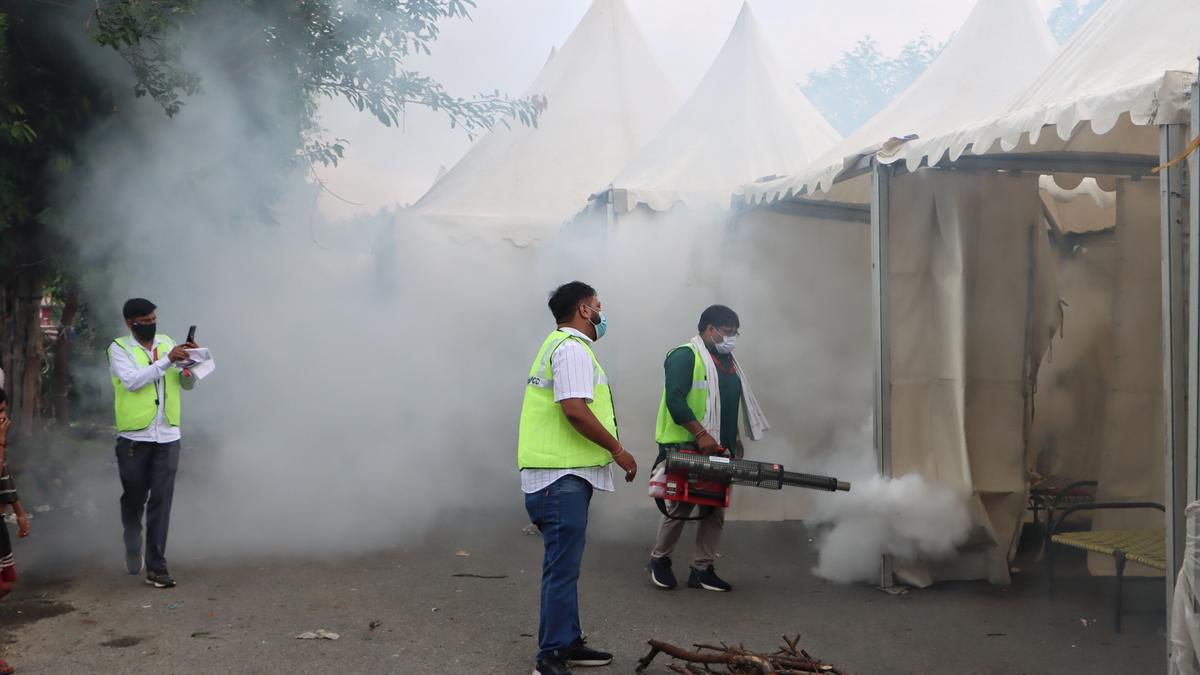

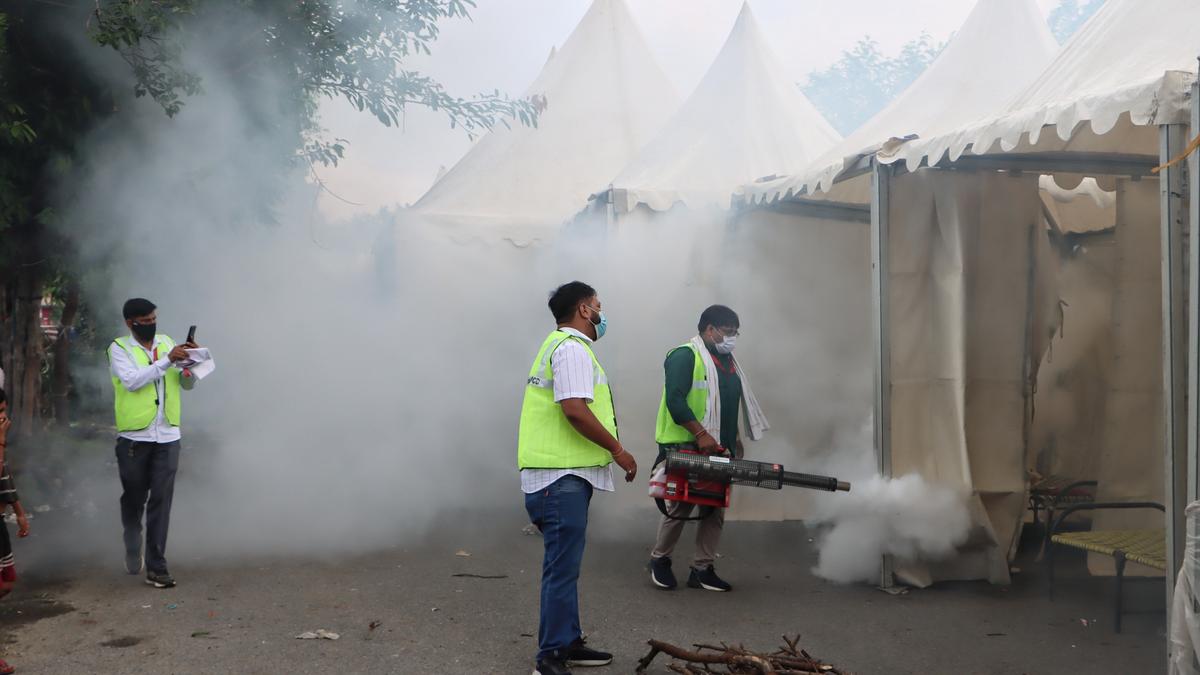
MCD workers fogging flood relief camp after the Yamuna water level receded.
| Photo Credit: PTI
Malaria cases are on the rise in Delhi as the city has recorded 264 cases so far this year – highest in the last five years in the corresponding period, according to the Municipal Corporation of Delhi (MCD). Nearly 100 cases have been reported in the last three weeks.
With the spike in vector-borne diseases, the MCD has cancelled weekly offs of the public health field staff to intensify inspection and anti-larval drives.
MCD chairperson Satya Sharma said that the civic body has intensified fogging and vector-control measures, particularly in flood-prone areas.
“Deputy health officers have been directed to monitor disease-control activities in riverbank zones and ensure sufficient supplies of chlorine and ORS packets,” Ms. Sharma said.
The MCD has also reported 557 dengue cases so far this year, slightly lower than last year’s 578 during the corresponding period. Chikungunya cases stand at 42, up from 30 last year.
Weekly offs cancelled
With these cases on the rise, the government has cancelled the weekly offs of the public health field staff to intensify inspection and anti-larval drives.
“Saturdays and Sundays will be working days until November 30 for all personnel engaged in vector-borne disease control. They will receive compensatory leave after December 1. However, gazetted holidays will still be observed,” said an MCD official.
Dr. Kamal Bakthawar, from the Outpatient Department at Ram Manohar Lohia Hospital, attributed the surge to the recent heavy rains. “We’ve seen a clear increase in OPD cases, particularly malaria, in the last few weeks. When one case emerges in an area, the likelihood of more infections nearby is very high,” he explained.
The detection of cases of vector-borne diseases is higher due to improved diagnostic practices, according to an MCD official.
“We’ve ramped up testing using rapid diagnostic kits. Earlier, blood slide tests were the only option, and many facilities lacked the required resources,” said a senior MCD official, noting that not all cases were local.
“This year, 54 malaria cases are migratory, people who contracted the disease while visiting or travelling to Delhi from surrounding areas,” he added.
Hotspots
The West and Central zones of Delhi have emerged as hotspots. The West zone has reported 46 malaria and 57 dengue cases, while the Central zone logged 30 and 63 cases of malaria and dengue respectively.
A senior doctor at Hindu Rao Hospital said that slum areas are particularly vulnerable due to poor sanitation, open drains, and high population density, and patients from these localities seek treatment only when symptoms become severe.
“There’s an urgent need for targeted intervention in these areas. Some local clinics also lack proper medication for treating vector-borne diseases. Inaccurate prescriptions without proper diagnosis can lead to further infection,” she said.
Published – September 10, 2025 01:18 am IST