



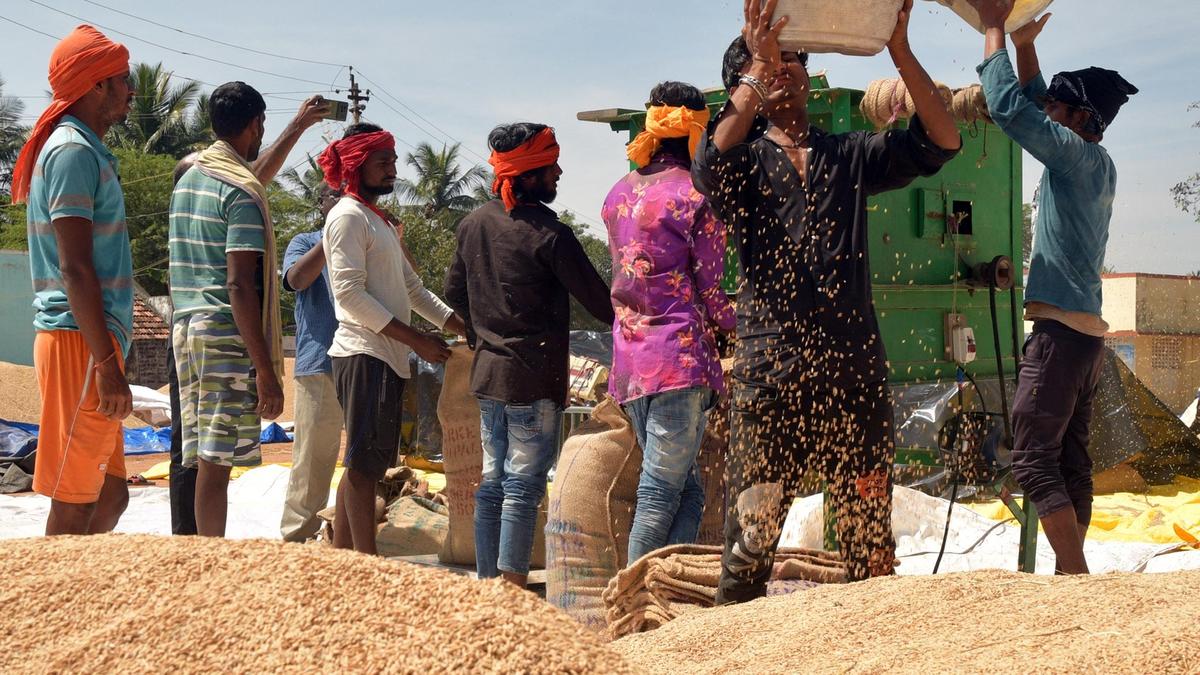

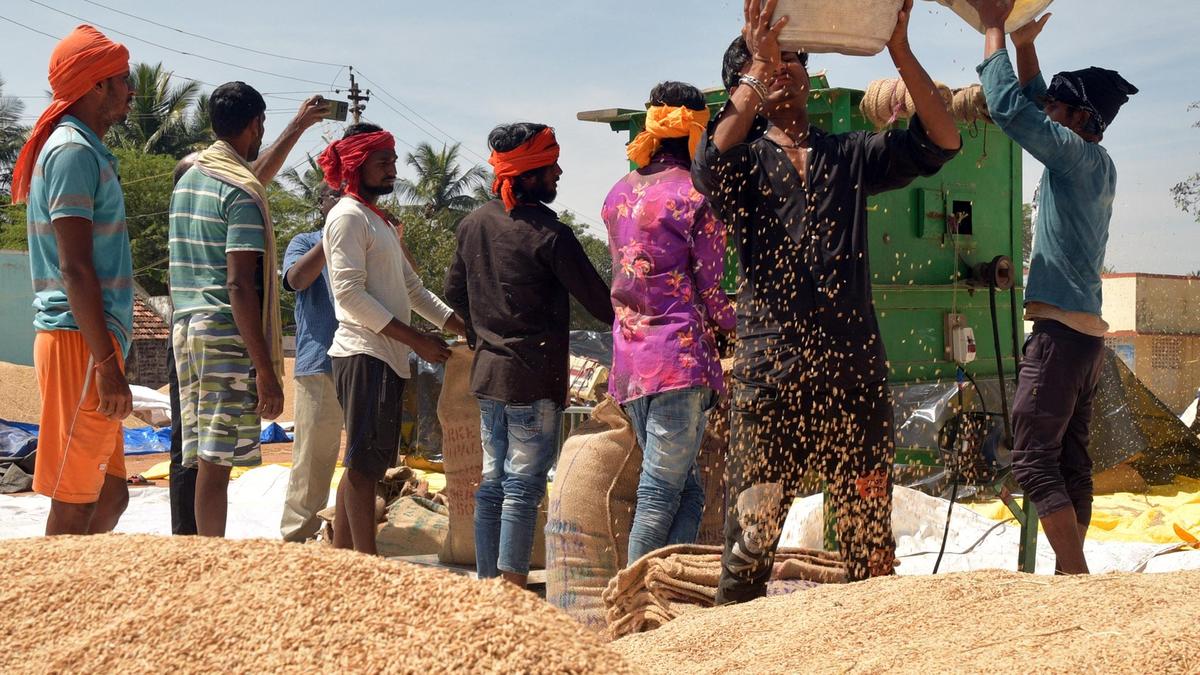
Workers from north India busy at the direct procurement centre at Suriyur in Tiruchi district.
| Photo Credit: FILE PHOTO
Narendranath Giri, 26, is on a train to Andhra Pradesh, hoping to get employed as a farmhand over the next few months.
The native of a village in South 24 Parganas District in West Bengal, recently finished a two-month stint sowing paddy saplings in farms located in and around Tiruchi.
A clip of him singing devotional chants as he transplanted paddy seedlings on a field at Kumarakodi village went viral recently.
“I came to Tiruchi because there is no employment in my village. Most of our jobs are now being done by refugees from Bangladesh. I travel to farms in Tamil Nadu and Andhra Pradesh so that I can support my family and parents,” Mr. Narendranath told The Hindu over phone.
As local residents eschew agricultural occupations in Tamil Nadu, inter-State migrant labourers such as Mr. Narendranath have become a common sight in many farms here. Farm hands from Bihar, West Bengal, and Odisha are known to seek employment in southern States.
“For a 12-hour shift per day, we were promised a monthly salary of ₹6,000 by the manpower agent, but we got only ₹3,500 after we came to Tamil Nadu. To avoid losing money to middlemen, I have decided to apply for job contracts directly next time,” the worker said.
Quite a few of the farmland owners in and around Tiruchi prefer to employ a mixed group of local and migrant workers. “The advantage of having migrant workers is that they are ready to work long hours, and do ancillary jobs on the farm such as caring for the cattle because they stay on the premises. Local farm hands usually clock in and out only during the day, and prefer to work under the Mahatma Gandhi National Rural Employment Guarantee Act (MGNREGA) schemes,” said a senior faculty overseeing the 40-acre farm attached to an agricultural college in Musiri.
At present, the farm which grows guava, pomegranate and citrus fruits, pays ₹400 and ₹300 daily to men and women respectively. It employs five workers from Bihar, who stay on the premises.
“During paddy harvesting season in the Cauvery delta districts, north Indian workers will usually work there to reap the crop, and build up their savings. Once the season is over, they come back to us,” said the faculty.
Ayalai Siva Suriyan, District Secretary, Tamil Nadu Vivasayigal Sangam, Tiruchi, said the dearth of young indigenous farmers had created the employment gap in the State’s agrarian economy. “Most of the youth in rural areas prefer to work in other sectors such as shopping malls or construction sites, because they offer better earnings. The migrant workers are skilled and play an important role in crop management, whether it is sowing or harvesting, so we must learn to co-exist with them,” said Mr. Suriyan.
Published – November 21, 2025 06:50 pm IST