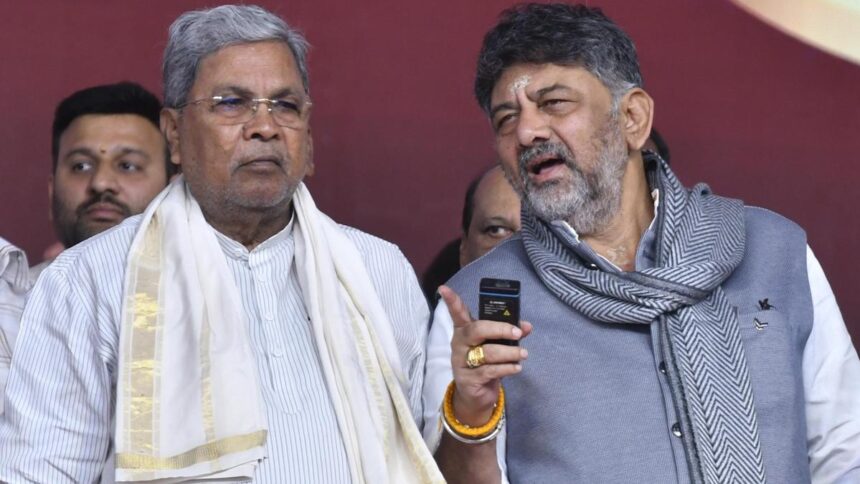



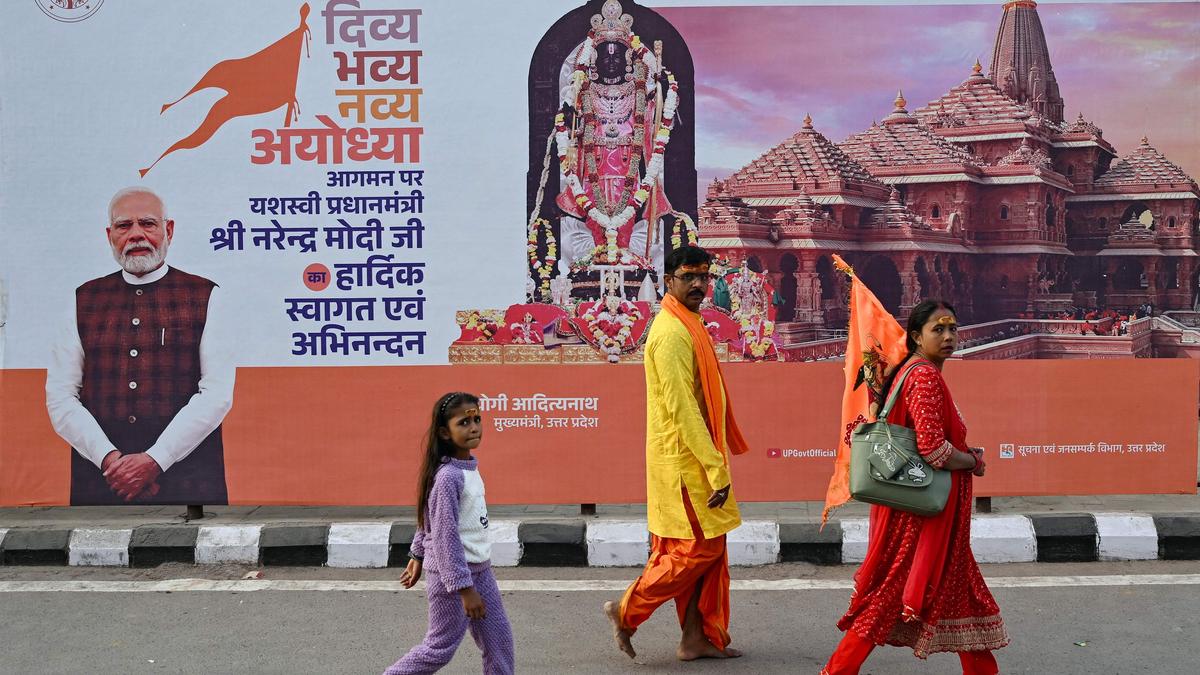

Devotees walk past a billboard featuring Ram Temple and Prime Minister Narendra Modi on the eve of his visit in Ayodhya on November 24, 2025.
| Photo Credit: AFP
Ayodhya prepares ahead of Prime Minister Narendra Modi’s scheduled to visit to the temple city on Tuesday (November 25, 2025) for the Dhwaja Rohan (flag-hoisting) ceremony, which signifies the completion of the Ram Temple’s construction. The event, taking place on the auspicious day of Vivaah Panchami, will be attended by Rashtriya Swayamsevak Sangh (RSS) Chief Mohan Bhagwat and U.P. Chief Minister Yogi Adityanath.
During his visit, Mr. Modi will first greet the people of Ayodhya and then proceed to the temple. At approximately 12 in the noon, he will hoist the 10-foot-high, 20-foot-long triangular saffron flag atop the temple.
“At around 10 a.m., he will visit the Saptmandir complex to offer prayers at the temples of Maharishi Vashistha, Maharishi Vishwamitra, Maharishi Agastya, Maharishi Valmiki, Devi Ahalya, Nishadraj Guha, and Mata Shabari. He will then pay obeisance at the Sheshavatar Temple, followed by a visit to the Mata Annapurna Temple at around 11 a.m. Afterwards, the Prime Minister will offer prayers in the sanctum sanctorum of the Ram Darbar. At approximately 12 noon, he will hoist the 10-foot-high, 20-foot-long triangular saffron flag atop the temple. Depicting a shining sun, symbolising Lord Shri Ram’s valour, alongside the sacred ‘Om’ and the Kovidara tree, the flag embodies dignity, heritage, and the timeless values of Ramrajya,” reads an official statement.
The flag will be raised on the Shikhar of the temple, built in the traditional North Indian Nagara architectural style. Surrounding it is an 800-metre enclosure crafted in South Indian architecture, reflecting India’s rich architectural diversity. The outer walls of the main shrine display 87 carved stone panels depicting episodes from Lord Rama’s life based on the Valmiki Ramayana, while 79 bronze panels on the perimetre illustrate scenes from India’s cultural traditions.
Published – November 24, 2025 10:36 pm IST