




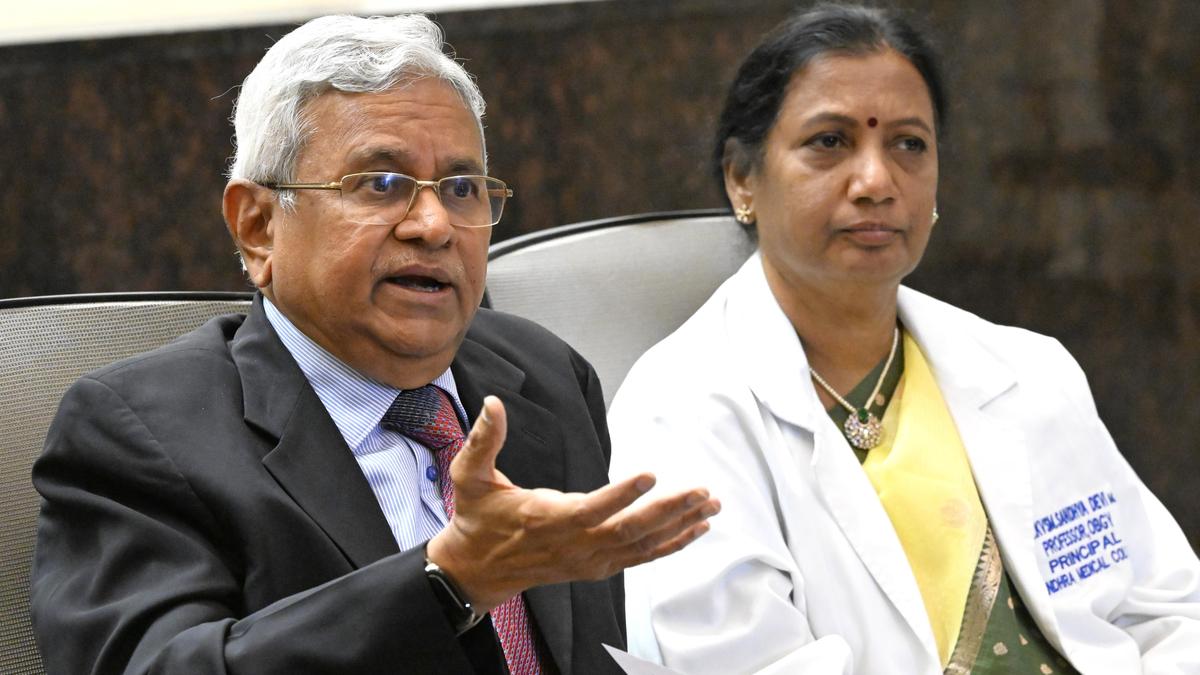

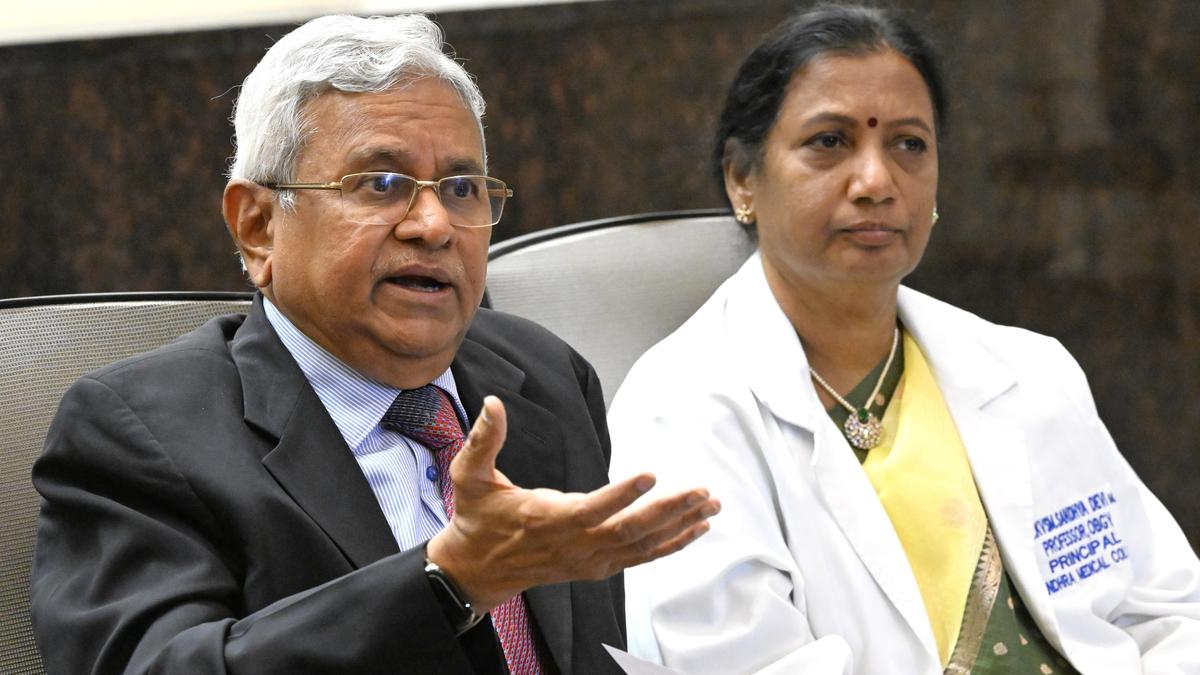
Dr. Ravi Raju, Project Mentor of Srikakulam Kidney Research Project, speaking at a media conference at Andhra Medical College (AMC) in Visakhapatnam on Friday. Dr. K.V.S.M. Sandhya Devi, principal, AMC, is also seen.
| Photo Credit: V. RAJU
The ‘Srikakulam Kidney Research Project’, sanctioned by the Department of Health Research (DHR) of the Government of India, through the ICMR, will help in early detection of Chronic Kidney Disease of Unknown Etiology (CKDu), which is prevalent in Uddanam region, according to Project Mentor T. Ravi Raju.
Dr. Ravi Raju, a noted nephrologist and former Vice-Chancellor of NTR University of Health Sciences, had recognised the prevalence of CKDu in Srikakulam district along with his team from Andhra Medial College (AMC) during the early 1990s and subsequently conducted research through field visits with his team.
Addressing a media conference along with G. Prasad, principal investigator and head of the department of nephrology, AMC, here on Friday (November 21), Dr. Ravi Raju said novel biomarkers would be used for the early detection of CKDu. It would facilitate the starting of new drugs, the quadruple therapy, a new modality of treatment, which changed the scope of treatment of CKD. This treatment could prevent progression of CKD, thereby reducing the need for dialysis or kidney transplantation.
“Deep dive epidemiological studies for identifying the causes of CKDu in the region and thereby take steps to prevent the disease, and conduct of RNA sequencing and genetic studies for identifying genetic predisposition are the other objectives of the current research project,” Dr. Ravi Raju said.
The DHR would support the establishment of the research laboratory at AMC, conduct of epidemiological, biochemical, novel biomarker and RNA sequencing studies apart from manpower support.
Recalling the early days of the identification of the problem, Dr. Ravi Raju said that a large numbers of CKD patients were coming to the King George Hospital (KGH) for treatment during early 1990s. Medical camps conducted in affected region in Srikakulam district had revealed the high prevalence of CKD in Uddanam region. Systematic surveys and kidney biopsies had established the type of kidney disease and severity of the condition.
The surveys had revealed that 18% of the population had CKD, and in 75% of the cases the cause was of unknown etiology. A vast majority of the affected persons were agricultural workers, both men, women and children. A unique feature in Uddanam was that the affected patients had no diabetes or hypertension, which are the most common causes of CKD.
Dr. Ravi Raju was optimistic that the present studies would help in identification of the cause, early detection and taking better public health measures in the affected region. KVSM Sandhya Devi, principal, AMC, and A. Krishnaveni, vice-principal, were present.
Published – November 21, 2025 08:55 pm IST