



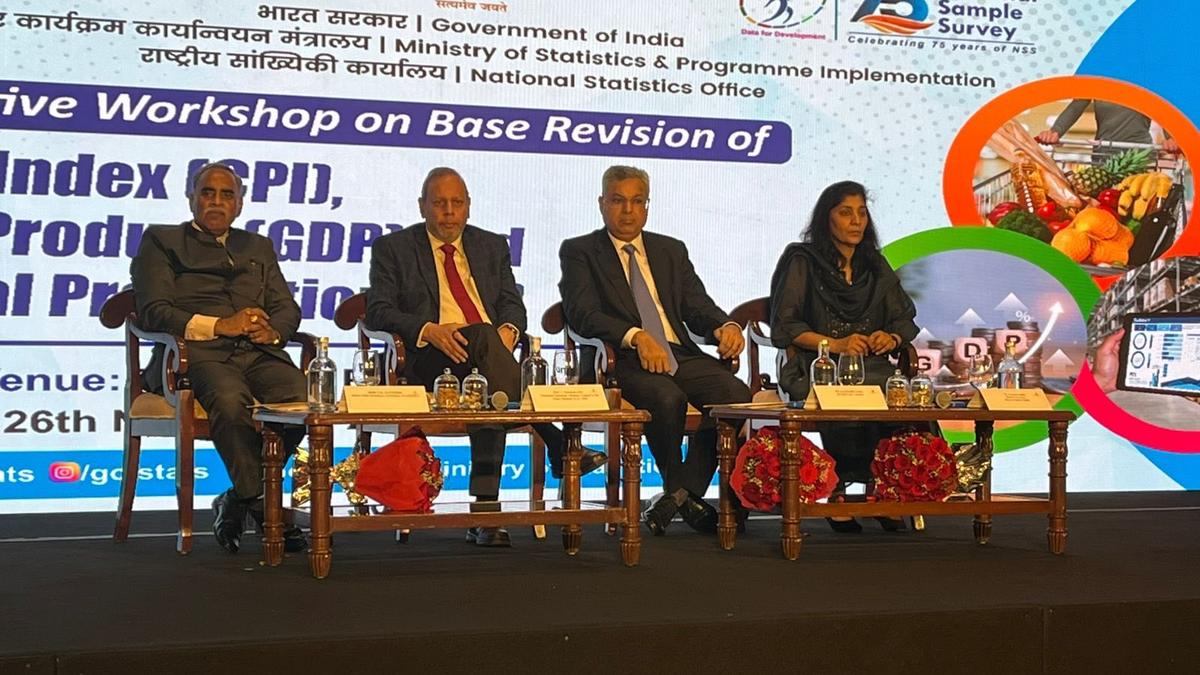

Ms. Gupta also spoke about initiatives brought in by the RBI to disseminate data. She said that the balance of payments (BoP) data is soon expected to be released on a monthly basis. Photo: X/@PIBMumbai
“There is no systemic bias in the central bank’s inflation forecast,” said Poonam Gupta, Deputy Governor of RBI, adding that reducing forecasting error is important.
“While minimising the forecast errors is equally important, there is no systematic bias in the forecast. It is not that the RBI’s forecast is biased in any particular way. As far as the growth is concerned, again we use a variety of approaches and models,” she said while speaking at an event conducted by the Ministry of Statistics and Programme Implementation (MoSPI) to explain the changes in the new CPI base revision on November 26 at Mumbai.
The Deputy Governor’s comments come in the backdrop of economists criticising the RBI for having an overstated CPI forecast and hence a hawkish “bias” in monetary policy, and that a rate cut was warranted. Prices increased at a rate of 0.25% in October 2025, making it the slowest pace ever.
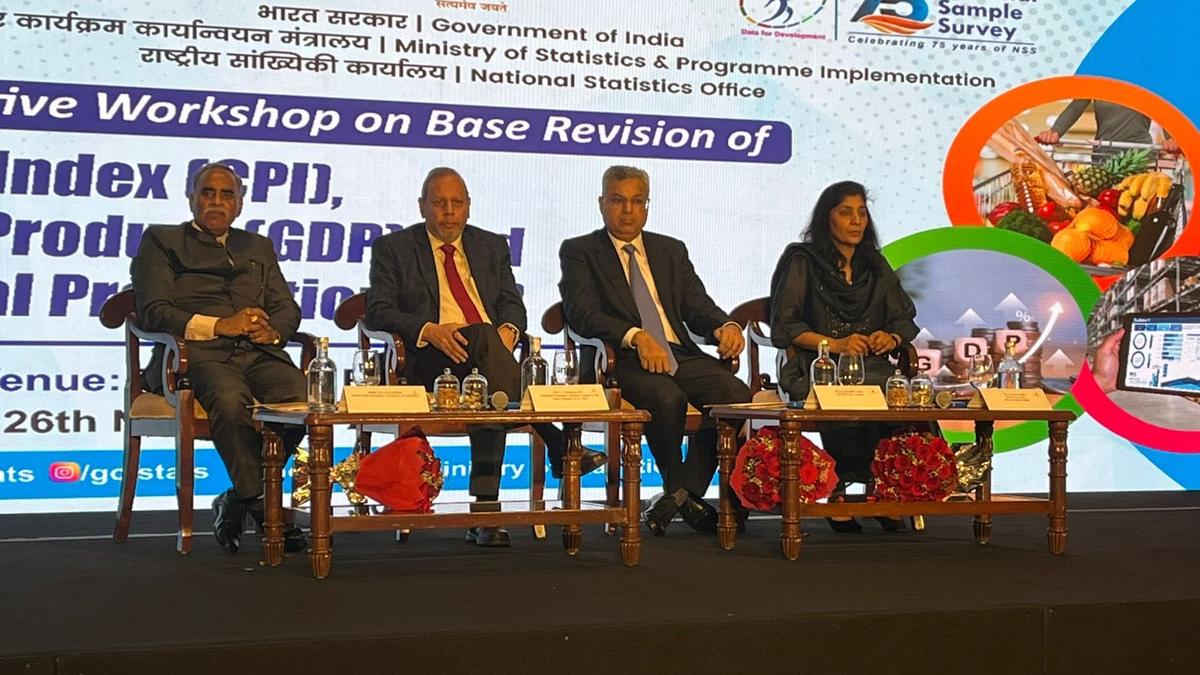
Ms. Gupta also spoke about initiatives brought in by the RBI to disseminate data. She said that the balance of payments (BoP) data is soon expected to be released on a monthly basis.
The Ministry of Statistics and Programme Implementation conducted the workshop to consult key stakeholders, including chief economists of banks, regarding the revision of the base year for the consumer price index, which measures retail price levels.
Currently, the base year for the index is set at 2011-12, and the base year will be revised to 2024-25. The proposed revised CPI series will be calculated using a sample which includes a 25% increase in the number of markets, 40% increase in towns and 17% increase in number of items compared with the previous series, according to MoSPI.
Additionally, the data will be more granular, globally compliant, and will utilise a refined methodology, incorporating new sources of data, the Ministry stated.
Published – November 26, 2025 06:52 pm IST