


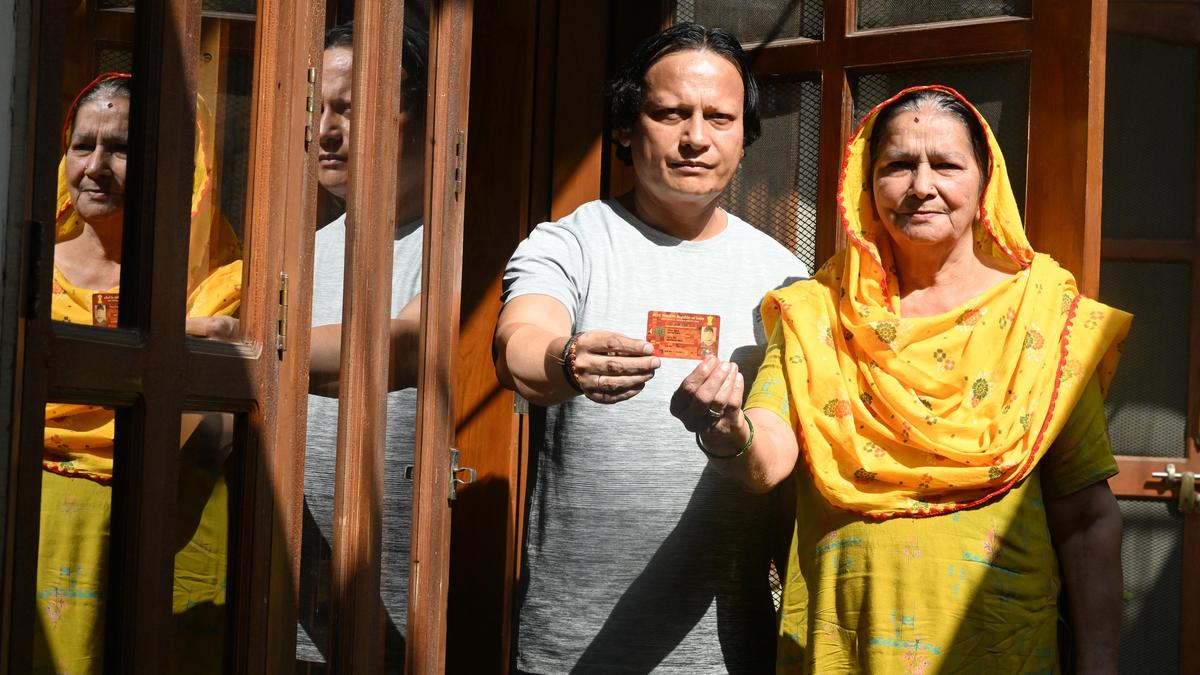

In 2008, Mishro Devi, 69, was the first Indian to own a smart card issued by the Union government, providing proof of her national identity. She says though she never used the document, she has preserved the “red card” as a souvenir.
Mishro and several hundred residents of her village – Pooth Khurd in north-west Delhi’s Bawana – were among the first few lakhs of people to be allotted the Multipurpose National Identity Card (MNIC) by the Union Ministry of Home Affairs (MHA) under a pilot project 17 years ago.
The card, with an embedded electronic chip, had Mishro’s biometric details: 10 fingerprints, an iris scan, her photograph, and thumb impression. It also had details such as her name, date of birth, parents’ names, place of birth, place of issue, and 10-year validity period.
The issuing authority was the Registrar General of Citizens, under the MHA, which determines citizenship in India. Under the pilot project, which concluded on March 31, 2009, as many as 12.88 lakh MNICs were issued to citizens aged 18 and above. Biometric data of about 30 lakh people was captured.
On August 12 this year, while responding to a question in the Lok Sabha, the MHA did not specify the “categories of valid documents” required for people to prove citizenship in India. Communist Party of India (Marxist-Leninist) Liberation MP Sudama Prasad had asked for the details.
Minister of State for Home Nityanand Rai stated in a written reply: “The citizenship of India is governed under the provisions of the Citizenship Act, 1955 and rules made thereunder.” Without specifying the admissible documents, the reply stated that citizenship “can be acquired by birth (Section 3), by descent (Section 4), by registration (Section 5), by naturalisation (Section 6), or by incorporation of territory (Section 7)”.
Determining citizenship
A debate around citizenship and what documents are required in order to be called an Indian was reignited when the Election Commission of India (EC) decided to conduct a special intensive revision (SIR) of electoral rolls in Bihar in June this year. Besides cleaning up and updating voter rolls, one of the objectives of the exercise was to weed out illegal immigrants – a mandate of the MHA.
According to the June 24 order of the EC for rolling out the SIR in Bihar, now being conducted in 12 other States and Union Territories, people could furnish any of the 11 valid documents for inclusion in the voter rolls. Residents whose parents’ names were included in the 2003 electoral rolls, the last time SIR was carried out, could skip submitting documents, it stated. On the list of admissible documents were birth certificate, passport, education certificate, but not the Aadhaar card. Following petitions in the Supreme Court, the EC agreed to accept Aadhaar cards too. As citizenship is the MHA’s domain, Opposition parties flagged the EC’s mandate to steer such a drive in the name of a clean-up of electoral rolls.
In 2015, then Minister of State for Home Kiren Rijiju informed Parliament that under the Citizenship Act, 1955, the “Central government may compulsorily register every citizen of India and issue (a) National Identity Card” to them. He added that accordingly, the government had decided to create the National Register of Indian Citizens (NRIC/NRC) by verifying the citizenship status of all people in the National Population Register (NPR).
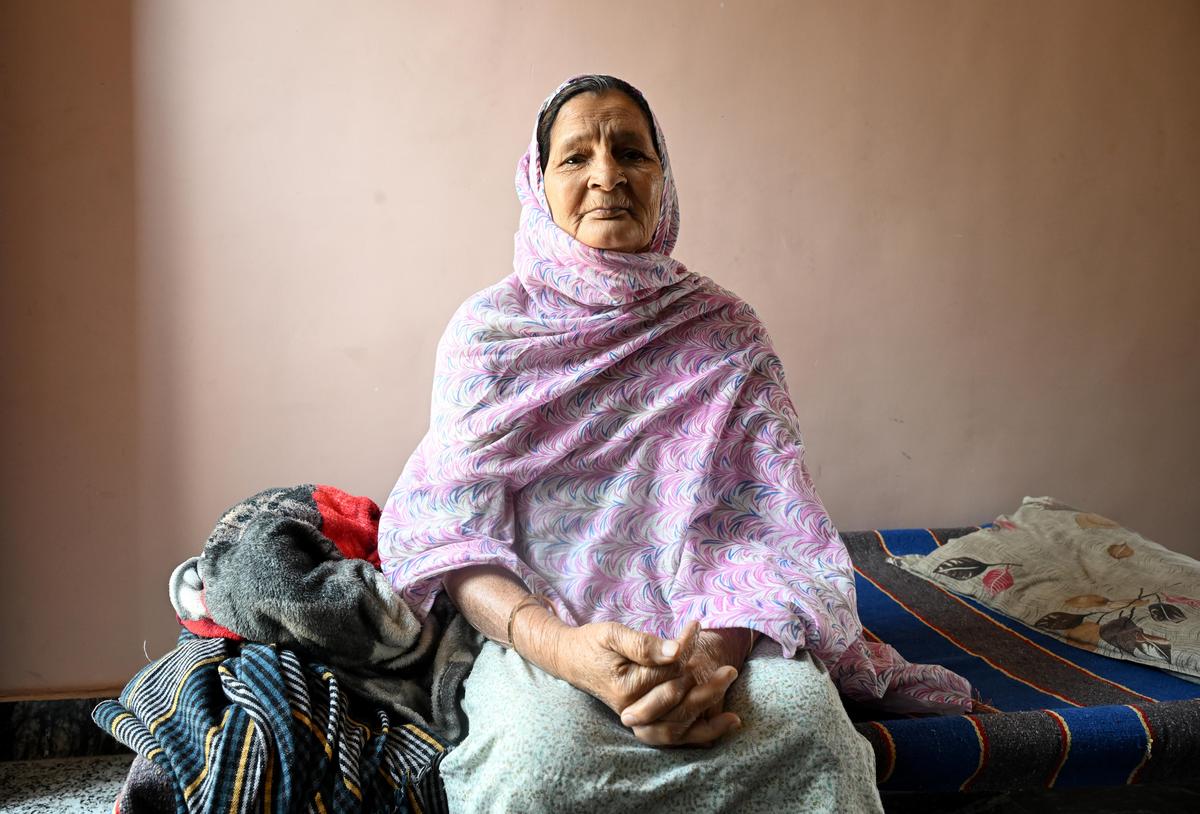
Bharpai, a resident of Pooth Khurd village, can’t remember where her MNIC card is, but says she has never used it.
| Photo Credit:
Sushil Kumar Verma
Updating details for the NPR, which was to be carried out simultaneously with the first phase of the Population Census 2027, has been put on hold. The citizenship of each individual would be separately determined at the time of preparation of the NRC, a subset of the NPR.
The NPR has a database of 119 crore residents of the country. Unlike the Census, where statistical data up to the village level is made public, NPR data is collected household-wise and can be shared with government agencies and States. NPR data was first collected in 2010 along with the first phase of the 2011 Population Census. It was last updated in 2015.
The first phase of the Census is to be conducted from April-October 2026; the pre-test is currently in progress across the country from November 10-30. Unlike previous instances, this time questions related to the NPR are not being asked or updated by enumerators in the pre-test phase.
Updation of the NPR was put on hold following riots and violence in 2019-20 after the Citizenship (Amendment) Act (CAA) was passed by Parliament on December 9, 2019. There were fears and apprehensions that CAA – which grants citizenship to members of six undocumented non-Muslim communities from Pakistan, Afghanistan, and Bangladesh who entered India on or before December 31, 2014 – followed by a countrywide compilation of the NRC will disenfranchise Muslims and undocumented Indians.
It was felt that while the CAA would come to the rescue of non-Muslims excluded from the NRC, excluded Muslims would have to prove their citizenship. Eighty-three people were killed in protests and riots from December 2019 to March 2020 in Assam, Uttar Pradesh, Karnataka, Meghalaya, and Delhi after the CAA was passed.
Though the Union government informed Parliament that “till now” no decision has been taken to prepare the NRC at the national level” and denied that the CAA and NRC are linked, the Citizenship Rules 2003 under the Citizenship Act, 1955 – which enables the process – has neither been amended nor dropped. No new legislation is needed to conduct the NRC. Assam is the only State where the NRC was compiled on the orders of the Supreme Court and the draft register excluded 19 lakh out of the 3.29 crore applicants.
In 2013, the then United Progressive Alliance government informed Parliament that the NPR is a register of residents: citizens as well as non-citizens. “The objective of creating an NPR is to net all usual residents of the country at a given point of time. The proposed resident identity (smart) cards will not be proof of citizenship and would carry a disclaimer that the card does not confer any right to citizenship. The citizenship of each individual would be separately determined at the time of preparation of the NRC,” it stated.
The idea of a unique identification system, however, goes back to 2001 when then Home Minister L.K. Advani proposed the issue of MNICs. During a meeting of a Parliamentary Consultative Committee on Home Affairs on August 21, 2003, a presentation by the government quoted a recommendation by a Group of Ministers on reforming the National Security System.
“Illegal migration has assumed serious proportions. There should be compulsory registration of citizens and non-citizens living in India. This will facilitate preparation of a national register of citizens. All citizens should be given an MNIC,” it stated. It added that non-citizens should be issued identity cards of a different colour and design. It recommended that the exercise be started in border districts or in a 20-km border belt and extended to the rest of India gradually.
A card as a memory
Sitting in her three-storey house in Pooth Khurd, where she has been living since 1974, Mishro recalls how she was invited to a school in 2008 and a government official felicitated her in the presence of the whole village. The lane that leads to her house is cemented but open drains flow on both sides.
When she was given the card, Mishro was told that she could use it to demand better civic facilities. Asked what the card could be used for, she says, “We were told that this card could get us potable drinking water and is also proof of our citizenship. I did not use it anywhere. Later, it was cancelled and replaced by the Aadhaar card.”
Mishro has even preserved the ceremonial banner resembling the card that was presented to her. “It is for posterity. The future generations should know that I was the first one to get this card,” she says.
Over the years, the Aadhaar card issued by the Unique Identification Authority of India (UIDAI) became ubiquitous with 100% saturation. The proposed NPR and the pilot MNIC face uncertainty. A former MHA official involved in the pilot project says the then government decided to give primacy to Aadhaar over the MNIC.
“We were told to hand over all the biometric data that we had collected during the pilot project to the UIDAI. The biometric data was seeded with Aadhaar to avoid duplication,” the former official says.
The efficacy of the Aadhaar card is now being contested by the Union government. The EC, during a hearing in the Supreme Court, stated that Aadhaar is only proof of identity, not citizenship. Mishro’s son, Deepak Dabas, who works in a school, has kept the MNIC wrapped in a plastic sheet along with other important documents in his almirah. “The whole family got the cards. I was young then. The village head filled our details and we only had to give our biometrics at a camp organised by authorities. We were not charged any money by the government,” says Deepak, adding that he has never used the card and he knows it has no value.
Rajbir Dabas, another resident of Pooth Khurd, says he lost the card while shifting to a new house, but used it several times to his advantage. “The card had a prominent Ashoka emblem on the right side and the ‘Republic of India’ inscribed on top. If you showed it to anyone, they could not understand what it was. I used it several times at toll plazas to avoid paying tax as attendants got scared every time we displayed the red card. They thought we were from the Ministry.”
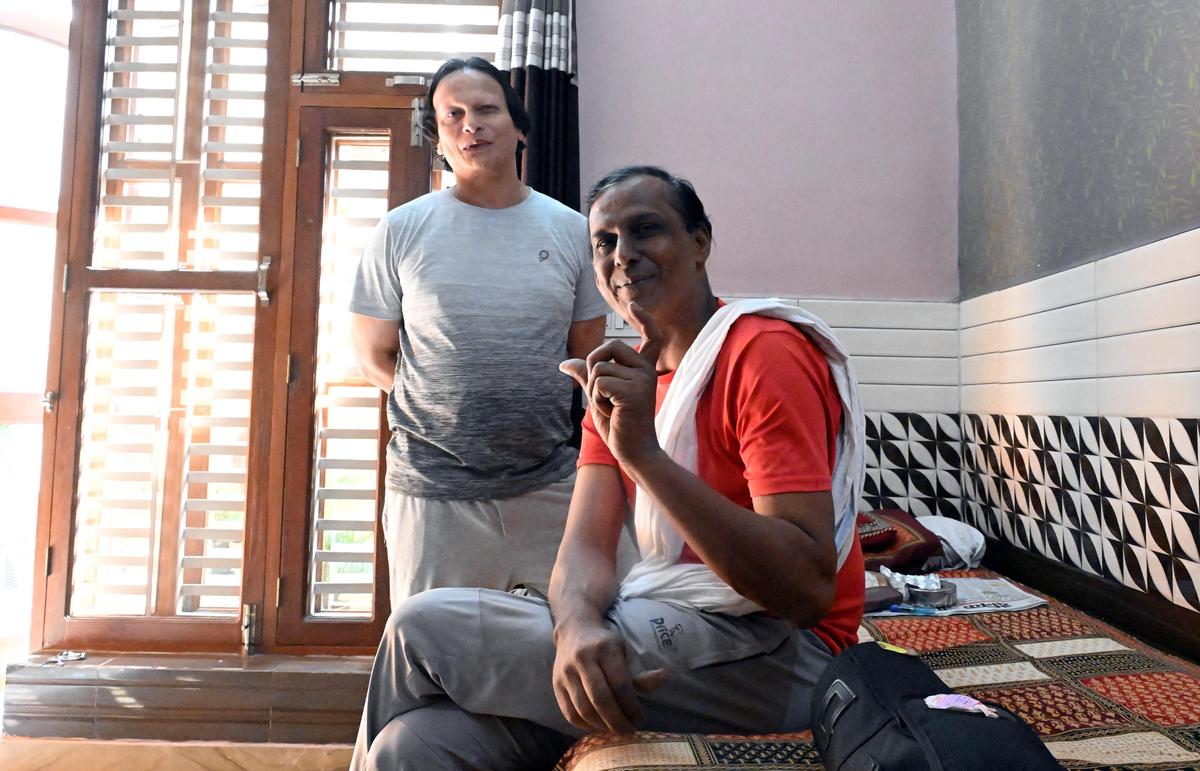
Rajbir Dabas, from the same village, who used the card to evade highway toll tax.
| Photo Credit:
Sushil Kumar Verma
Bharpai, 67, another resident of the village, has a faint memory of the MNIC. Battling age-related health issues, she sits on a cot on the terrace of her two-storey house. When asked about the card, Bharpai, who is hard of hearing, says, “Yes, I did get the card, but do not remember where it is right now. I never cared to take care of it. I have my Aadhaar card.” She also says she did not use it ever in her life.
Around 500 metres away at the panchayat bhavan, a group of men have gathered to play cards. When asked if they also got the MNIC, Rajesh, one of the residents, says, “I do have the card, but it is of no use. An electricity bill is of more use to us than this card. Now that you are asking about it, maybe I will look for it. Around 4,000 people in this village got the card then,” he says, adding that he too used the card to avoid paying toll tax on highways.
Mishro says she never thought of discarding the card. “Do you throw away a gift?” she says, hoping that it could be of use some day to her children and grandchildren.
vijaita.singh@thehindu.co.in
Edited by Sunalini Mathew