






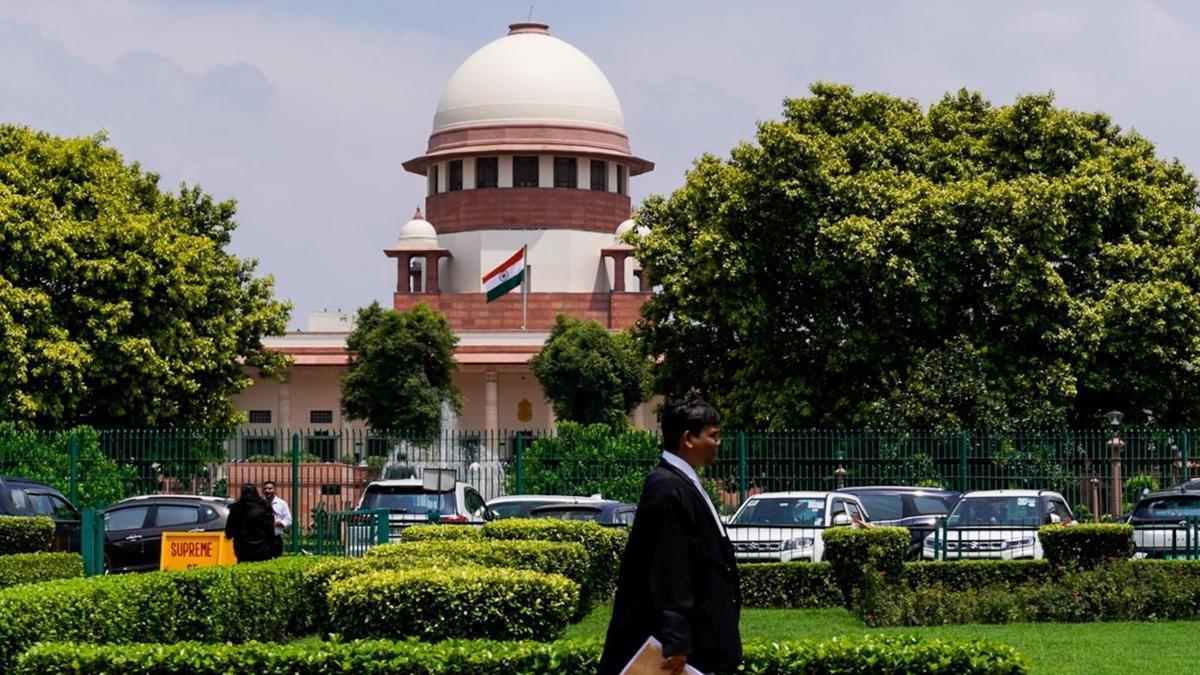
Supreme Court of India. File
| Photo Credit: The Hindu
The opinion delivered by a five-judge Bench of the Supreme Court that the judiciary can neither impose timelines on Presidents and Governors while dealing with State Bills nor grant them ‘deemed assent’ is only advisory in nature.
An advisory opinion is only that — an advice. Article 143 of the Constitution empowers the President to consult the Supreme Court, through a Reference, on any question of law which, for her, appears to be one of public importance.
Also read | Presidential Reference verdict updates
The Presidential Reference of May 13 had 14 questions, largely regarding the ambit of the powers, functions and discretion of the Governors and the President under Articles 200 and 201.
The Reference was made a little over a month after a Division Bench of the Supreme Court, in a judgment in the Tamil Nadu Governor’s case in April, fixed three-month timelines for the Governors and the President to decide on State Bills sent to them for assent or reserved for her consideration, respectively.

The April 8 judgment of Justices J.B. Pardiwala and R. Mahadevan continues to be binding, despite the advisory opinion delivered on November 20, 2025.
Article 141 of the Constitution mandates that “the law declared by the Supreme Court shall be binding on all courts within the territory of India”. Further, Article 144 of the Constitution adds that “all authorities, civil and judicial, in the territory of India shall act in aid of the Supreme Court”.
These two Articles make it clear, in no uncertain terms, that the law declared by the Supreme Court, through its judgments, is binding and “all” authorities are bound to comply with it. Hence, the April 8 judgment in the Tamil Nadu Governor still holds fort as law.

The Union government could have sought a review of the April 8 judgment if it was unhappy with it, but chose, through the President, to issue a Presidential Reference.
The States of Tamil Nadu and Kerala, in their preliminary submissions, had argued that an opinion given by a Presidential Reference Bench could neither set aside the binding judgment of April in the Tamil Nadu Governor case nor act as a substitute for a review or a curative petition.
Tamil Nadu had contended that Presidential References like this could both make serious inroads into judicial independence and be used as an indirect endeavour to overturn Supreme Court judgments without going through constitutional proceedings like the review and curative.

The two States alleged the Reference was a ruse to make the apex court sit in appeal of its own authoritative pronouncement in the Tamil Nadu Governor case.
The five-judge Bench did not accept the preliminary objections of the States and found the Presidential Reference maintainable. The Bench observed that an “authoritative opinion of this Court is mandated since the law on the functions of the Governor and the President under Article 200 and Article 201, cannot be left in a state of confusion, as it would impede smooth functioning of the Constitution”.
The Union government may use this “authoritative opinion” of the Supreme Court as a prize weapon to seek a review of the April 8 judgment of the apex court.
However, if such a review petition is ever filed, the same two judges, Justices Pardiwala and Mahadevan, are expected to hear it, Again, the question is would a Review Bench of the apex court feel bound by the advisory opinion to the President. eom
Published – November 20, 2025 04:30 pm IST