




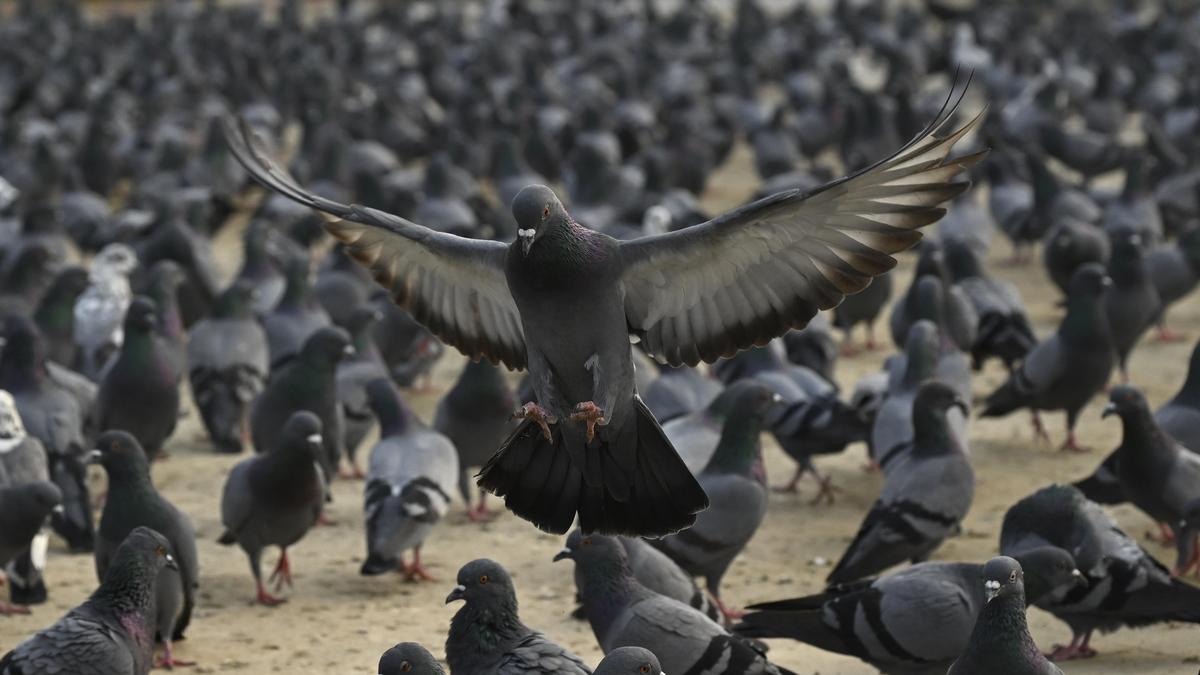

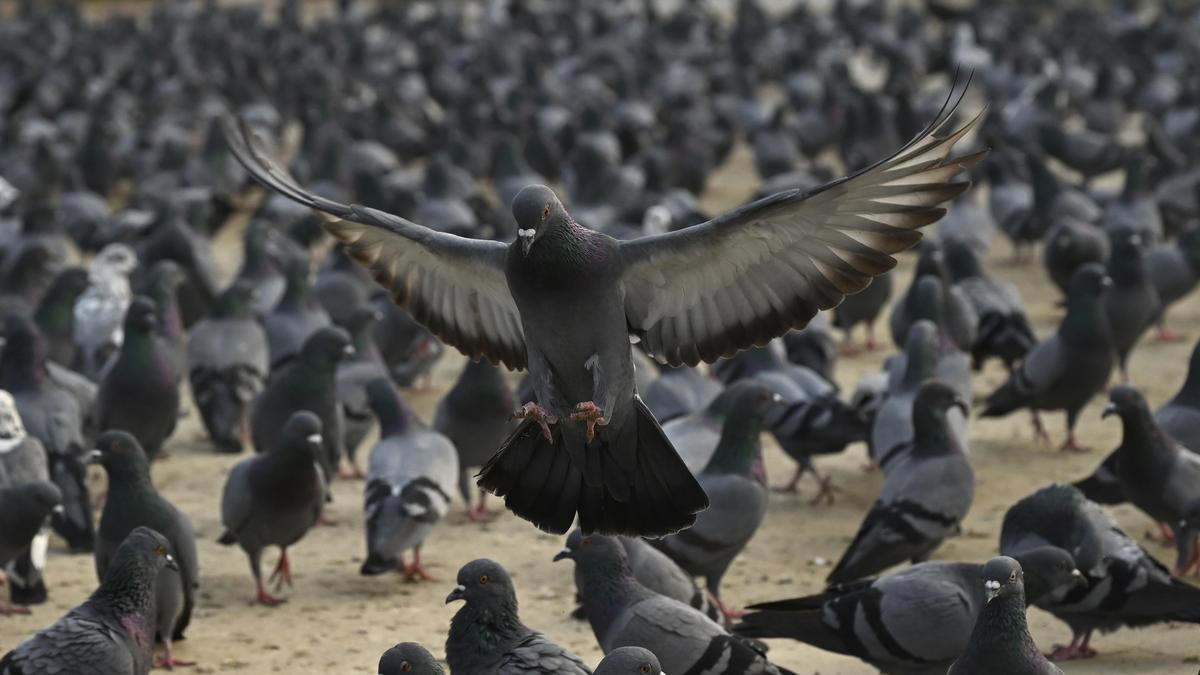
Image used for representation only.
| Photo Credit: The Hindu
A Mumbai-based advocate has moved the Bombay High Court on Wednesday (November 19, 2025) to cancel the BMC’s decision allowing controlled pigeon feeding at four locations, including Airoli-Mulund creekside, citing health, safety and environmental risks.
The petition filed by advocate and social activist Sagar Kantilal Devre, argues that the site poses “grave risks” to public health, road safety, and the local ecosystem.
The intervention application comes in the backdrop of ongoing petitions challenging the legality of pigeon feeding in public spaces. The High Court had earlier upheld BMC’s blanket ban on feeding pigeons at traditional Kabutarkhanas, citing medical evidence that pigeon droppings and feathers can transmit severe respiratory illnesses such as hypersensitivity pneumonitis, histoplasmosis, and cryptococcosis. The Supreme Court refused to interfere with these orders in August.
Following public pressure, BMC issued a press note on October 31 announcing an interim arrangement, controlled feeding between 7 a.m. and 9 a.m. at Worli Reservoir, a mangrove patch in Andheri West, Gorai Maidan in Borivali, and the Airoli-Mulund creekside. NGOs willing to manage cleanliness and crowd control were invited to oversee these spots until an expert committee submits its report.
Mr. Devre’s petition contends that the Airoli-Mulund site is “highly unsuitable,” citing photographs of traffic congestion and unsanitary conditions. “The sudden flight of large flocks near a busy arterial road connecting Mumbai and Navi Mumbai could trigger accidents,” the plea states. It also warns of ecological disruption in mangrove habitats and potential harm to migratory birds like flamingos.
The application reiterates health concerns highlighted in earlier court proceedings, noting that pigeon droppings release fungal spores and allergens that can cause irreversible lung damage, especially among children, senior citizens, and immunocompromised individuals. Environmental hazards such as corrosion of infrastructure and blocked drains were also flagged.
The High Court had previously directed the formation of a 13-member expert committee comprising pulmonologists, microbiologists, and representatives from the Bombay Natural History Society and Animal Welfare Boards to examine the health impact of pigeon feeding and suggest long-term solutions. The committee’s report is awaited.
Mr. Devre has urged the court to allow his intervention and direct BMC to reconsider the Airoli-Mulund designation.
Published – November 20, 2025 04:19 am IST