

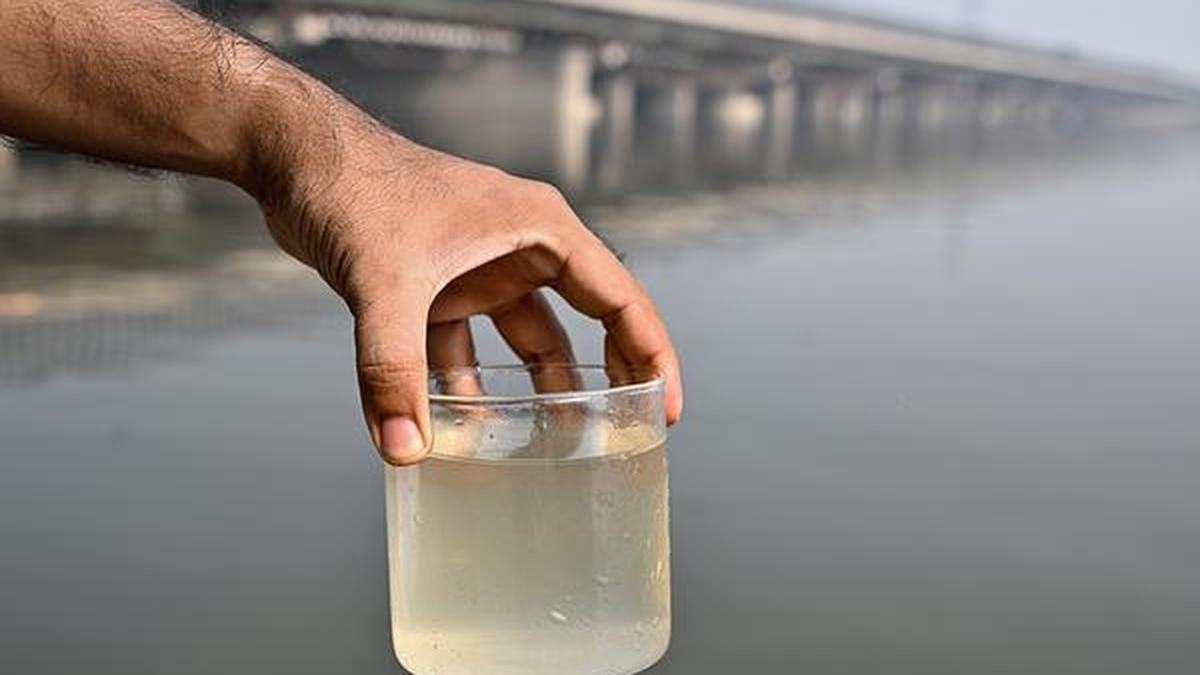

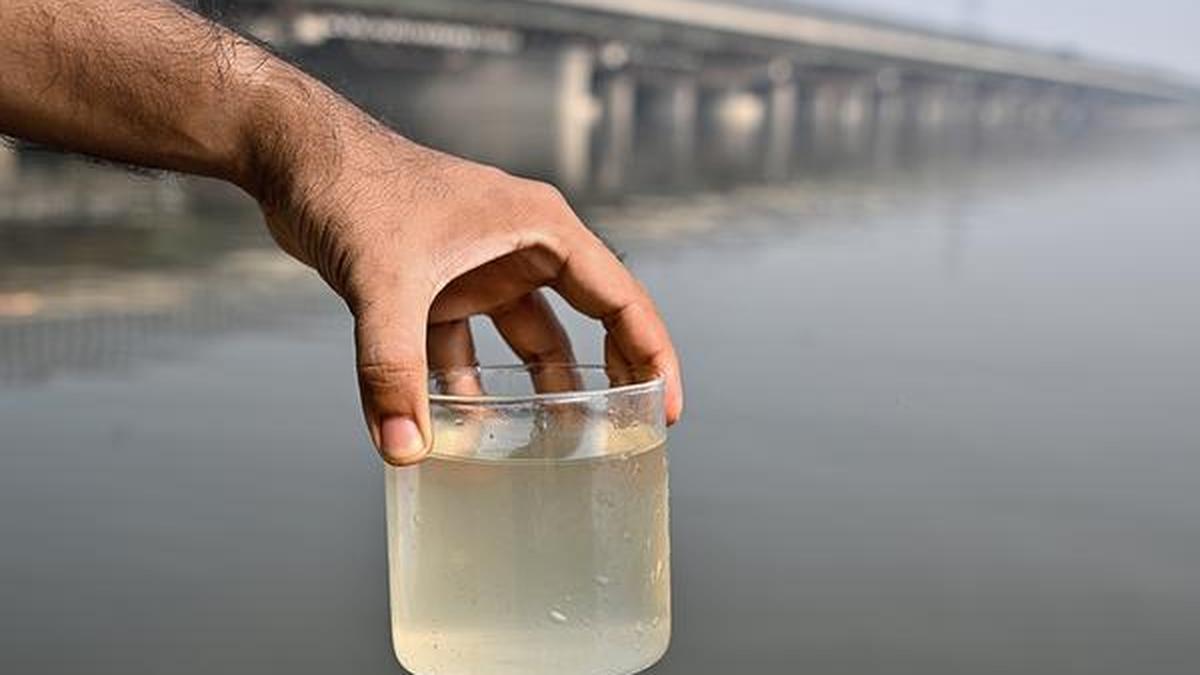
Yamuna water quality at ITO ghat in New Delhi.
| Photo Credit: SHASHI SHEKHAR KASHYAP
An ambitious plan to release water from the Ganga into the Delhi stretch of the Yamuna to increase flow and dilute pollution has hit a roadblock with the Uttar Pradesh government raising concerns, an official source told The Hindu.
The plan was to release about 500 cusecs of Ganga water from the Upper Ganga Canal (UGC) in western U.P. to the Yamuna.
As the UGC is not directly connected to the Yamuna, the plan was to first divert water from the UGC to the Eastern Yamuna Canal (EYC) via an existing channel, and then divert it from the EYC to the Yamuna.
“The water diverted from the UGC to the EYC has to pass through three districts of U.P. The U.P. government raised concerns that farmers would protest if the water is diverted and transported through a channel to Delhi and they are not allowed to use it for agriculture, despite it passing through their area,” the source said.
The U.P. government also flagged that significant re-engineering will be needed for the diversion, the source said.
“A committee is examining the engineering concerns raised by U.P. However, the farmers’ issue, first raised in July, remains unresolved,” the source said.
As per the plan, the extra water is supposed to pass through the Delhi stretch of the Yamuna and be recovered downstream via the Agra canal by the U.P. government. The Delhi Jal Board (DJB) is not supposed to collect this extra water for drinking water purposes.
IIT Roorkee has been tasked with conducting a study to increase the capacity of the Deoband channel in U.P., which is proposed to connect the UGC and EYC to divert water.
Cleaning the Yamuna was one of the key promises made by Prime Minister Narendra Modi ahead of the Delhi Assembly election.
Several delays
In 2015, the National Green Tribunal (NGT), while hearing a case filed by Manoj Mishra, an ex-IFS officer, devised the ‘Maily Se Nirmal Yamuna’ (dirty to clean Yamuna) Revitalization Plan, 2017, to clean the Yamuna and restore the floodplains by March 31, 2017.
“We direct the Chief Secretaries to prepare an immediate action plan required to ensure proper environmental flows throughout the year, in the entire river and particularly the stretch flowing through Delhi,” the NGT judgment dated January 13, 2015, read. But the deadline was not met.
A National Institute of Hydrology, Roorkee, study recommended maintaining 23 cumecs (cubic metres per second) of river flow after the Hathnikund Barrage, upstream of Delhi. However, the current flow stands at only 10 cumecs.
New dams
Diverting the Ganga water was seen as an interim solution. However, the long-term solution is to construct three dams in the upper reaches of the Yamuna. “Once these dams are completed, excess water during the monsoon can be stored and released during the lean season to maintain the required flow in the river. But the construction of only one of them has started, and the completion date is December 2031,” the source said.
Published – December 04, 2025 10:13 am IST